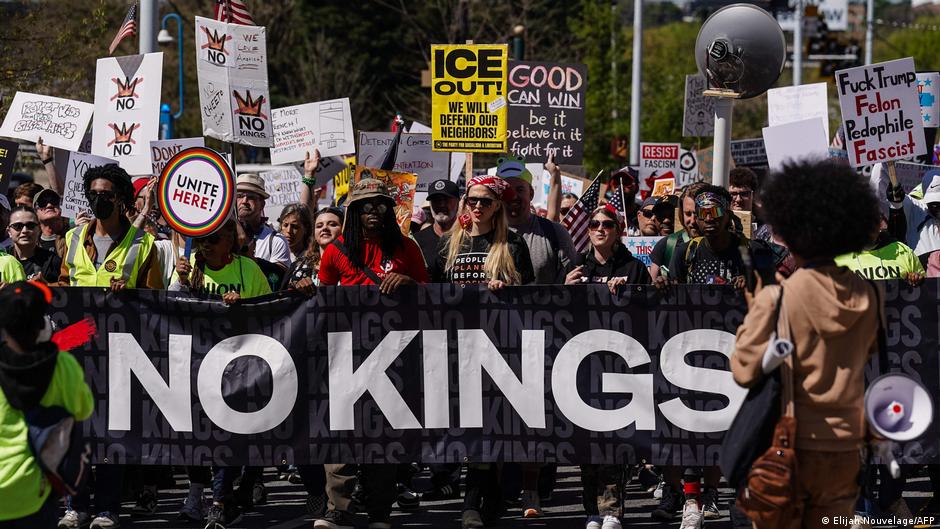
Thousands of Americans took to the streets on Saturday as part of ongoing protests under the slogan 'No Kings', where participants expressed their fears regarding the decline of democracy in the country under President Donald Trump. The protests saw widespread participation from various demographics, with over 3,000 marches organized nationwide.
In the capital, Washington D.C., demonstrators marched across a bridge overlooking the Potomac River towards the Lincoln Memorial, a historic symbol of human rights. Some protesters carried signs with slogans such as 'Trump must go now!' and 'We face fascism', reflecting feelings of anxiety and anger towards current policies.
Event Details
These protests come at a sensitive time as Trump faces increasing criticism over a range of policies, including immigration issues, alleged corruption within the administration, the cost of living crisis, and military escalation in Iran. Some demonstrators pointed out that the American Constitution is 'under threat', expressing concern that things are no longer 'normal'.
The protests were also witnessed in several European cities, such as Paris, Amsterdam, and Rome, indicating that concerns over Trump's policies extend beyond U.S. borders. Organizations that organized these protests have confirmed their aim to attract over 9 million participants nationwide.
Background & Context
Historically, the United States has seen numerous protests reflecting the division within American society over political and social issues. Since Trump took office in 2016, divisions have intensified, with many Americans viewing his policies as a threat to democratic values. Previous protests held in June and October of last year saw millions participating, demonstrating ongoing concerns over the decline of democracy.
This tension comes as the midterm elections in November approach, where the Republican Party, led by Trump, is expected to face significant challenges in maintaining control of Congress. This situation increases the pressure on Trump, who is seeking to bolster his position amid rising criticism.
Impact & Consequences
The implications of these protests extend beyond the United States, reflecting a global concern regarding the decline of democracy in many countries. The increase in protests against Trump may encourage similar movements in other nations, reflecting people's desire to defend their democratic rights.
Moreover, these protests could impact U.S. foreign policy, especially amid current crises such as the conflict in Iran, where many Americans are worried about rising tensions. Such pressures could lead to changes in U.S. policies towards the Middle East.
Regional Significance
For the Arab world, events in the United States are of significant interest, especially given the complex relationships between Washington and Arab nations. The decline of democracy in the U.S. may affect the support and aid policies it provides to the region, potentially leading to changes in political dynamics.
The rise of protests could also encourage democratic movements in Arab countries, as citizens strive to achieve their political and social rights. Events in the U.S. may serve as a model to emulate or a warning of the challenges facing democracy.
In conclusion, the current protests reflect a deep concern over the decline of democracy in the United States, calling for attention from the international community. Amid the political and economic challenges facing the country, the question of the future of democracy in the U.S. remains open, along with its impact on the world at large.