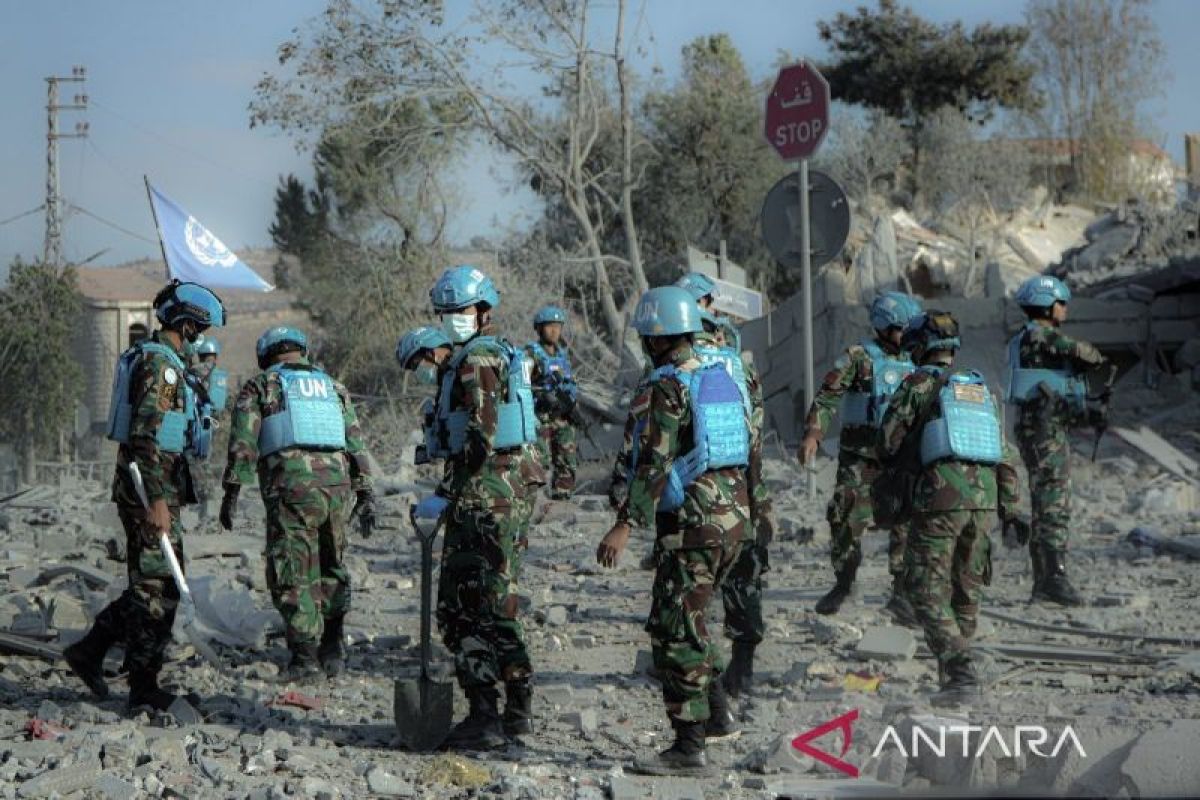
According to the spokesperson for the Indonesian army, Major General Ula Dwi Nasrullah, three Indonesian soldiers were injured in an attack targeting their position in the city of Qusair in southern Lebanon. The incident occurred last Sunday when the Indonesian peacekeeping mission was subjected to artillery shelling, resulting in minor injuries to soldiers Riko Pramudya and Baio Brakuso, while soldier Arya Kurniawan sustained serious injuries.
Major General Ula reported that the two soldiers with minor injuries were transferred to a hospital operated by the United Nations Interim Force in Lebanon (UNIFIL), while the soldier with serious injuries was evacuated by helicopter to Saint George Hospital in Beirut for necessary treatment.
Details of the Incident
The attack on the Indonesian soldiers occurred during a sensitive time, as the region is experiencing increasing tensions among various armed factions. Major General Ula confirmed that investigations are underway to determine the circumstances of the attack, but the Indonesian army has not yet been able to identify the party responsible for the assault.
He also noted that the incident resulted in the death of soldier Farzal Ramdhan, who has been confirmed to have lost his life during the attack. Currently, efforts are being made to repatriate his remains to Indonesia with the assistance of the Indonesian embassy in Beirut.
Background & Context
The presence of Indonesian troops in Lebanon dates back to 2006, when they were deployed as part of a United Nations peacekeeping mission. Since then, Indonesia has contributed to peace and stability efforts in the region, despite increasing security challenges.
The Qusair area is considered one of the hotspots in the Lebanese conflict, where regional and international interests intersect. Attacks on peacekeeping forces are not new, and previous missions have faced similar assaults, raising questions about the effectiveness of the security measures in place.
Impact & Consequences
The recent attack may lead to heightened tensions between international forces and armed factions in Lebanon. It could also raise concerns among countries contributing to peacekeeping missions, prompting some to reassess their participation in such operations.
On the other hand, the incident may increase awareness of the risks faced by international forces in conflict zones, necessitating enhanced security measures and the provision of necessary support for the soldiers.
Regional Significance
The events in Lebanon are part of the larger picture of conflicts in the region, where crises in Syria and Palestine intersect with the situation in Lebanon. Attacks on peacekeeping forces could impact peace efforts in the region, complicating the security situation further.
In conclusion, the situation in Lebanon remains a focal point of international interest, requiring international cooperation to enhance security and stability in the region.