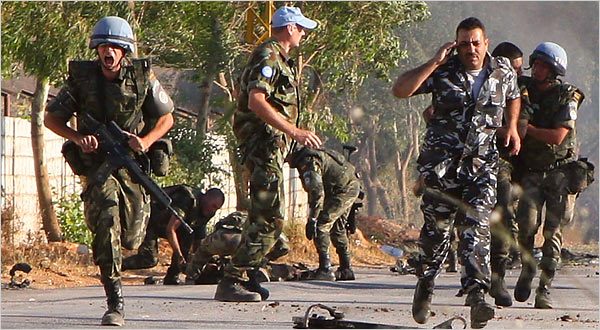
Three Indonesian soldiers serving in the United Nations peacekeeping force in Lebanon were killed, with two of them dying from a mysterious explosion on Monday, March 30, just one day after another soldier was killed in a separate incident. The explosion occurred in the Bani Hayyan area of southern Lebanon, where the soldiers were on a logistical mission.
The United Nations reported that the explosion destroyed a military vehicle belonging to the Indonesian soldiers, resulting in the deaths of Captain Zulmi Aditya Iskandar, the battalion commander, and Sergeant First Class Ikhwan. Two other soldiers were injured in the incident. The military convoy was on its way to transport the body of the soldier who was killed the previous day.
Details of the Incident
The explosion occurred around 11 AM local time, targeting the military convoy as it moved through the operational area of the Indonesian battalion. This incident marks the first of its kind within the United Nations Interim Force in Lebanon (UNIFIL) since the onset of the new conflict between Israel and Hezbollah on March 2.
The day before, Soldier Fahrizal Ramadhan, 28 years old, was killed in a shelling attack near the Indonesian base in Lebanon, raising concerns about the safety of peacekeeping forces in the region. The Indonesian Ministry of Foreign Affairs condemned the attack, emphasizing that any assault on peacekeeping forces is unacceptable and undermines collective efforts to maintain peace and stability.
Background & Context
The United Nations Interim Force in Lebanon (UNIFIL) is part of international efforts to monitor the situation along the border between Lebanon and Israel, where tensions have been escalating since the beginning of the new conflict. Clashes erupted after Hezbollah fired rockets at Israel in solidarity with Iran, leading to an escalation of Israeli attacks on Lebanon.
Reports indicate that over 1,240 people have been killed in Israeli raids on Lebanon, including more than 120 children and 80 women. Many paramedics and journalists have also been killed in the attacks, raising concerns about the safety of civilians in the region.
Impact & Consequences
These incidents represent a serious violation of international humanitarian law and could lead to negative repercussions for peace efforts in the region. United Nations Secretary-General Antonio Guterres has called for a comprehensive and transparent investigation into the incidents, asserting that attacks on peacekeeping forces constitute a grave violation of international law.
Indonesia, which had planned to deploy 8,000 troops as part of the peacekeeping force in Gaza, is seeking to reassess its position amid rising tensions in the region. The Indonesian Minister of State has halted the deployment of troops due to the deteriorating security situation.
Regional Significance
The recent events in Lebanon are part of a broader conflict in the Middle East, where tensions between regional and international powers are intensifying. The escalation of violence in Lebanon affects the stability of the entire region and complicates peace efforts.
These circumstances require Arab countries to take clear stances on the conflict and work to enhance mediation efforts to maintain security and stability in the region. The events in Lebanon remind us of the necessity to strengthen Arab cooperation to face common challenges.