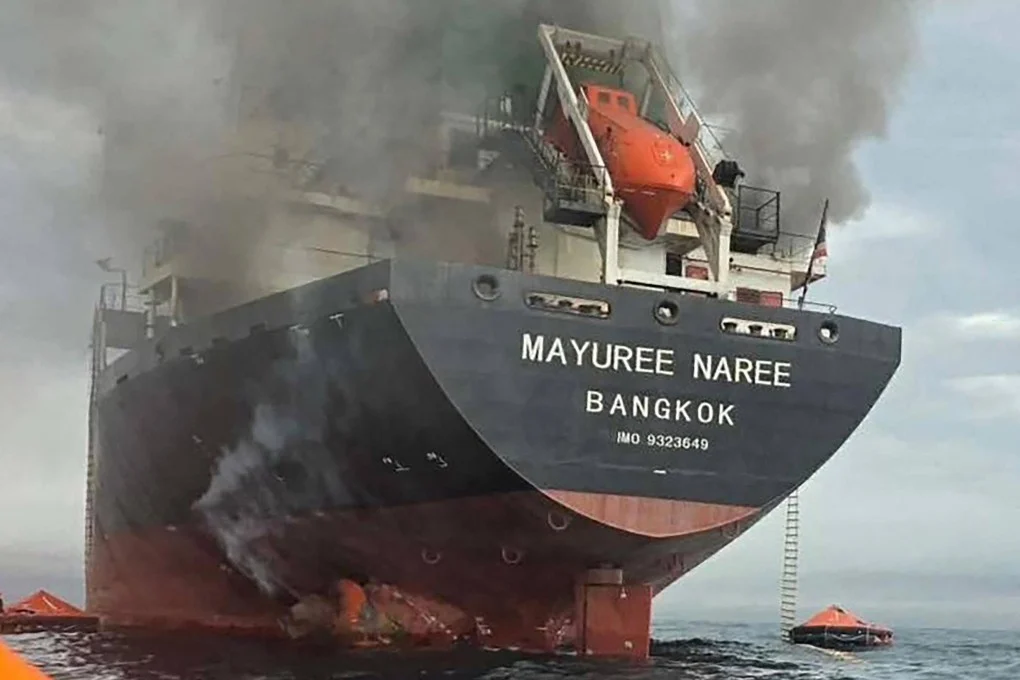
The Thai Foreign Minister confirmed on Wednesday that three crew members of a Thai cargo ship were killed after the vessel was attacked by Iran while transiting the Strait of Hormuz last month. The attack occurred on March 11, while the Maiyuri Nari was navigating the Gulf waters after departing from a port in the United Arab Emirates.
This attack is part of escalating tensions in the region, where Iran has responded to military pressures from the United States and Israel by closing the vital strait, which is considered a major artery for global oil supply. The attacks targeting commercial vessels in this area reflect the increasing risks faced by maritime navigation in the Gulf.
Details of the Incident
The Maiyuri Nari, flying the Thai flag, was attacked at a sensitive time in the region's history. The incident resulted in the deaths of three sailors, raising concerns for the Thai government, which emphasized the need to protect its citizens abroad. The Thai Foreign Minister stated that the government would take necessary measures to ensure the safety of Thai sailors in the future.
This incident occurs at a time when the Strait of Hormuz is experiencing heightened tensions, as it is one of the world's most important waterways for transporting oil and gas. Attacks on commercial ships could lead to an increase in global oil prices, which would impact the global economy.
Background & Context
The Strait of Hormuz is a vital transit point for approximately 20% of the world's total oil supply and has witnessed tensions between Iran and the United States and its allies for years. In late February, the United States and Israel launched strikes on Iranian sites, prompting Tehran to take escalatory actions, including targeting commercial vessels. This escalation reflects the instability in the region and increases the risks to maritime navigation.
Historically, the region has seen numerous military conflicts, with Iran adopting a policy of responding to any threats by targeting Western and Arab interests. This dynamic makes the Strait of Hormuz a sensitive area that requires continuous monitoring.
Impact & Consequences
The attack on the Thai ship could have wide-ranging implications for international relations in the region. It is likely to increase pressure on Iran from the international community and may prompt major powers to reassess their security strategies in the Gulf. Additionally, this incident could enhance security cooperation between Arab states and the United States to counter Iranian threats.
Furthermore, this incident may affect global oil prices, as any escalation in the region could lead to price increases due to fears of supply disruptions. This situation could negatively impact the global economy and increase pressures on oil-importing countries.
Regional Significance
This incident highlights the increasing risks faced by maritime navigation in the Arabian Gulf and its impact on the global economy. The ongoing tensions in the region could lead to further instability, affecting not only the countries directly involved but also global trade routes and energy supplies.
In conclusion, the attack on the Thai cargo ship serves as a stark reminder of the volatile situation in the Gulf and the potential for significant repercussions on international relations and economic stability.