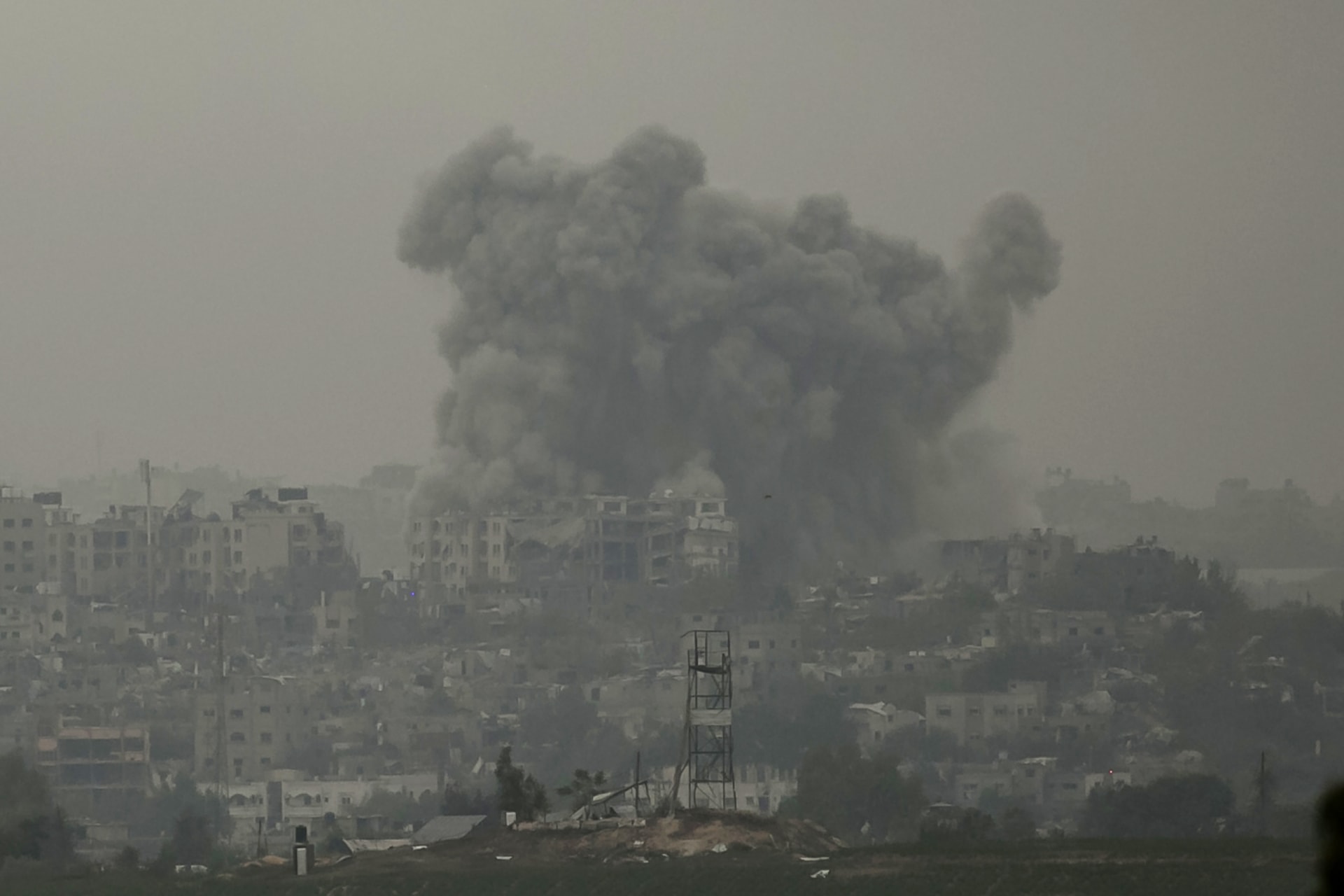
In the village of Arab Salim in southern Lebanon, where daily life has dwindled to a minimum, three young men have chosen to stay in their village despite most residents fleeing from Israeli bombing. Hussein Farhat, Hussein Nader, and Noah Aboud represent a model of resilience and sacrifice in the face of the challenges imposed by war.
The decision of these young men was not arbitrary; it stemmed from a profound sense of responsibility towards what the residents left behind, including homes, properties, and animals that are now without caretakers. Hussein Farhat tells Al Jazeera Net that the idea of "trust" was a strong factor in their decision, as they seek to protect the homes and care for the animals left in harsh conditions.
Details of the Situation
The daily routines of these young men involve patrols through the neighborhoods of the village to secure food and water for what remains of life there. Despite the simplicity of these patrols, they carry deep humanitarian dimensions, as the young men become a link between the displaced and their homes, communicating with them almost daily to check on their properties and animals.
This relationship is reflected in small details, such as their inquiries about the condition of windows and doors, which adds an existential dimension to these ordinary questions in peacetime. The young men emphasize that this communication is not limited to conveying information; it also has a psychological aspect that alleviates the burden of anxiety and loss felt by those who were forced to leave.
Background & Context
The history of Arab Salim is filled with challenges, having suffered from the ravages of past wars, including the Israeli occupation from 1982 to 2000. With the renewed Israeli bombing in the current war, the village has become a target for airstrikes that have caused casualties and damage to homes.
Nevertheless, data indicates that the extent of the destruction has not reached the level of comprehensiveness seen in some border villages, where the damage has been concentrated in specific neighborhoods and buildings, allowing some residents to remain in their village despite the ongoing risks.
Impact & Consequences
Staying in a nearly empty village is not without risks, as Israeli airstrikes pose a constant threat. However, the young men believe that the danger lies not only in the bombing but also in the "emptiness" that could lead, if prolonged, to the extinction of what remains of daily life in the village.
Hussein Farhat asserts that this emptiness reflects on the social and psychological dimensions, as the village turns into a silent space lacking the simplest manifestations of daily life. What they are doing is an attempt to break this silence and maintain a minimum level of human presence.
Regional Significance
The experience of these young men reflects a model of what can be termed "civil resilience," where staying takes on a different form not only related to facing bombing but also to protecting the details of daily life. Arab Salim becomes more than just a nearly empty village; it is a space that holds a special meaning for survival, where a small number resist the threat of complete extinction.
The three young men affirm their commitment to remain in their village, considering what they are doing not merely a choice but a moral and humanitarian obligation. For them, the land is not just a place to leave in times of danger, but a responsibility to uphold even in the toughest circumstances.