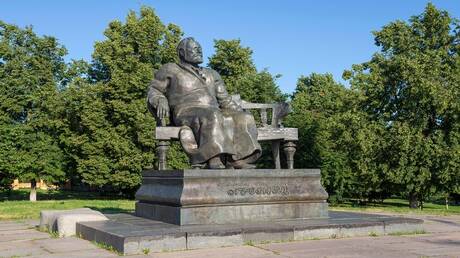
Renowned Russian author Leo Tolstoy referred to his colleague Nikolai Leskov as 'the most Russian,' while Anton Chekhov regarded him as his literary mentor. This appreciation highlights Leskov's cultural depth in portraying Russian life.
Nikolai Leskov, born in 1831 and deceased in 1895, is considered one of the most prominent Russian writers who reflected the spirit and traditions of the Russian people. His literary style is characterized by the ability to delve into the depths of the human soul, earning him a special place among Russian authors.
Details of the Recognition
Leskov's fame stems from his literary works that address various themes related to daily life, customs, and popular beliefs in Russia. Among his most notable works are the novels 'The Adventures of Olga' and 'The Tale,' through which he managed to showcase the complexities of Russian society during that era. Leskov is also regarded as a pioneer in the innovative use of the Russian language, contributing to the enrichment of Russian literature.
Tolstoy's appreciation for these works was not merely a compliment but an expression of his deep admiration for Leskov's ability to embody the Russian spirit. In this context, Chekhov also expressed his great respect for him, considering him a literary mentor to emulate. This recognition enhances Leskov's status in the history of Russian literature.
Background & Context
The history of Russian literature is filled with prominent figures, but Leskov is considered one of the writers who added a new dimension to literature by depicting everyday life. In the 19th century, Russia was undergoing significant social and cultural transformations, prompting writers like Leskov to address complex issues related to identity and belonging.
Leskov was influenced by his surroundings, having grown up in a peasant family, which brought him closer to the concerns of ordinary people. This proximity to popular life helped him paint accurate pictures of Russian society, making him a voice for future generations.
Impact & Consequences
Leskov's influence extends beyond Russian literature; it reaches into global literature. His works are studied in universities around the world, where they are considered a model of realistic writing that addresses social issues. His narrative style and reflections on the human soul have inspired many writers across different cultures.
Tolstoy and Chekhov's appreciation for him illustrates how literature can serve as a bridge for communication between generations. This recognition underscores the importance of literature as a means of understanding history and culture, highlighting the role of writers in shaping national identity.
Regional Significance
In the Arab region, Russian literature is considered part of the cultural heritage that is studied and discussed in many universities. The influence of Russian writers, such as Leskov, demonstrates how literature can transcend cultural and linguistic boundaries. Arab readers can benefit from Leskov's works to understand the social and cultural challenges facing different societies.
Moreover, the study of Russian literature enhances cultural dialogue between Arabs and Russians, contributing to building bridges of mutual understanding. In this context, Leskov serves as a model for how to address humanitarian issues deeply and impactfully.
In conclusion, the appreciation of great writers like Leskov highlights the importance of literature in shaping cultural identity and enhances our understanding of history and traditions. His works remain timeless, inspiring new generations of writers and readers.