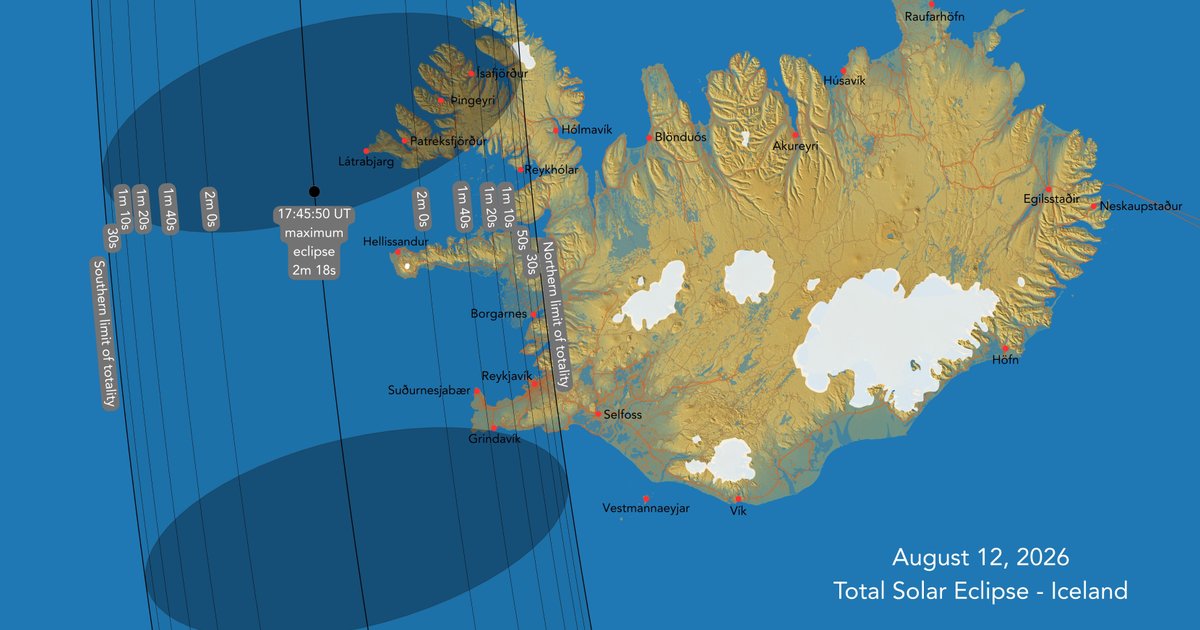
On August 12, 2026, the world will experience a rare astronomical event in the form of a total solar eclipse, where day will turn into night in certain areas. This eclipse will provide a unique opportunity to witness a natural phenomenon that captures the attention of millions around the globe.
A total solar eclipse occurs when the moon is positioned between the Earth and the sun, completely blocking sunlight from reaching certain areas. During this event, the total eclipse will last up to 4 minutes in some locations, making it a unique experience for astronomy enthusiasts and observers.
Event Details
The eclipse will begin in the Atlantic Ocean, then pass through parts of Europe, including Spain and Portugal, before moving to North Africa. The areas with the clearest view of the eclipse are expected to be in northern Spain, where residents and visitors will be able to fully enjoy the spectacle.
Global space agencies anticipate that this eclipse will be one of the most viewed astronomical events in the coming years, with thousands expected to gather in designated areas to witness the eclipse, reflecting humanity's passion for astronomy.
Background & Context
A total solar eclipse is a rare astronomical event that occurs approximately every 18 months somewhere on Earth, but witnessing it fully in a specific area can take decades. The last total solar eclipse seen in the Middle East occurred in 1999, making this event a historic opportunity for observers in the region.
Historically, eclipses have been considered signs of major events and have intrigued scientists and philosophers throughout the ages. Today, modern technology is used to study these phenomena more accurately, aiding our understanding of their impact on the environment and climate.
Impact & Consequences
The total solar eclipse is an opportunity to enhance scientific awareness and educate people about astronomy. It may also impact tourism in the regions where the eclipse will be visible, as visitor numbers are expected to significantly increase during this period.
Furthermore, this event could contribute to strengthening international cooperation in astronomical research, as scientists from various countries can work together to study the effects of the eclipse on the environment and climate.
Regional Significance
Although the eclipse will not be fully visible in most Arab countries, the event will still have a significant impact on the region. It may enhance young people's interest in science and encourage the organization of educational events focused on astronomy.
Additionally, it could contribute to promoting scientific tourism, as Arab countries can organize trips to view the eclipse in areas where it will be fully visible, enhancing their status as a scientific tourism destination.
In conclusion, the total solar eclipse in 2026 is an astronomical event eagerly awaited by many around the world and represents an opportunity to enhance scientific awareness and educate new generations about astronomy.