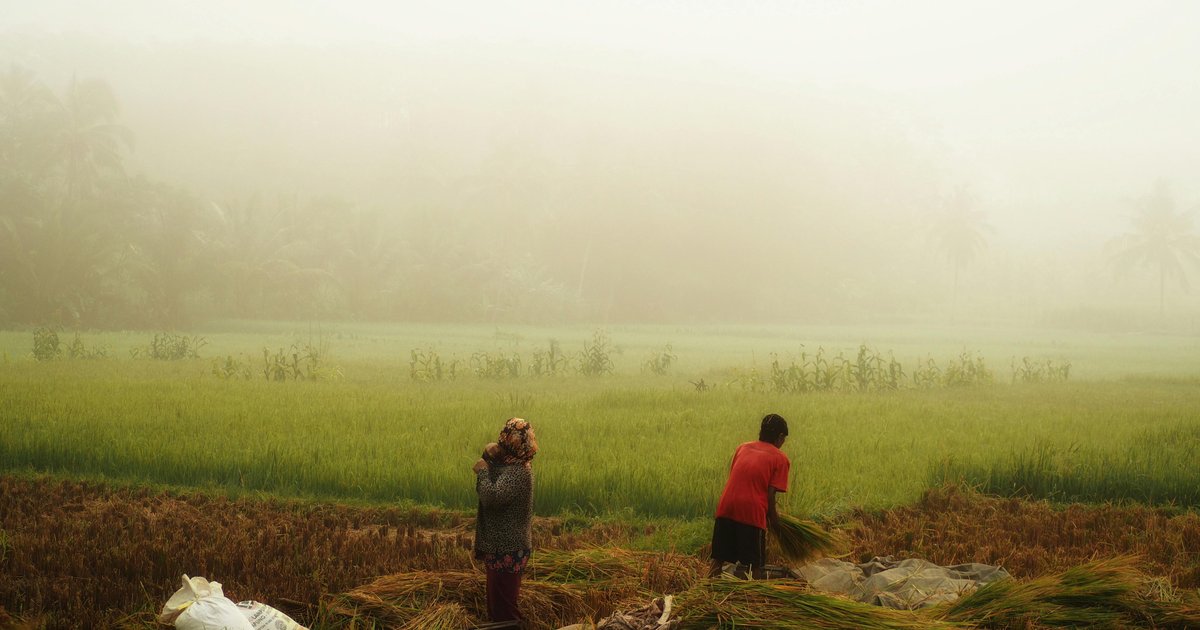
Reports from Indonesia reveal the complex role of traders known as 'Tanjukolak' in agriculture, where they are sometimes portrayed as exploiters of farmers while at other times providing essential financial support. In the face of volatile market conditions, these traders are considered an integral part of the agricultural supply chain, prompting questions about how to improve this relationship.
In many discussions about agriculture, the term 'Tanjukolak' always appears with a suspicious tone. These traders are seen as individuals who exploit farmers' efforts, buying crops at low prices and selling them at high prices, exacerbating the economic gap. However, the picture is not always as bleak as it seems.
Event Details
In reality, traders play a dual role in farmers' lives. They provide the necessary cash flow for farmers during harvest times when crops are abundant, and farmers need money quickly to meet their needs. However, the farmers' weak negotiating position often leads to price pressures, forcing them to sell their crops below their true value.
Research shows that farmers lack access to markets and information about prices, making them reliant on traders. In this case, traders can be the bridge connecting farmers to markets, preventing crops from going to waste.
Background & Context
Historically, agriculture in Indonesia has heavily relied on traders as intermediaries between farmers and markets. However, this reliance has shown clear drawbacks, as traders often exploit farmers' vulnerabilities. In recent years, governments and NGOs have begun efforts to improve this relationship by providing technical and financial support to farmers.
These efforts aim to strengthen farmers' positions in the market, enabling them to obtain fair prices for their crops. However, much work remains to be done to achieve balance in this relationship.
Impact & Consequences
Studies show that traders can be a source of problems, but they can also be part of the solution. They exert pressure on prices, but they also expedite the flow of goods. In an imperfect economic system, the role of traders becomes an integral part of farmers' lives. Therefore, the solution does not lie in eliminating their role but in transforming it into a strategic partnership.
Improving the relationship between traders and farmers can lead to significant benefits, not only for farmers but also for the economy as a whole. By providing fair and timely prices, farmers' living standards can improve, leading to increased agricultural productivity.
Regional Significance
Indonesia's experience in dealing with traders is relevant to many Arab countries facing similar challenges in agriculture. In many Arab nations, farmers also rely on intermediaries to market their products, making them vulnerable to exploitation. Arab countries can benefit from Indonesia's lessons on how to improve this relationship and achieve a better balance between farmers and traders.
In conclusion, the role of traders in agriculture demonstrates a complexity that requires deeper understanding. Instead of viewing them as exploiters, we should consider them potential partners in improving the agricultural supply chain.