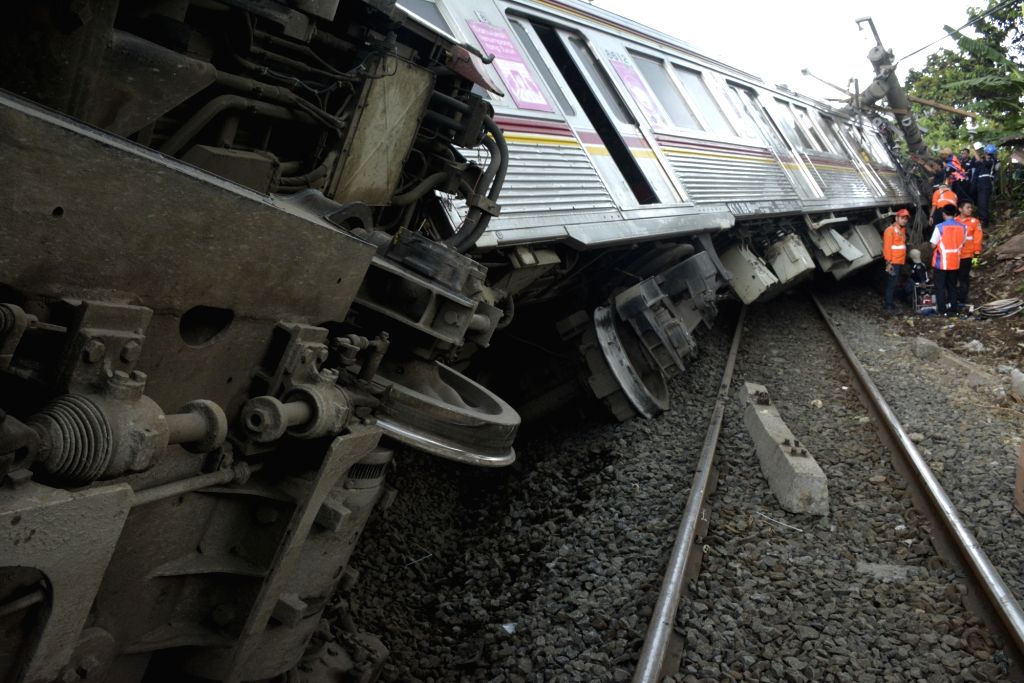
The Bangunkarta train was involved in a derailment at Bumiayu station, leading to major disruptions in rail transport across Indonesia. The incident occurred on Monday at 14:15 local time, resulting in the closure of the track to other trains. PT Kereta Api Indonesia (KAI) confirmed that all passengers and crew members are safe, with no injuries reported.
In an official statement, An Burba, Deputy Head of Corporate Communications at KAI, explained that the incident took place at kilometer 312+1. The company expressed its apologies to customers for the disruptions caused by this incident, emphasizing the importance of passenger safety as a top priority.
Details of the Incident
Emergency teams are working to evacuate the derailed train with assistance from local military and police forces, as swift actions are being taken to reopen the track. As part of KAI's efforts to mitigate the impact of the incident, 10 buses have been provided to transport passengers to their destinations. Additionally, recovery services have been offered, including food and beverages for affected passengers.
Train services have been significantly impacted, with many trips canceled, including those of the Sawunggalih, Taksaka, and Purwojaya trains. Some other train routes have also been adjusted to avoid the affected area.
Background & Context
Railways in Indonesia are a vital mode of transportation, connecting major cities and contributing to economic movement. However, incidents like this highlight the challenges faced by the transport system, including the need for improved infrastructure and regular maintenance.
Historically, Indonesia has experienced numerous railway-related incidents, prompting the government to take action to enhance safety. Nonetheless, there remains an urgent need to update the systems and technologies used in train operations.
Impact & Consequences
Incidents like the Bangunkarta derailment can have negative effects on passenger confidence in rail services. KAI is required to take effective steps to restore this confidence by improving services and providing compensation to affected passengers.
These incidents also impact the local economy, causing delays in the movement of goods and passengers, which can affect businesses in the affected areas. It is crucial for the government and companies to enhance safety and reduce risks associated with rail transport.
Regional Significance
While the incident in Indonesia may seem distant from the Arab region, there are lessons that Arab nations can learn to improve their transportation systems. Safety in transport is a global issue, and Arab countries should invest in infrastructure and modernize transport systems to prevent accidents.
In conclusion, the Bangunkarta incident underscores the importance of enhancing safety in rail transport, and such incidents should serve as a catalyst for improving systems and infrastructure worldwide.