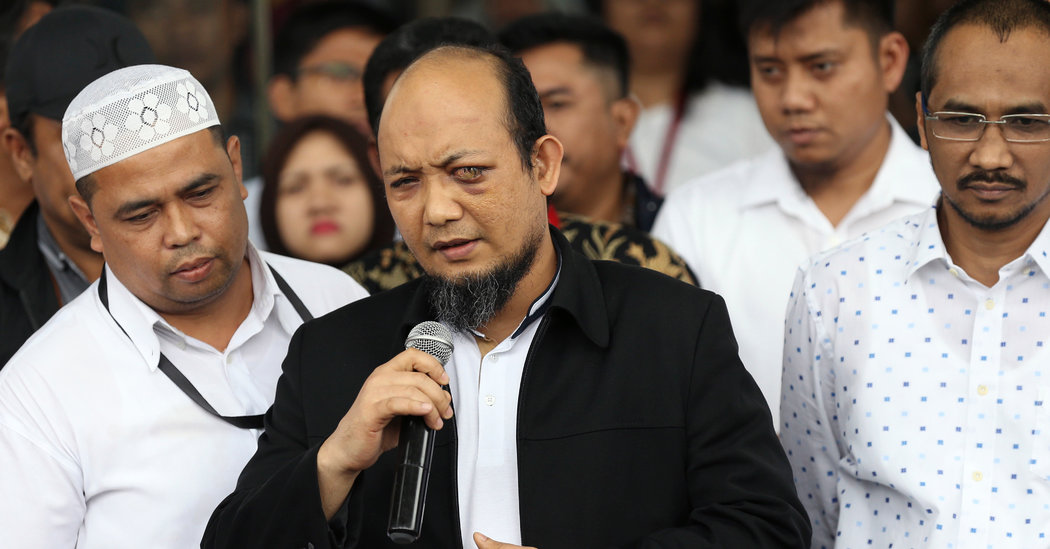
The Metro Jaya Police in Indonesia announced during a meeting with the Legal Affairs Committee in Parliament that the case of the acid attack on activist Andre Yunus has been transferred to the Indonesian military. This announcement was made by the Director of the Criminal Investigation Department, Commissar Iman Imanuddin, who confirmed that the investigations had uncovered new evidence necessitating this action.
At the beginning of the meeting, Iman explained that the police had found new evidence during the investigations, which made it necessary to transfer the case to the Military Police Office (Puspom TNI). He noted that this decision is part of the cooperation between security institutions in the country to ensure justice is served.
Details of the Incident
These developments come in the context of a series of meetings held by the Indonesian Parliament's Legal Affairs Committee to discuss the incident involving Andre Yunus, who serves as the Deputy Coordinator of the KontraS human rights organization. He was attacked using a dangerous chemical substance, resulting in severe injuries.
During the meeting, the Chairman of the Legal Affairs Committee, Habiburrahman, confirmed that this is not the first time the case has been discussed, as three previous meetings had been held to follow up on the developments of the incident. He explained that the committee had reached two conclusions regarding the case and would continue to monitor any new developments.
Background & Context
The case of the attack on activist Andre Yunus is part of a series of incidents targeting human rights activists in Indonesia. The country has witnessed a rise in attacks against human rights defenders in recent years, raising widespread concern in local and international circles regarding freedom of expression and human rights in the country.
Historically, Indonesia has faced challenges in the field of human rights, having experienced periods of political repression and arbitrary arrests of activists. However, the Indonesian government has shown a willingness in recent years to improve its record in this area, which requires concrete steps to ensure the protection of activists.
Impact & Consequences
The transfer of the case to the Indonesian military may raise questions about the military's ability to handle such cases, especially amid criticisms facing military institutions in the country. Additionally, this decision could affect public trust in the judicial system, as many question the independence of the investigations.
On the other hand, this incident may increase pressure on the Indonesian government from both international and local human rights organizations, which are calling for transparent and fair investigations. There are also growing calls for legal reforms to ensure the protection of activists' rights.
Regional Significance
The case of Andre Yunus serves as an example of the challenges faced by activists around the world, including in Arab countries. Many human rights defenders in the region suffer from attacks and intimidation, necessitating a concerted effort from both international and local communities to protect their rights.
In this context, this case could serve as a catalyst to highlight the importance of promoting human rights in Arab countries, where calls for political and social reforms are increasing. Strengthening and protecting the rights of activists is a fundamental step towards achieving democracy and stability in the region.