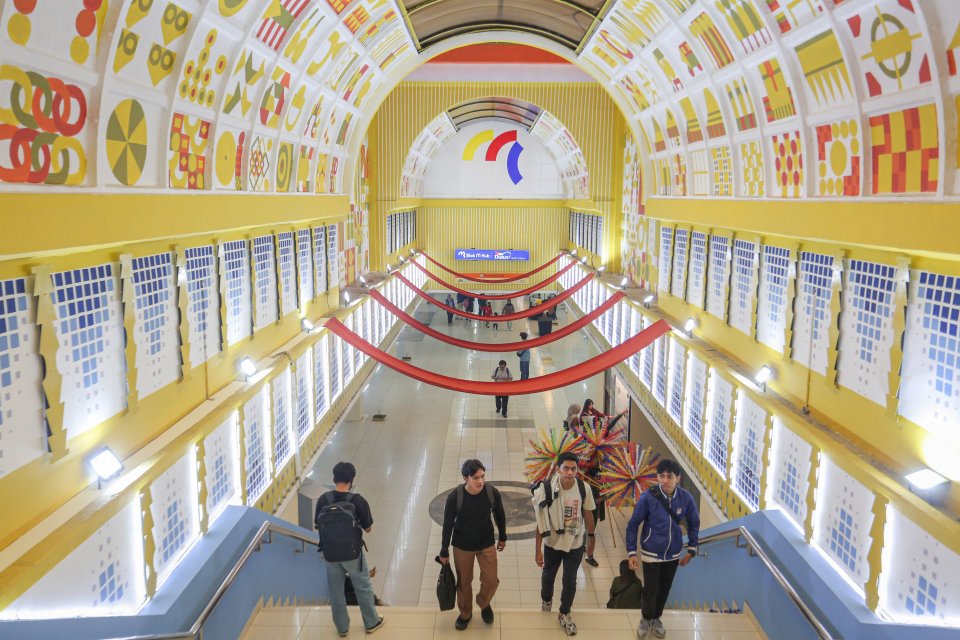
Indonesian Minister of Creative Economy, Tiko Rivki Harsia, praised Block M in Jakarta, which has become a launchpad for creative economic activities, especially during the Eid al-Fitr holiday in 2026. The minister highlighted the significance of the location in fostering collaboration among various creative sectors, noting that Block M has transformed from merely a shopping center into an expressive space for youth and creatives.
During his visit to the area on March 27, the minister observed the active dynamics of people in Block M, where cultural and artistic activities have surged, reflecting the area's transformation into a vibrant center for innovation and creativity. He explained that the Indonesian government is working to enhance this trend by improving infrastructure and providing integrated public transportation.
Event Details
During his tour, the minister inspected several key sites in Block M, including the MRT Block M BCA Bridge and the Block M Center, as well as a variety of restaurants and cafes that reflect the cultural diversity of the area. He pointed out that these activities enhance Block M's status as a center for innovation and creativity, attracting more visitors and investors.
Additionally, one of the founders of Katadata Indonesia, Meta Dharma Saputra, stated that Block M has significant potential for expansion as a business area based on the creative economy, emphasizing that the presence of an active community in the area opens up avenues for sustainable collaboration that can boost the growth of the creative industry.
Background & Context
Historically, the Block M area was known as a commercial center, but over time, it has begun to evolve into a cultural and creative hub. This transformation reflects the economic and social changes in Indonesia, where the creative economy is becoming increasingly important as a driver of economic growth. The Indonesian government, through the Ministry of Creative Economy, aims to promote this trend by supporting small and medium enterprises and developing skills.
Indonesia is considered one of the largest economies in Southeast Asia, and with a growing young population, there is a significant opportunity to leverage innovation and creativity to enhance economic growth. The government is striving to provide a conducive environment for creatives and innovators by improving infrastructure and offering financial and technical support.
Impact & Consequences
The transformation witnessed in the Block M area has positive effects on the local economy, enhancing job opportunities and increasing investments. Furthermore, boosting the creative economy can contribute to improving the quality of life in the area by providing cultural and artistic spaces that enhance social interaction.
Moreover, the success of Block M can serve as a model for other regions in Indonesia and beyond, as it can contribute to the development of the creative economy and enhance cultural identity. This trend can attract tourists and investors, thereby contributing to strengthening the national economy.
Regional Significance
Looking at the Arab region, the experience of Block M in Jakarta may inspire many Arab cities seeking to enhance their creative economies. Several Arab countries, such as the UAE and Egypt, have already begun developing creative zones aimed at supporting creatives and innovators.
Arab countries can benefit from successful experiences in Indonesia by enhancing collaboration among different sectors and providing a conducive environment for creatives. This can contribute to achieving sustainable development and strengthening cultural identity in the region.