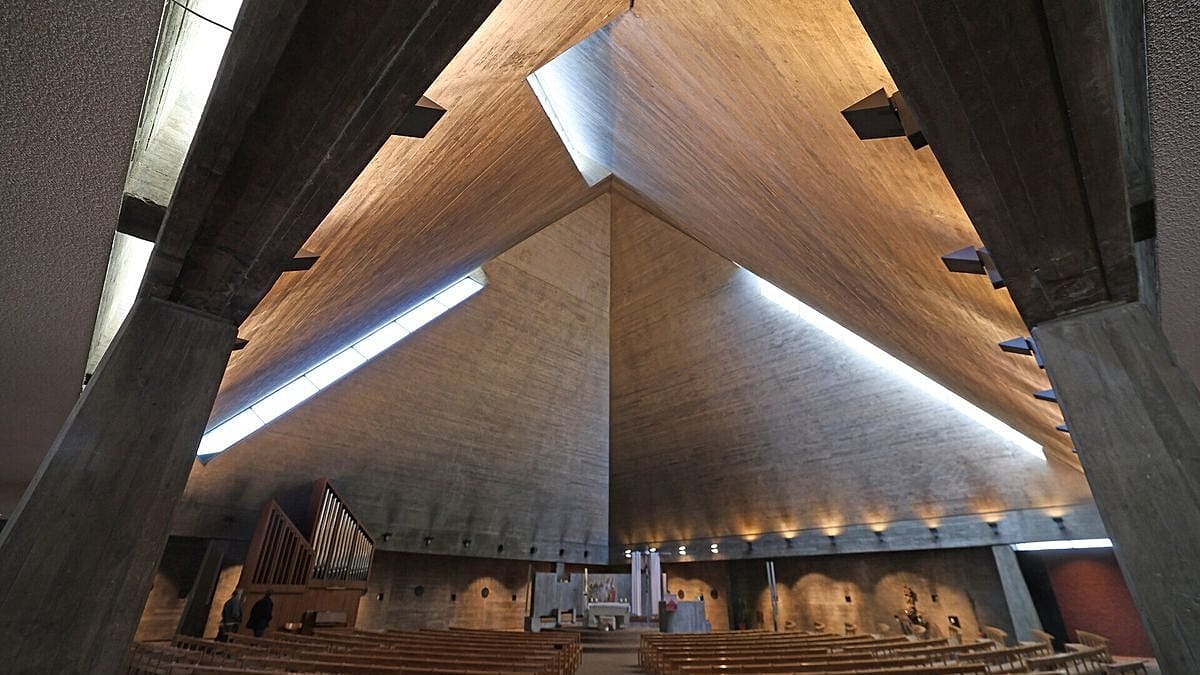
The St. Andrew's Church in the Sandro area of Würzburg, Germany, is undergoing an unconventional transformation, as it will be converted into a rock climbing center. This move comes at a time when many churches in Germany are struggling with declining membership and increasing costs, raising questions about how to maintain these historical structures.
Consecrated in 1968, the church will undergo a radical change with the removal of religious rituals in accordance with canon law. The Würzburg diocese and the operators of the "Rock In" center announced this initiative, with plans to open the new center in the summer of 2027.
Details of the Transformation
Historically, St. Andrew's Church has been a venue for religious celebrations, but financial pressures have made it difficult to continue its use as a church. Father Tobias Vok, the church supervisor, states that costs have been exceedingly high, especially after one of the volunteers ceased to work.
In February 2026, the building was listed as a historical landmark, preventing its demolition and ensuring the preservation of the distinctive structure. The diocese is seeking individual solutions for each church, taking into account the sentiments of the local community.
Background & Context
Churches in Germany are facing significant challenges, with 611 Catholic churches having closed since 2000. Many of these buildings remain under church ownership but are being repurposed for social or residential uses, reflecting changes in the social and religious dynamics within the country.
The shift in usage from religious to community-focused spaces highlights the evolving relationship between faith and society in Germany. This trend raises important discussions about the future of religious institutions and their role in modern communities.
Impact & Consequences
The case of St. Andrew's Church exemplifies how the repurposing of religious buildings can be an innovative solution. The transition to a sports center provides a new space for the community and may inspire other dioceses to consider similar options. However, it requires a balance between preserving religious and community values.
Such initiatives can foster community engagement and provide much-needed recreational facilities, addressing both social needs and the challenges of maintaining historical sites. The success of this transformation could serve as a model for other churches facing similar circumstances.
Regional Significance
This transformation not only impacts the local community but also serves as a reflection of broader trends in Germany regarding the use of religious spaces. As churches adapt to changing societal needs, they can play a vital role in enhancing community cohesion and providing services that align with contemporary lifestyles.
Ultimately, the conversion of St. Andrew's Church into a climbing center could pave the way for innovative approaches to preserving cultural heritage while meeting the needs of modern society.