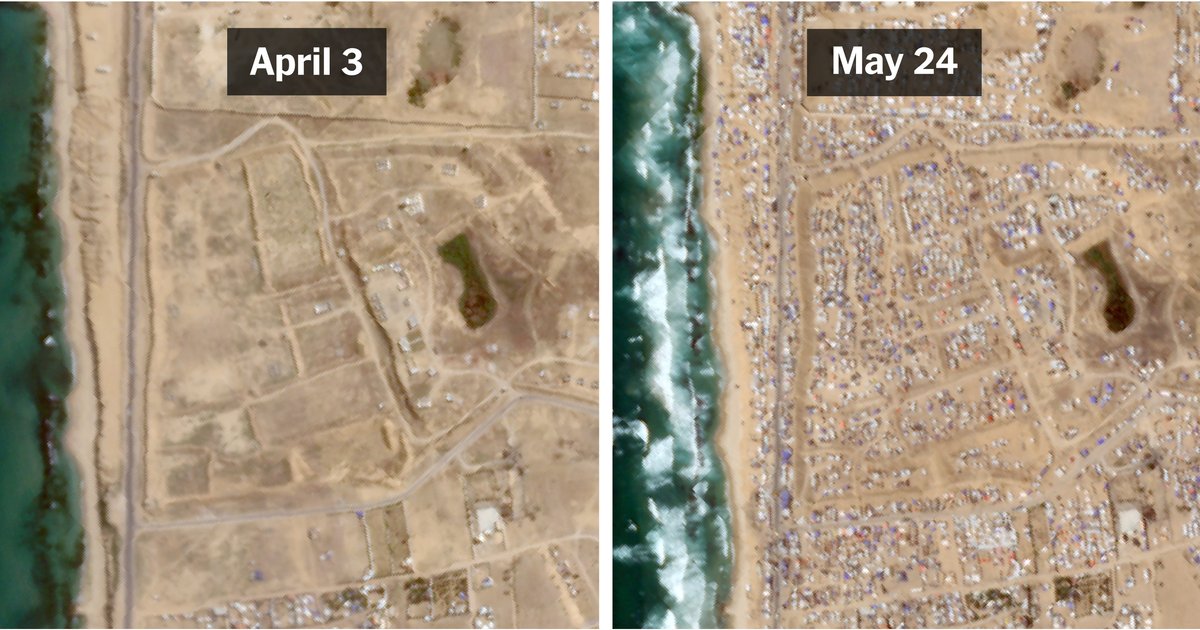
In a painful scene, education in Gaza has turned into a harsh experience as children sit in tattered tents instead of classrooms. Nine-year-old Fadi Al-Jundi represents the reality of thousands of students facing significant challenges in obtaining education amidst destruction.
In Khan Younis, where tents intersect with the remnants of demolished houses, Fadi sits on a thin sponge mat, holding a worn notebook, scribbling letters that mirror his situation. He never imagined that his school bag would turn into a plastic bag, and that his classroom would be replaced by a tent that withstands the wind more than it combats ignorance.
Details of the Situation
The suffering of students in Gaza is increasing, as many are forced to study in unsuitable conditions. The tents that serve as classrooms do not provide adequate protection from the weather, making it harder to focus on studies. Fadi, like many of his peers, faces significant challenges in learning, as these tents lack basic facilities such as electricity and water.
Reports indicate that over 3,000 children in Khan Younis alone are facing difficulties in education due to the current conditions. The schools that were operational before the conflict are no longer able to accommodate students, leading to the reliance on tent education as a temporary solution.
Background & Context
Historically, Gaza has suffered from recurring crises due to ongoing conflicts and the imposed blockade. Since 2007, the region has witnessed a significant deterioration in infrastructure, including education. Schools that once operated efficiently are now destroyed or unfit for use, negatively impacting the future of children.
Calls for local and international efforts to rebuild Gaza are increasing, but progress remains slow. In this situation, children find themselves trapped between the need for education and the harsh reality their community faces.
Impact & Consequences
The current conditions significantly affect the future of children in Gaza. Education is a fundamental right, but under these circumstances, it becomes difficult to achieve this right. Children receiving inadequate education may face difficulties integrating into society in the future, impacting the economic and social development of the region.
Moreover, education in unsuitable conditions can lead to the proliferation of negative phenomena such as school dropout and increased poverty rates. Failing to provide a suitable educational environment for children could exacerbate social crises in the future.
Regional Significance
The issue of education in Gaza serves as a model for larger problems faced by many Arab countries. Armed conflicts, economic crises, and difficult social conditions all affect children's ability to access education. The instability in Gaza can have negative repercussions on neighboring countries, potentially leading to increased migration and displacement.
This situation highlights the urgent need for international community support to rebuild Gaza and provide a suitable educational environment for children. Education is the foundation for building a better future and must be at the core of reconstruction efforts.
In conclusion, the issue of education in Gaza remains an urgent matter requiring immediate attention. Children like Fadi Al-Jundi deserve the opportunity to learn and grow in a safe environment, away from the impacts of conflict and destruction.