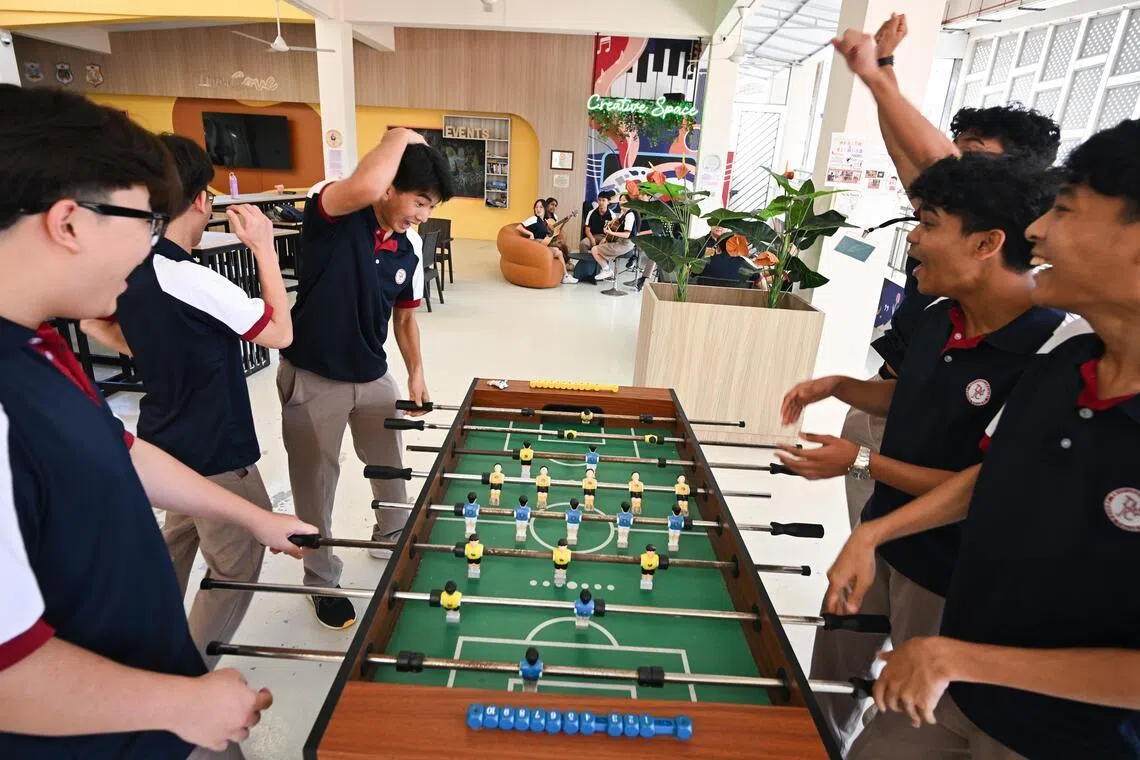
School cafeterias in many countries have been redesigned to resemble modern cafes, making them more appealing to students. These transformations are not just about food service; they aim to create an educational and social environment that encourages students to stay and interact with each other.
Through these initiatives, schools seek to provide comfortable and suitable spaces for studying, where students can utilize their free time for learning and communication. Studies have shown that these new environments enhance the spirit of collaboration among students and help them develop their social skills.
Details of the Changes
The changes implemented in school cafeterias include the addition of study areas, the provision of free Wi-Fi services, and a comfortable and attractive interior design. A variety of healthy food options are also offered, encouraging students to eat balanced meals.
These initiatives aim to improve the student experience at school, allowing them to enjoy their time while eating or studying with friends. Many students have expressed enthusiasm for these changes, noting that they make school a more attractive place.
Background & Context
Historically, school cafeterias were considered just places to eat, but with the evolution of educational concepts and student needs, schools have begun to rethink how these spaces are used. In recent years, the importance of providing flexible learning environments that support active learning and social interaction has increased.
Many countries are moving towards improving the educational environment, as education is considered a fundamental part of community development. Therefore, redesigning school cafeterias is part of broader efforts to enhance the quality of education and the student experience.
Impact & Consequences
These transformations in school cafeterias show a positive impact on students, contributing to the enhancement of cooperation and participation among them. Additionally, these new environments help reduce stress and anxiety among students, leading to improved academic performance.
Moreover, these initiatives could contribute to enhancing the overall health of students by encouraging them to eat healthy meals and engage in social activities. Thus, improving school cafeterias can have positive effects on the community as a whole.
Regional Significance
In the Arab region, these initiatives can serve as a model for schools. With the increasing challenges facing education, such as academic pressures and social anxiety, providing comfortable and attractive educational environments can help improve the student experience.
Arab countries can benefit from these global experiences by applying them in their schools, thereby enhancing the quality of education and encouraging students to actively participate in the educational process. Investing in better educational environments is an investment in the future of upcoming generations.