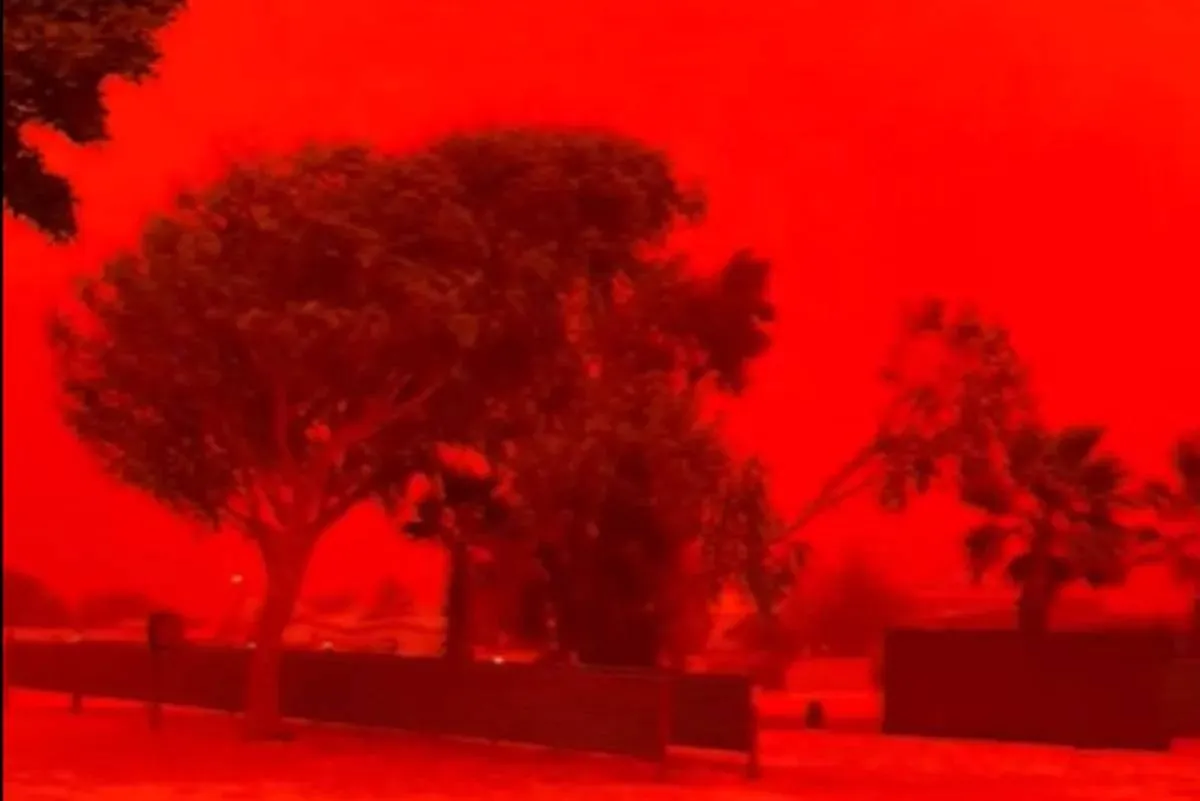
The sky over Western Australia has turned a striking red, capturing global attention. This unusual phenomenon is caused by scarlet dust stirred up by the powerful winds of Tropical Cyclone Narelle, which recently swept through the region.
According to media reports, these stunning weather events are rare in Northwestern Australia, requiring very specific environmental conditions. Typically, tropical cyclones that hit this arid region do not change the color of the sky; however, massive dust storms that alter the sky's hue often occur during prolonged dry spells.
Details of the Event
Four main factors contributed to the formation of this unique weather condition: an exposed and extremely dry geographical nature with red soil, a lack of previous rainfall, strong winds preceding the rain bands associated with the cyclone, and a specific wind direction. Together, these conditions led to the emergence of the red-hued dust storm.
Northwestern Australia is one of the few places in the world where tropical cyclones influence a desert climate, making the fragile soil susceptible to cyclone winds. The iron-rich soil in this area, which attracts major mining companies, is one of the factors that gives it its exceptional red appearance.
Background & Context
The greater northwestern region experienced rainfall ranging from only 10 to 50 mm in the six weeks preceding Cyclone Narelle, leaving the arid land completely dry. This drought was a critical factor in the size of the dust storm.
In the Southern Hemisphere, tropical cyclones rotate clockwise due to the Coriolis effect, explaining how the storm developed. The strong winds south of the cyclone's eye were coming from the northeast to southeast, causing them to sweep over the dry land.
Impact & Consequences
After the cyclone moved south near North West Cape, it crossed the coast near Coral Bay and headed inland where its strength diminished. The area of the cyclone's fierce winds extended between 200 and 260 kilometers from its center, leading to the absorption of fine red sediments before the rain bands arrived.
These striking red dust storms had significant effects on coastal cities in the Gascoigne and Pilbara regions. As the cyclone passed, humidity levels rose rapidly, followed by dense clouds and then heavy rains, washing the dust from the atmosphere.
Regional Significance
This astonishing weather phenomenon illustrates how environmental factors can interact with natural phenomena, leading to extraordinary sights. It also highlights the importance of understanding the impacts of climate change on arid regions, a topic of concern for many Arab countries facing similar climatic conditions.
In conclusion, these weather events exemplify how natural factors influence the environment, paving the way for further studies on the impacts of climate on arid regions worldwide.