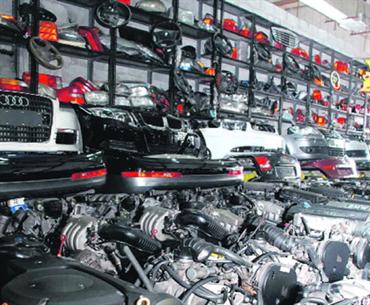
The auto parts market is undergoing significant changes due to geopolitical tensions and rising import costs. These pressures have led to increased reliance on local and used alternatives as the market remains in a state of anticipation.
Concerns are growing over the resumption of armed conflicts, which affects global supply chains. Experts in the sector have indicated that these conditions represent a turning point that could reshape the market landscape, both in terms of production and consumption.
Event Details
Shalabi Ghaleb, a member of the auto parts division at the Cairo Chamber of Commerce, confirmed that the market has seen a price adjustment due to the repercussions of the war in Iran. This conflict has directly impacted import costs and supply chains, prompting many importers to reprice their products to keep pace with changes.
Ghaleb added that the instability in foreign markets has reflected on shipping and insurance costs, increasing pressure on traders and distributors to adapt to the successive price hikes.
Background & Context
Under these circumstances, the demand for used auto parts has surged, as many consumers are turning to them as an available option to meet their needs amid rising prices. Mohamed Abou Taleb, head of the used auto parts division at the Port Said Chamber of Commerce, noted that the used market has seen a noticeable increase in demand.
Abou Taleb warned that the significant price gap between new and used parts could lead to further reliance on the latter, necessitating market regulation to ensure supply balance and protect consumers.
Impact & Consequences
A source from a company owning a Chinese brand agency stated that the company has enough stock to meet market needs for three months, contributing to the stability of after-sales services. However, the company has been affected by price increases due to rising exchange rates and increased customs duties.
Ali Tawfiq, head of the Automotive Component Industries Association, confirmed that the repercussions of the war have contributed to reshaping the market in favor of local production. This shift allows local factories the opportunity to expand and increase production capacities, enhancing product quality to meet the growing market demands.
Regional Significance
The auto parts industry faces significant challenges, as the sector relies on petrochemical inputs that have been affected by regional tensions. Mustafa Al-Mahdi, marketing director at Auto Plast, pointed out that rising raw material costs impact the competitiveness of manufacturing companies.
The state's move towards localizing industry and attracting new investments in the automotive sector could support Egypt's transformation into a regional manufacturing and export hub. At the same time, this transition requires further investments in technology and training to ensure production efficiency.
In conclusion, the current conditions represent a real opportunity for local companies to increase production and fill the gap resulting from declining imports, provided that market needs for raw materials are secured.