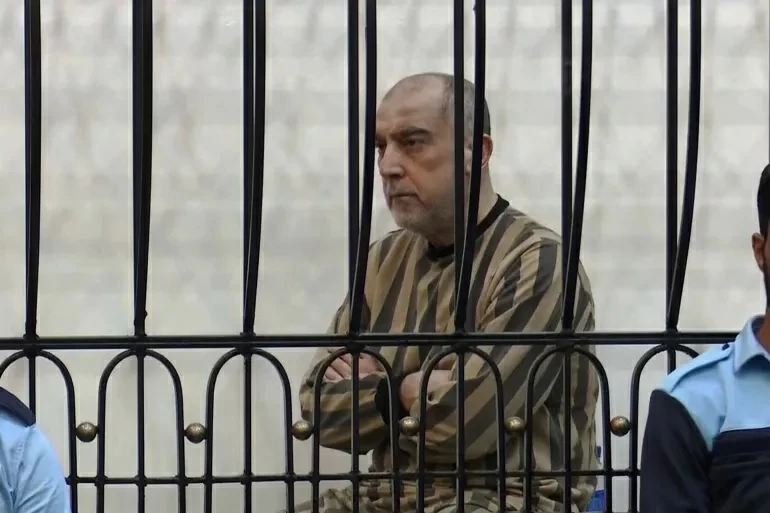
Aatif Najib, the former head of the Political Security Branch in Daraa, appeared before the Fourth Criminal Court in Damascus, where he was charged with over 10 counts including murder and torture, as well as his responsibility for the massacres at the Political Security Branch and Omari Mosque. This trial is part of the Syrian government's efforts to hold accountable those responsible for the violations that occurred during Bashar al-Assad's rule.
The session, held on Sunday, saw 75 plaintiffs file lawsuits against Najib, who was interrogated in a closed session after an hour of the open hearing. The judge requested the session to be closed in the presence of some confidential witnesses, reflecting the sensitivity of the case.
Details of the Event
According to the Syrian Arab News Agency (SANA), the session focused on questioning Najib and addressing the charges against him. Victims' families and several members of the National Commission for Transitional Justice attended, along with representatives from international legal and humanitarian organizations, indicating the broad interest in the case.
The Criminal Court in Damascus had held the first public session of Najib's trial on April 26, marking a significant step in the accountability process for officials of Bashar al-Assad's regime. The National Commission for Transitional Justice confirmed that this trial is part of addressing files of crimes and serious violations according to legal procedures.
Background & Context
Aatif Najib is known for his role in pursuing opponents and activists in Daraa, where he played a direct role in handling the incident involving the arrest of children in Daraa who were tortured for writing anti-Assad slogans on their school walls. This incident was a catalyst for the Syrian revolution, escalating tensions in the country.
Najib was arrested by the General Security Directorate of the Syrian Ministry of Interior in January 2025 during a security campaign to pursue remnants of the former regime in Latakia province. His arrest is considered one of the most notable detentions of former security officials, given his sensitive security position in Daraa at the beginning of the revolution.
Impact & Consequences
The trial of Najib is an important step towards achieving justice in Syria, as the government seeks to address the violations committed by Bashar al-Assad's regime. This trial may help to rebuild trust between citizens and authorities, especially in light of the difficult circumstances the country is facing.
Furthermore, this trial could encourage victims of violations to come forward with their testimonies, potentially leading to more trials against those responsible for crimes in Syria. Holding accountable those responsible for violations could be a step towards achieving peace and stability in the country.
Regional Significance
The trial of Najib highlights the importance of transitional justice in the Arab region, where many countries suffer from the aftermath of conflicts and violations. Achieving justice can serve as a model for other countries seeking to address the impacts of wars and conflicts.
In conclusion, the trial of Aatif Najib is part of broader efforts to achieve justice and accountability in Syria, which may contribute to building a better future for the country.