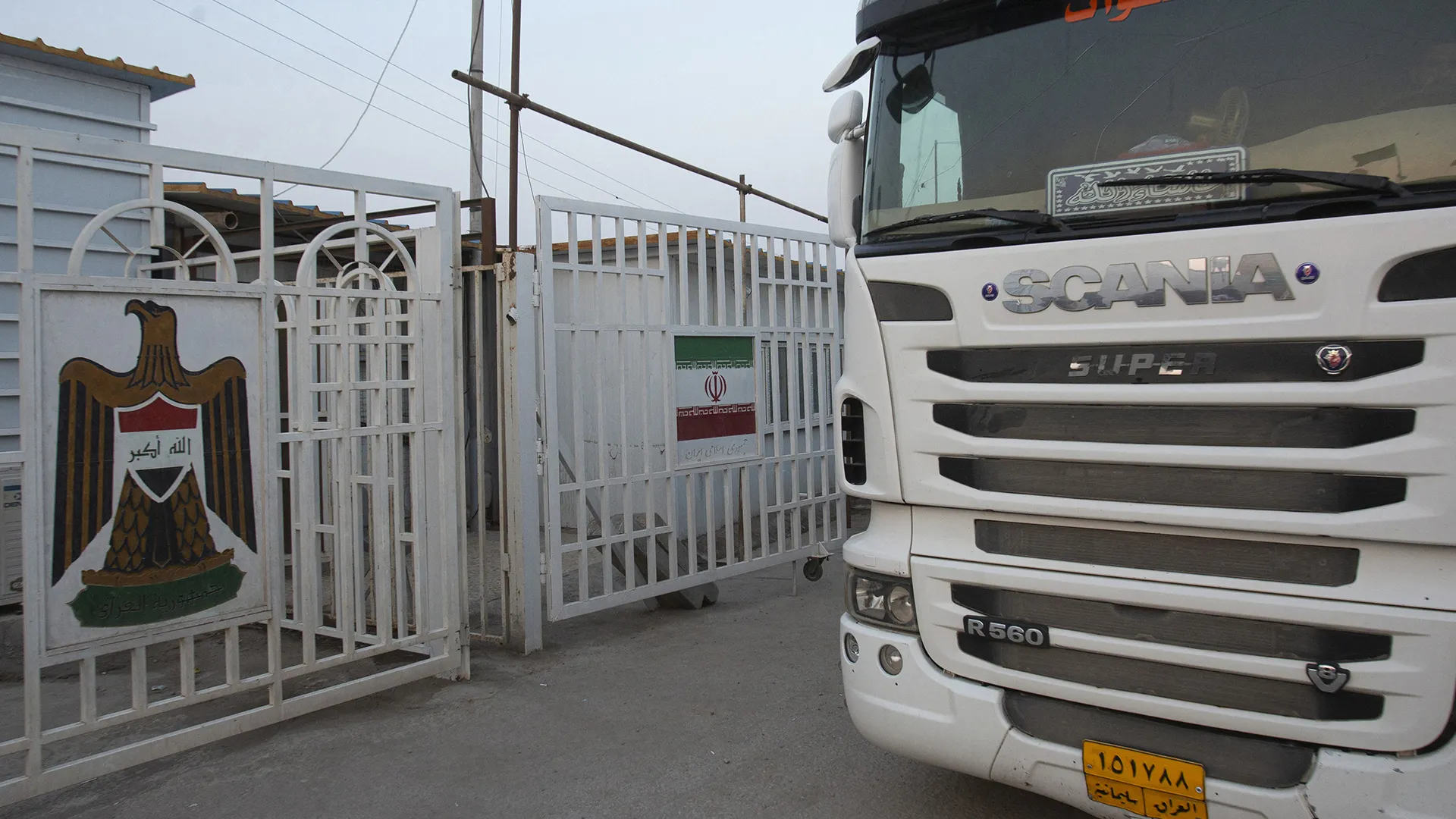
Truck drivers have been experiencing increasing hardships for two weeks at the Shalamcheh border crossing between Iraq and Iran, as they find themselves in danger from Israeli airstrikes targeting the Iranian side. These conditions have turned the process of transporting goods into a perilous experience, negatively affecting their daily lives.
Abbas Saad, one of the drivers, states that the continuous bombardment has sometimes completely halted traffic, leaving them stranded for extended periods. Saad adds, "We live in constant danger, and several of our colleagues have been injured, with no entity providing us protection."
Details of the Situation
Long queues of trucks are present at the crossing, stretching for dozens of kilometers, which exacerbates the drivers' suffering. Another driver, Mohammed Iyad, points out that the ongoing delays in entry procedures from the Iranian side due to security conditions have increased their struggles. They witnessed the death of a colleague due to the bombardment, making the crossing feel like a "waiting area for death."
Dhargham Abdullah, a truck driver, describes the situation as a "vortex of waiting," where some wait up to 16 days before being allowed entry, only to find themselves waiting again due to renewed airstrikes. He expresses with anguish, "We wait for days in the open without services, and there is no official entity to whom we can submit our complaints."
Background & Context
This suffering comes at a time when the region is witnessing military escalation between Israel and Iran, complicating the situation at the border. The Shalamcheh crossing is considered one of the most important commercial crossings in the region, relied upon by many drivers to transport goods between Iraq and Iran.
Hassan Al-Maliki, a customs clearance agent, confirms that work has not completely stopped despite the dangers, but he faces unprecedented challenges. He describes the situation, saying, "The crossing is repeatedly bombed, even while we are conducting our work, creating a state of severe confusion in customs clearance operations."
Impact & Consequences
As the escalation continues, pleas from drivers to government entities in Baghdad and Tehran for urgent solutions are increasing. The drivers are demanding the securing of border areas and the facilitation of administrative procedures to reduce their time spent in military contact zones, aiming to avoid further human losses.
The humanitarian situation requires urgent intervention, as the ongoing bombardment and instability in the region threaten the lives of many drivers and their families. It is crucial for governments to take effective steps to protect these individuals who are an essential part of the local economy.
Regional Significance
These events indicate a rise in tensions in the region, as the continuation of military conflicts impacts trade and the economy. The drivers, representing a broad segment of society, suffer from the repercussions of these conditions, necessitating greater attention from governments and humanitarian organizations.
In conclusion, hope remains pinned on finding quick and effective solutions to alleviate the suffering of these drivers, who are the lifeline for many families in Iraq and Iran.