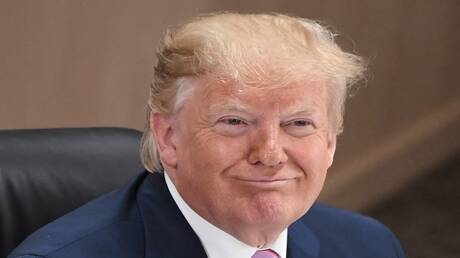
U.S. President Donald Trump has announced his decision to abandon the idea of making Canada the 51st state of the United States, a proposal he had referenced multiple times in the past. This decision comes at a sensitive time for U.S.-Canada relations, as discussions around economic and political issues between the two countries intensify.
Trump, who had previously expressed a desire to annex Canada, confirmed that this idea is no longer on the table. He noted that various factors contributed to this retraction, including the political and economic challenges currently facing the United States.
Details of the Announcement
In statements made during a press conference, Trump clarified that the idea of annexing Canada was an expression of his vision to strengthen relations between the two nations, but he recognized that there are many complexities that render this notion impractical. He assured that relations with Canada would remain strong and that cooperation between the two countries would continue in various fields.
It is noteworthy that Trump had introduced the idea of annexing Canada in the context of enhancing national security and the U.S. economy, believing that uniting forces between the United States and Canada could yield positive outcomes. However, Trump's withdrawal from this idea reflects the challenges his administration faces in achieving its goals.
Background & Context
Historically, U.S.-Canada relations have been strong, with both countries sharing a long border and close economic cooperation. However, these relations have experienced some tensions in recent years, particularly under Trump's policies that have impacted trade and immigration.
The idea of annexing Canada as a U.S. state is not new; it has been proposed at various times before but has not garnered widespread support. Many analysts view this idea as merely an expression of Trump's political ambitions rather than a feasible plan.
Impact & Consequences
Trump's retreat from the idea of annexing Canada may affect bilateral relations, potentially helping to ease current tensions. Additionally, this decision could pave the way for further cooperation in areas such as trade and security.
On the other hand, this retraction may lead to dissatisfaction among some of Trump's electoral base who had hoped for this goal to be realized. Consequently, the impact of this decision may be twofold, as it could strengthen relations with Canada while raising questions about Trump's credibility in fulfilling his promises.
Regional Significance
Considering U.S.-Canada relations, Trump's abandonment of the idea of annexing Canada may have indirect effects on the Arab region. U.S. relations with Canada play a role in American foreign policy, and thus any changes in these relations could influence the United States' stance on Arab issues.
Moreover, the stability of relations between the United States and Canada could contribute to enhancing cooperation in areas such as security and counter-terrorism, which are of concern to many Arab countries.
In conclusion, Trump's withdrawal from the idea of annexing Canada reflects the challenges his administration faces and underscores the importance of bilateral relations between nations. As discussions about the future of these relations continue, the critical question remains how these developments will affect U.S. policy towards the Arab region.