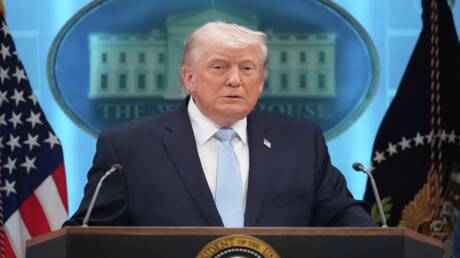
Professor Thomas Malinen from the University of Helsinki describes the United States' acceptance of Iranian conditions as a clear defeat for President Donald Trump. These remarks come at a sensitive time when U.S.-Iranian relations are experiencing increasing tension, as Tehran seeks to bolster its regional position by imposing its conditions on Washington.
This step represents a radical shift in U.S. foreign policy, which previously relied on economic and military pressure against Iran. By accepting Iranian conditions, Trump appears to be retreating from his strong stance, raising questions about his strategy in dealing with Tehran.
Details of the Event
Malinen stated that Trump's acceptance of Iranian conditions reflects a near-total surrender, placing the U.S. president in a weak position against his adversaries. He indicates that this move could have negative repercussions for both domestic and foreign policy in the United States.
These statements come at a time when Iran is improving its relations with some European countries, increasing pressure on the U.S. administration to make concessions. There are also concerns that this approach could enhance Iran's influence in the region, potentially threatening regional stability.
Background & Context
Historically, U.S.-Iran relations have been tense since the Islamic Revolution in 1979. These relations have seen many fluctuations, from economic sanctions to military threats. In recent years, the Trump administration attempted to exert maximum pressure on Iran by withdrawing from the nuclear agreement in 2018.
However, with increasing internal and external pressures, the U.S. administration seems to be reevaluating its strategy. Accepting Iranian conditions may signal a change in the American approach towards Tehran, which could affect relations with Washington's allies in the region.
Impact & Consequences
This step could have significant implications for international politics. Accepting Iranian conditions may encourage other countries to adopt similar stances, undermining the United States' position as a superpower. Additionally, this trend could exacerbate crises in other regions, such as Syria and Yemen.
Moreover, this decision may impact U.S. relations with its traditional allies in the region, who rely on Washington's support to confront Iranian threats. Consequently, this shift could create uncertainty in regional politics.
Regional Significance
In the Arab context, this decision could have profound effects. Countries like Saudi Arabia and the UAE may feel concerned about Iran's enhanced influence in the region, potentially leading to heightened tensions. This shift could also alter the dynamics of conflict in Yemen and Syria, where Iran plays a pivotal role.
Arab countries need to reassess their security and political strategies in light of these developments. Cooperation with the United States may become more complicated, necessitating the search for new alliances to address regional challenges.
In conclusion, Trump's acceptance of Iranian conditions appears to represent a turning point in U.S. policy towards Tehran, potentially paving the way for radical changes in international and regional relations. Arab countries must be prepared to face these new challenges.