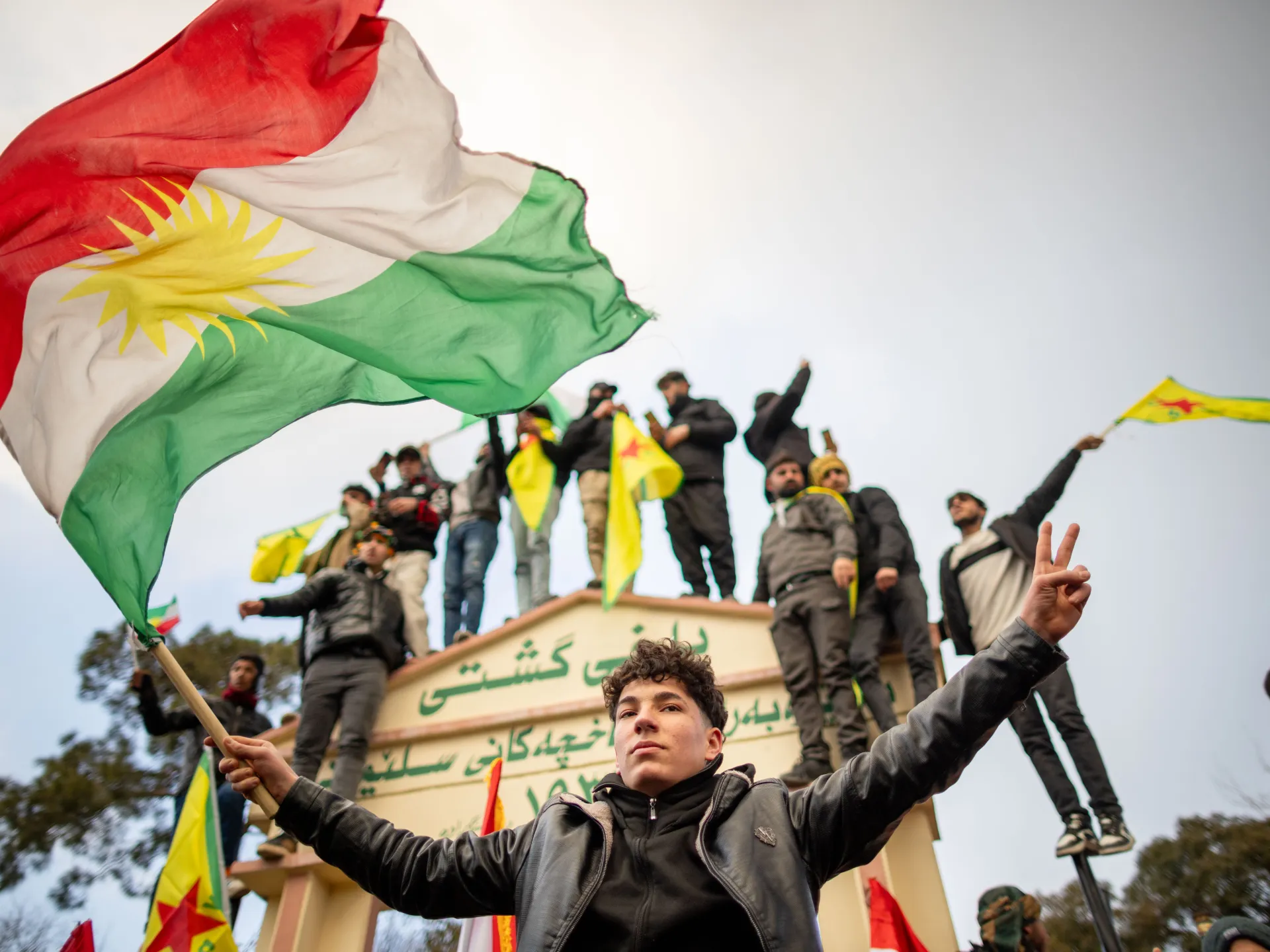
In a significant revelation, U.S. President Donald Trump acknowledged that the Kurds have detained weapons intended for Iranian protesters, effectively removing this option from the current war calculations. This statement emerges at a critical juncture as the deadline Trump imposed on Iran nears its conclusion.
In this context, former general and diplomat Mark Kimmitt dismissed the possibility of utilizing the Kurdish card militarily, indicating that the Kurds are no longer viewed as a resistance force in the ongoing conflict. He emphasized that the complex regional situation complicates their deployment in any military strategy.
Details of the Event
Trump's remarks were made through various media platforms, highlighting the shifting dynamics in U.S. foreign policy. The admission that the Kurds have taken control of arms meant for Iranian demonstrators suggests a significant change in the U.S. approach towards both the Kurds and Iran.
Experts note that the Kurdish forces, once considered a pivotal ally in the fight against ISIS and a counterbalance to Iranian influence, are now facing a decline in their strategic importance. This shift raises questions about the future role of the Kurds in regional conflicts and U.S. military strategies.
Background & Context
The Kurdish forces have historically played a crucial role in the Middle East, particularly in combating ISIS and opposing Iranian expansionism. However, recent developments indicate a waning influence, as the U.S. reassesses its alliances and strategies in the region.
Trump's administration has been vocal about its intentions to confront Iran, but the reliance on Kurdish forces appears to be diminishing. The geopolitical landscape is evolving, and the U.S. may seek alternative strategies that do not involve the Kurds as a military asset.
Impact & Consequences
The implications of Trump's acknowledgment are profound. It suggests a potential shift in U.S. military engagement in the region, which could lead to increased tensions between the U.S. and Iran. The Kurds, feeling abandoned, may reassess their alliances and strategies moving forward.
Moreover, the acknowledgment that the Kurds are no longer a viable military option could embolden Iranian forces and their proxies in the region. This could lead to a resurgence of Iranian influence in areas previously contested by Kurdish forces, altering the balance of power.
Regional Significance
The developments surrounding the Kurds and U.S. strategy against Iran highlight the intricate web of alliances and conflicts in the Middle East. The Kurds' diminishing role raises concerns about the stability of the region and the future of U.S. foreign policy.
As the situation evolves, the U.S. must navigate its relationships with various factions, including the Kurds and Iran, while addressing the broader implications of its military strategies. The outcome of these dynamics will significantly impact regional security and U.S. interests.
In conclusion, the acknowledgment of the Kurds as a burned card in Trump's strategy against Iran underscores the shifting landscape of U.S. foreign policy. The implications of this shift could resonate throughout the region, affecting not only the Kurds but also the broader geopolitical balance.