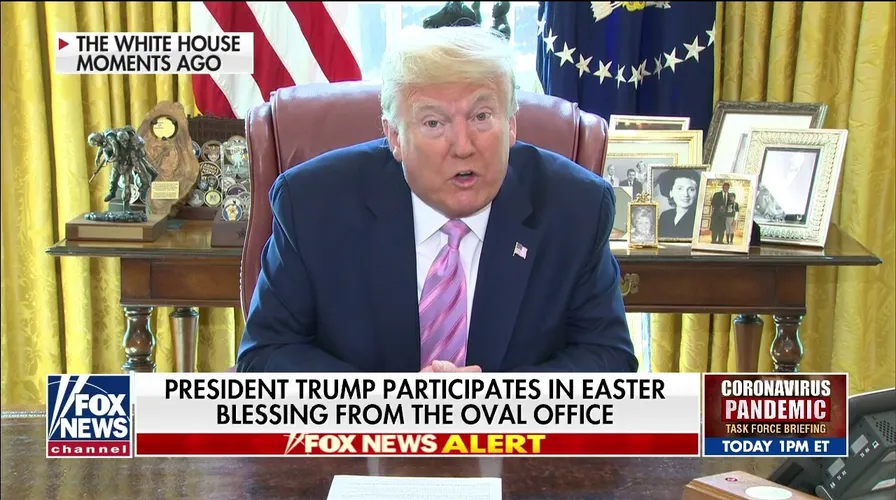
In a move reflecting the religious inclinations of the U.S. administration, Trump administration agencies published congratulatory messages for Easter, celebrating the resurrection of Christ. These messages come at a sensitive time, highlighting the importance of religious values in American politics.
These messages demonstrate how the current administration seeks to strengthen the ties between religion and politics, as the greetings express hope and renewal, aligning with the spirit of Easter, which symbolizes resurrection and rebirth.
Event Details
The messages published by U.S. administration agencies, such as the Department of State and the Department of Defense, included references to the profound meanings of Easter, emphasizing the importance of faith in the lives of individuals and communities. These messages were shared across official social media platforms, reflecting the administration's desire to reach a broad audience.
The content also reaffirmed traditional American values, such as freedom and democracy, noting that these values are inspired by religious teachings. The messages received positive reactions from some segments of American society, while others criticized the blending of politics and religion.
Background & Context
Easter is one of the most significant Christian holidays, celebrated by millions around the world. This holiday is seen as a symbol of resurrection and renewal, typically celebrated in the spring. In the United States, religion and politics play a crucial role in shaping national identity, with many Americans considering religion an essential part of their daily lives.
Historically, there have been numerous attempts to integrate religious values into American politics, especially during election periods. Recent years have seen a rise in religious discourse in politics, reflecting a shift in how religious values interact with social and political issues.
Impact & Consequences
These messages could influence how the American public perceives the role of religion in politics, potentially encouraging some individuals to strengthen their faith while causing concern among others about the increasing influence of religion on public policy. This move could also deepen divisions among different groups within society.
Furthermore, these messages may serve as a tool to bolster support for the current administration, particularly among voters who place significant importance on religious values. At the same time, this step may raise questions about the boundaries between religion and state in the United States.
Regional Significance
The Arab region closely follows political developments in the United States, as American policies directly impact many regional issues. These messages may enhance relations between the United States and predominantly Christian countries in the region, such as Lebanon and Egypt.
Additionally, the promotion of religious values in American politics may spark interest in Arab communities, where religion is a fundamental part of cultural identity. This could encourage discussions about the role of religion in politics in Arab countries, potentially leading to changes in how governments interact with religious values.
In conclusion, the Easter messages from the Trump administration reflect current trends in American politics, showcasing how religion can play a role in shaping public policies. As discussions on this topic continue, the question remains about how these dynamics will affect international relations, especially in the Arab region.