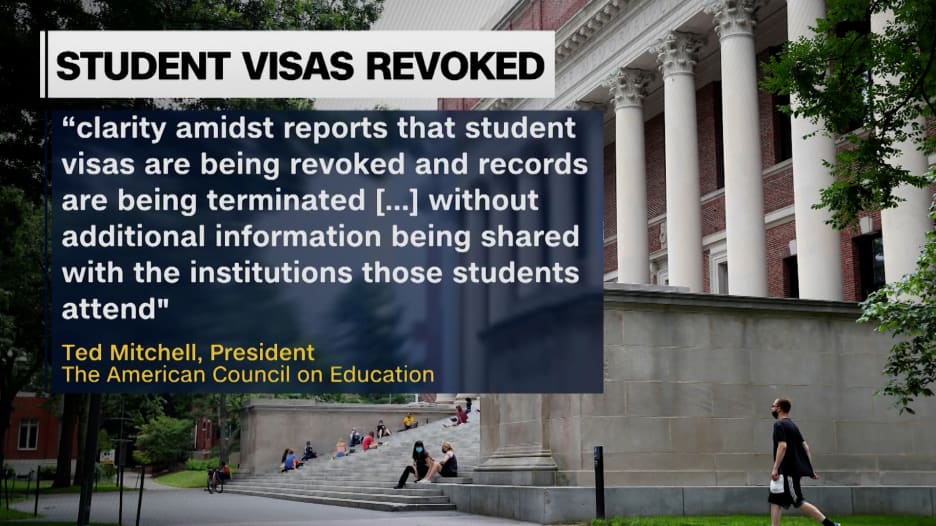
The Trump administration has announced the cancellation of visas for a number of African students, including those who received full scholarships to prestigious universities such as Duke and Harvard. This sudden decision has transformed the dreams of the "best and brightest African minds" into a painful reality of waiting between hope and despair.
In a report published by the Wall Street Journal, correspondent Caroline Kimo highlighted the stories of students who have been barred from returning to their American universities, illustrating how sovereign decisions can alter entire life paths. Among these students is Majok Biur, a South Sudanese student who fled war to Uganda and received a scholarship to study computer science at Duke University.
Details of the Incident
Biur traveled to Uganda after a successful academic year to spend the holiday, but he was unable to return after the U.S. administration abruptly canceled his visa in 2025, as part of decisions affecting several African countries, starting with South Sudan. When he attempted to apply for a new visa, he was told that his application was pending indefinitely.
According to preliminary data from the U.S. Department of Commerce, the number of African students coming to America for the Fall 2025 semester has decreased by nearly a third compared to the previous year, with a sharp decline in the number of students from Nigeria and Ghana. This decline has not only affected the numbers but has turned the lives of these students into a state of stagnation.
Context and Background
These decisions come at a time when American universities are raising slogans of diversity and attracting talent, raising questions about the contradictions in U.S. policies. While universities seek to attract international students, current policies reflect a retreat in this direction, which could negatively impact the reputation of American education.
Historically, the United States has been a preferred destination for African students, with many benefiting from educational opportunities that enabled them to achieve significant academic accomplishments. However, these new policies could eliminate those opportunities, threatening to reduce the number of creative minds that could contribute to the development of American society.
Consequences and Impact
The repercussions of this decision extend beyond Biur, affecting thousands of students who face the same fate. Some are considering abandoning their dreams entirely and returning to traditional paths in their home countries, such as marriage or local employment. This frustration could lead to the loss of an entire generation of talents that could have contributed to the advancement of their countries.
Conversely, the U.S. government views the student visa for outstanding students as a "privilege, not a right," prioritizing national security. However, experts and academic officials have warned that these policies may deprive the United States of the "best minds" that could become part of its scientific and economic fabric.
Impact on the Arab Region
These American policies serve as a warning to Arab countries seeking to attract international students. With increasing economic and social challenges, these countries may find themselves competing with the United States for creative minds. This situation could also drive Arab students to seek educational opportunities in other countries, affecting the future of education in the region.
In conclusion, the cancellation of African student visas represents a step that could have far-reaching implications for higher education in the United States and the future of African students. These policies could lead to the loss of valuable educational opportunities, negatively impacting academic and economic development on the African continent.