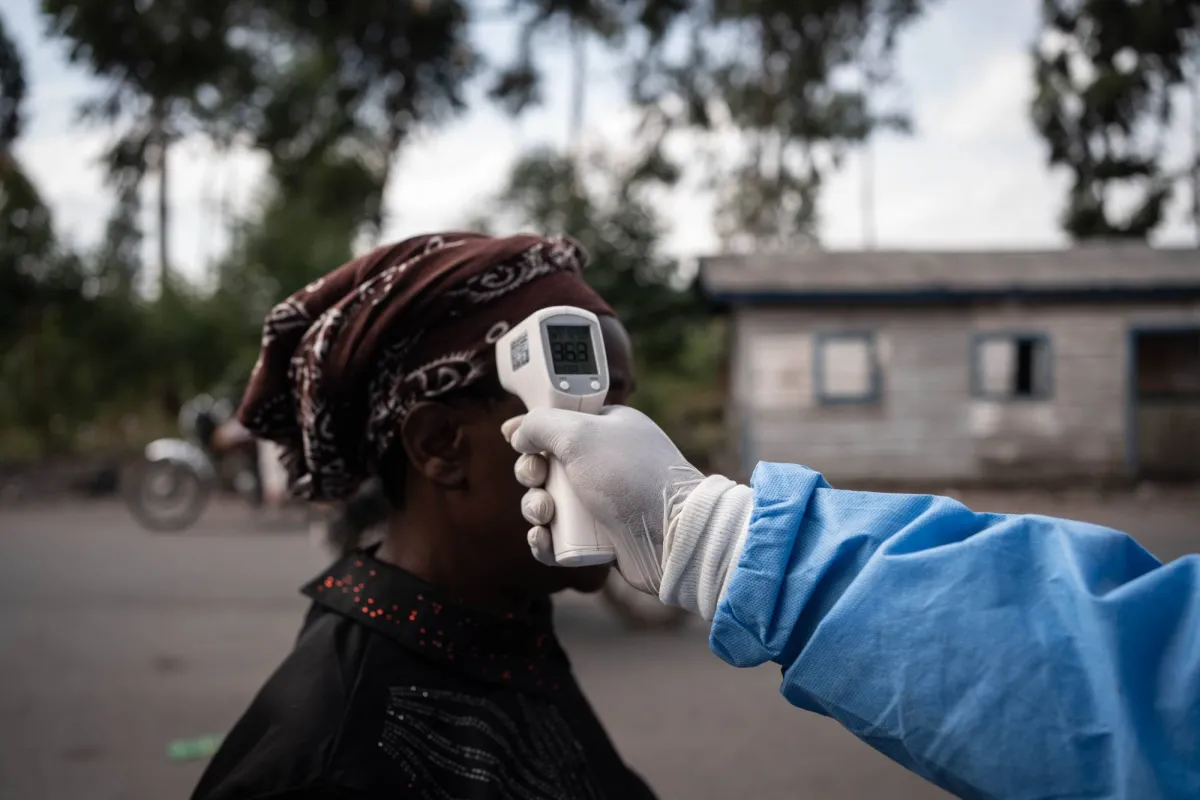
The administration of President Donald Trump is working to open a quarantine facility in Kenya, where American citizens infected with the Ebola virus will be transferred instead of being brought back to the United States for treatment. This decision comes at a time when the World Health Organization is reporting an outbreak of the virus in the Democratic Republic of the Congo, with 10 confirmed deaths and 220 suspected cases.
Reports indicate that the virus may have spread more widely than previously reported, especially since there is currently no vaccine or treatment available for the strain responsible for the outbreak. The American newspaper Wall Street Journal reported that the administration plans to send public health officials to Kenya to operate the facility, which will be designated for Americans needing to leave Congo quickly.
Details of the Plan
The Trump administration's plan awaits approval from Kenyan authorities, as no confirmed cases have been recorded in Kenya so far. This approach contrasts with the policies of previous administrations, which would return infected individuals to the United States for treatment in specialized medical units. Earlier this month, an American doctor exhibiting Ebola symptoms was transferred to a hospital in Germany, alongside monitoring of 6 other Americans in Germany and the Czech Republic.
It is noteworthy that funding cuts imposed by the Trump administration have led to the closure of vital disease monitoring networks, which could have helped detect and control the outbreak earlier. The administration has also relied on the Public Health Service Act to prevent the entry of migrants and residents who have been in Congo, Uganda, or South Sudan in the past 21 weeks.
Background & Context
The Bundibugyo strain of the Ebola virus is considered one of the deadliest strains, with a mortality rate of around 50%. However, early access to high-quality medical care can significantly improve survival chances. The director of the Johns Hopkins Center for Health Security noted that recovery rates are higher in specialized units designed to care for those infected.
The United States has several facilities equipped with the latest technologies to monitor and treat patients with severe diseases, including Ebola. Among these facilities is a unit in Omaha, where 18 Americans are under observation due to Hantavirus infection.
Impact & Consequences
The Trump administration's plan to transfer infected individuals to Kenya has drawn criticism from public health experts. Some argue that leaving Americans in Africa instead of bringing them home represents a failure of the government to fulfill its duty to its citizens. Additionally, establishing a facility in Kenya requires coordination with the Departments of State, Defense, and Health, raising questions about the effectiveness of this system in combating the virus.
At the same time, the Director-General of the World Health Organization warned that the ongoing conflict in eastern Democratic Republic of the Congo complicates efforts to contain the Ebola outbreak, calling for an immediate ceasefire. He emphasized that the situation requires urgent humanitarian response, as insecurity poses a significant barrier to disease control efforts.
Regional Significance
These developments are particularly significant for the Arab region, as outbreaks of infectious diseases like Ebola can impact regional health security. The response of Arab countries to such epidemics requires enhanced regional and international cooperation to address health challenges.
In conclusion, there is an urgent need to develop effective strategies for disease monitoring and containment, especially given the current circumstances in Central Africa.