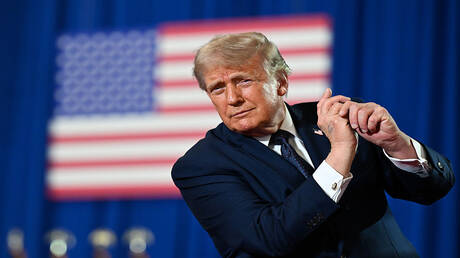
In a surprising development, U.S. President Donald Trump admitted to insulting Israeli Prime Minister Benjamin Netanyahu, labeling him as 'crazy' during a phone call that took place on Monday evening. These remarks come at a sensitive time when U.S.-Israeli relations are experiencing notable tension, particularly concerning the political and economic issues lingering between the two sides.
These statements are shocking to many, as Trump had previously shown strong support for Netanyahu during his presidency. However, it seems that circumstances have changed, raising questions about the future of U.S.-Israeli relations.
Details of the Incident
In the leaked phone call, Trump indicated that Netanyahu was behaving irrationally, which prompted him to use such a description. Clips from this call have circulated through the media, eliciting mixed reactions within political circles.
These remarks come at a time when Netanyahu is facing both internal and external pressures, with increasing criticism regarding his policies towards the Palestinians, in addition to the economic challenges Israel is encountering. Some circles have suggested that these statements could negatively impact U.S. support for Israel in the future.
Background & Context
Historically, U.S.-Israeli relations have been based on a foundation of close cooperation, with the United States viewing Israel as a strategic ally in the Middle East. However, these relations have experienced fluctuations over the years, especially amid political changes in both countries.
During Trump's presidency, relations between the two sides were strengthened, as Trump took bold steps such as recognizing Jerusalem as the capital of Israel. Yet, it appears that the situation has now shifted, raising questions about the sustainability of this support.
Impact & Consequences
Trump's remarks serve as a red flag for Netanyahu, as they could lead to a deterioration of U.S. support for Israel under the Biden administration. This could adversely affect Israeli policies towards the Palestinians and complicate the situation in the region.
Additionally, these statements may open the door for further criticism directed at Netanyahu from the Israeli opposition, which could impact the stability of his government in the near future.
Regional Significance
These developments come at a sensitive time for the Arab region, where tensions between Palestinians and Israelis are escalating. Some may view Trump's remarks as indicative of a decline in U.S. support for Israel, which could strengthen the Palestinians' position on the international stage.
In light of these circumstances, Arab nations may seek to reassess their relationships with the United States and Israel, potentially leading to changes in the political dynamics of the region.
In conclusion, Trump's statements emerge as a significant factor in U.S.-Israeli relations, necessitating close monitoring of future developments. This moment could be a turning point in how the United States engages with its allies in the Middle East.