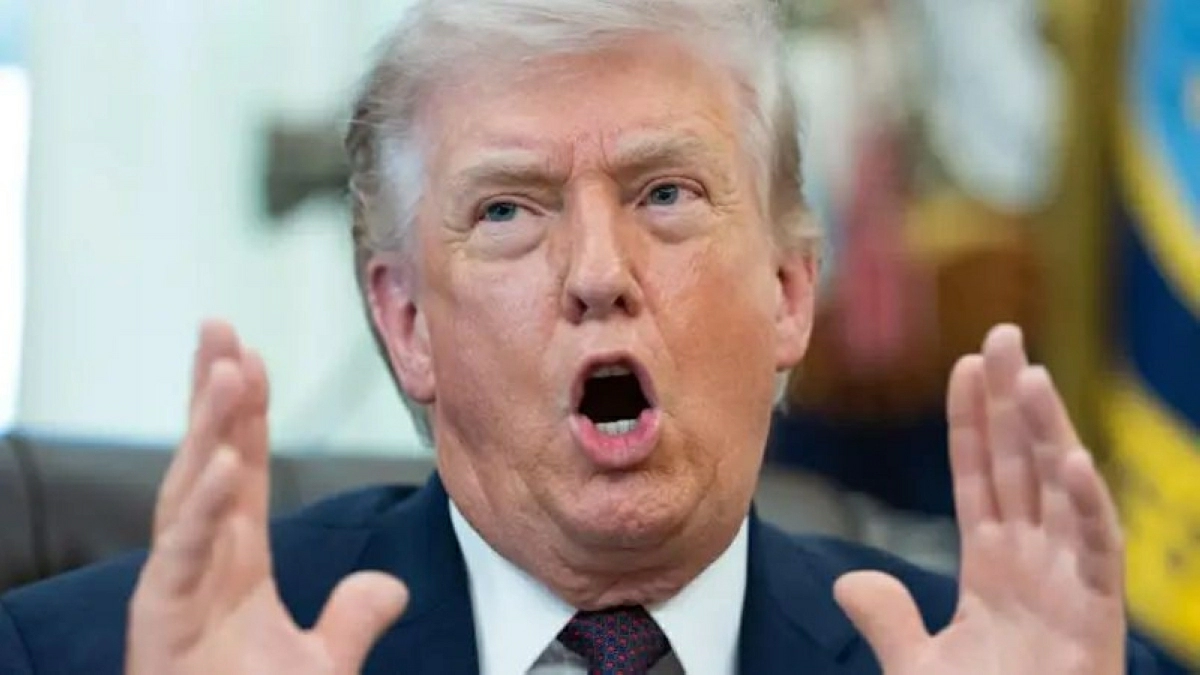
US President Donald Trump announced on Tuesday that the United States may end its military operations against Iran within two to three weeks, asserting that Tehran is not obligated to reach an agreement as a condition for ending the war. This statement was made during a press conference at the White House, where Trump said, "We will be leaving very soon," adding that the withdrawal could happen "within two weeks, maybe two weeks, maybe three."
Trump's remarks come at a time when the US administration continues its discussions with Iranian officials, while the American air campaign persists. When asked about the impact of rising fuel prices since the war began on February 28, Trump stated, "All I have to do is leave Iran, and we will do that soon, and they will collapse." He confirmed that the end of US operations is not linked to reaching any agreement with Iran, which has in turn closed the vital Strait of Hormuz to oil tanker traffic as a form of response.
Details of the Announcement
Speaking to reporters in the Oval Office, Trump said, "They do not have to reach an agreement with me," indicating that the US would leave when it feels that Iran has been placed in a "stone age" and will not be able to develop a nuclear weapon. He also noted that "whether we have an agreement or not is irrelevant." Trump is expected to deliver a national address at 9 PM Eastern Time on Wednesday to provide an important update on the war against Iran.
Trump reiterated his call for other countries to secure oil from the Strait of Hormuz themselves, after many of America's allies declined his requests for military assistance in securing tanker movements. He said, "If France or any other country wants oil or gas, they will have to go through the Strait of Hormuz themselves."
Background & Context
US-Iranian relations have been tense for several decades, escalating after the US withdrawal from the Iranian nuclear deal in 2018. Since then, the US has imposed severe economic sanctions on Iran, exacerbating the country's economic conditions. Recently, hostilities between the two sides have intensified, leading to military escalation in the region.
Historically, the Strait of Hormuz has been a vital point for oil transportation, with approximately 20% of global oil supplies passing through it. Any closure of this strait could lead to a significant rise in oil prices, impacting the global economy as a whole.
Impact & Consequences
Analysts expect the coming days to be crucial in the course of the war against Iran, as US Secretary of Defense Peter Hegseth indicated that the upcoming days will be "critical." He also added that the role of US ground forces in the conflict cannot be ruled out. These statements reflect the US's readiness to confront any potential escalation from Iran, especially given the tense situation in the region.
It appears that the US statements indicate a desire to reduce American military presence in the region, which could open the door for Iran to enhance its influence in the Gulf, potentially leading to significant changes in the power dynamics in the area.
Regional Significance
Developments in US-Iranian relations directly affect Arab countries, especially those located in the Gulf region. Any escalation in the conflict could have economic and security repercussions for neighboring countries, prompting them to take precautionary measures. Additionally, the stability of oil prices heavily relies on the situation in the Strait of Hormuz, affecting the economies of oil-producing nations.
In conclusion, the situation in the region remains tense, with anticipation for what the coming days will bring in terms of developments, both in US-Iranian relations and in the security situation in the Gulf.