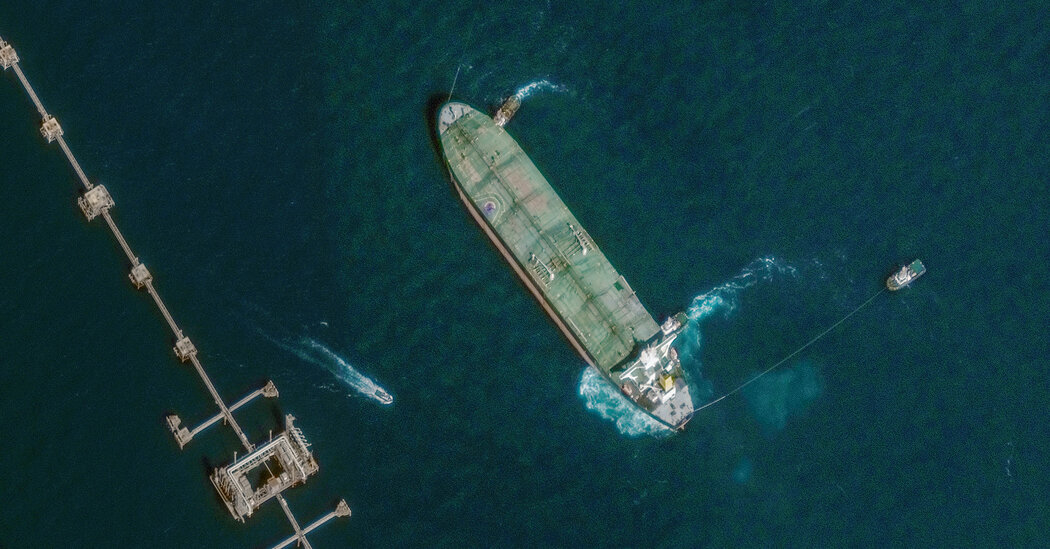
On Sunday, March 29, President Donald Trump announced that Iran will start sending 20 oil tankers to the United States via the Strait of Hormuz beginning Monday morning. Trump characterized this step as a "form of respect" from Iran, noting that these tankers will cross the strait as part of the ongoing negotiations between the two nations.
In his statements, Trump added that he "believes things are going well" in the negotiations, expressing confidence that the United States will reach an agreement with Iran, despite the possibility that this may not happen. He confirmed that the United States is engaging in both direct and indirect negotiations with Iran.
Details of the Announcement
Trump's remarks came at a sensitive time, as the United States and Iran continue to exchange accusations over several issues, including Iran's nuclear program and Tehran's support for armed groups in the region. While Trump emphasized the potential for reaching an agreement, he pointed out that there are multiple options available to the United States, including the possibility of deploying ground troops if necessary.
On the other hand, Iran had previously rejected a 15-point plan proposed by the United States to end the conflict, insisting that any ceasefire must be on its own terms. These statements reflect the ongoing tension between the two sides, which requires an effective diplomatic solution.
Background & Context
Historically, U.S.-Iranian relations have been marked by significant tensions since the Islamic Revolution in 1979. Since then, the United States has imposed strict economic sanctions on Iran, severely impacting its economy. In recent years, tensions have escalated further following the U.S. withdrawal from the Iranian nuclear deal in 2018, leading to heightened stances from both parties.
The Strait of Hormuz is one of the world's most crucial maritime passages, through which about 20% of the world's total oil passes. Control over this strait means control over a large portion of the global oil market, making any movements within it of significant strategic importance.
Impact & Consequences
If this step is implemented, it could signify a shift in Iranian policy towards the United States and may open the door for further negotiations. However, any potential agreement will need to address the underlying issues that have led to the current tensions, including Iran's nuclear program and Tehran's support for armed groups in the region.
Conversely, this move may increase tensions with U.S. allies in the region, who may view it as a threat to their interests. Additionally, any escalation in the situation could affect global oil prices, which could negatively impact the global economy.
Regional Significance
Arab countries, especially those located in the Arabian Gulf, are among the most affected by the tensions between the United States and Iran. Any escalation in the situation could lead to increased tensions in the region, impacting its stability and security. Furthermore, these developments could influence oil prices, which directly affect the economies of Arab nations.
In conclusion, U.S.-Iranian relations remain under scrutiny, as any new movements could lead to radical changes in the regional and international landscape. Stakeholders must work towards finding diplomatic solutions to avoid further escalation.