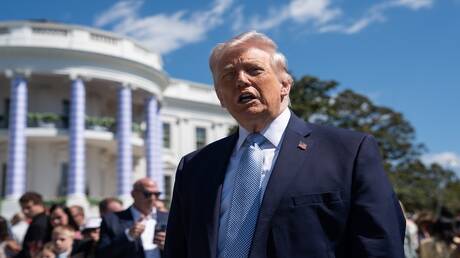
U.S. President Donald Trump announced to the Associated Press that there is a long-term agreement with Iran, which includes 15 points, with a consensus reached on most of its details. This agreement is part of the Trump administration's efforts to enhance regional security and reduce tensions with Tehran.
This move is significant in the context of U.S.-Iranian relations, which have seen considerable strain in recent years, especially following the U.S. withdrawal from the nuclear agreement in 2018. Trump emphasized that this agreement aims to address key issues causing concern in the region.
Details of the Agreement
According to Trump's statements, most of the terms of the agreement have been finalized, indicating substantial progress in negotiations. The U.S. president did not disclose specific details about the points but mentioned that the agreement addresses issues related to Iran's nuclear program, Tehran's support for armed groups in the region, as well as human rights concerns.
This announcement follows a series of meetings and negotiations held between U.S. and Iranian officials, where opinions were exchanged on how to achieve stability in the region. Trump expressed hope that this agreement would contribute to enhancing security and peace in the Middle East.
Background & Context
The history of relations between the United States and Iran is fraught with tensions and conflicts. Since the Islamic Revolution in 1979, relations between the two countries have deteriorated significantly, with Washington accusing Tehran of supporting terrorism and threatening its interests in the region. In 2015, the nuclear agreement was reached, which halted Iran's nuclear program in exchange for the easing of sanctions, but Trump's withdrawal from the agreement in 2018 reset relations to square one.
As tensions escalated, the United States imposed stringent economic sanctions on Iran, significantly impacting its economy. In this context, Trump is now seeking to rebuild relations through this new agreement, which could represent a turning point in U.S. policy towards Iran.
Impact & Consequences
If successfully implemented, this agreement could lead to a reduction in tensions in the region, providing an opportunity for other countries to mediate existing conflicts. Additionally, this agreement may contribute to improving Iran's economic situation, as it could lead to the easing of sanctions and increased trade cooperation.
However, there remains concern that some parties may oppose this agreement, potentially leading to renewed tensions. There are also questions about Iran's commitment to the new terms, especially given its history of previous violations.
Regional Significance
This agreement could have significant implications for Arab countries, especially those sharing borders with Iran. Countries like Saudi Arabia and Israel may view this agreement as a threat to their security, prompting them to take countermeasures. At the same time, the agreement could reduce tensions in Iraq and Syria, where Iran-backed militias are present.
Ultimately, this announcement represents a new step in U.S.-Iranian relations and may open new avenues for cooperation or conflict in the region. Arab countries must closely monitor developments, as the outcomes of this agreement will directly affect security and stability in the area.