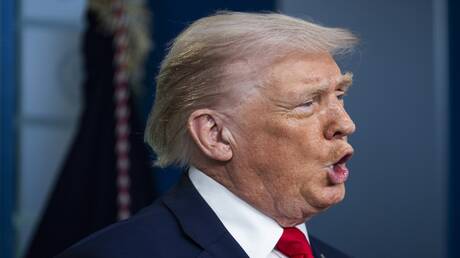
On Monday, U.S. President Donald Trump revealed his plans to run for the presidency of Venezuela after the ongoing crisis in Iran comes to an end. This statement comes at a time of increasing international tensions, highlighting Trump's political ambitions on the global stage.
Trump's remarks are part of his political strategy aimed at enhancing the influence of the United States in Latin America, especially given the political and economic crises plaguing Venezuela. This announcement has elicited mixed reactions from political and media circles.
Event Details
During a press conference, Trump confirmed his intention to run for the presidency of Venezuela after the conflict in Iran concludes, indicating that this candidacy would be part of his vision to rebuild countries suffering from crises. He also added that the United States would continue to support its allies in the region.
While Trump did not elaborate on the specifics of his candidacy plan, he noted that the situation in Iran would significantly influence his political decisions. This statement comes at a time when Iran is experiencing both internal and external tensions, adding complexity to the global political landscape.
Background & Context
Historically, Venezuela was under the leadership of former President Hugo Chavez, who adopted a policy opposing the United States. As the economic and political conditions in the country deteriorated, Venezuela became a focal point for global powers, including the United States. Trump, who had previously taken a hard stance against the former Venezuelan government, is now seeking to capitalize on the opportunity to strengthen his influence in the region.
The current Iranian crisis, which involves both internal and external conflicts, casts a shadow over American politics. Trump believes that the resolution of this crisis will open the door for him to achieve his political objectives in Venezuela, reflecting his strategy in dealing with international crises.
Impact & Consequences
If Trump's candidacy for the presidency of Venezuela materializes, it could lead to radical changes in Venezuelan politics and provoke strong reactions from both the current government and the opposition. Additionally, this candidacy could reshape relations between the United States and other Latin American countries.
The potential impacts of this decision may include increased tensions between the United States and Venezuela, as well as repercussions on American relations with other countries in the region. This candidacy could also signify a shift in American political strategies towards Latin America.
Regional Significance
As the United States focuses on Venezuela, this may affect its policies in the Arab region. American relations with Middle Eastern countries could be influenced by changes in U.S. policy towards Latin America, especially amid the multiple crises facing the region.
Moreover, Trump's political maneuvers may attract the attention of Arab nations grappling with similar crises, potentially prompting them to reassess their political and economic strategies.
In conclusion, Trump's announcement regarding his plans to run for the presidency of Venezuela after the crisis in Iran is a controversial step that could have significant implications for international politics. Amid increasing crises, the question remains about how this move will affect American relations with countries in the region.