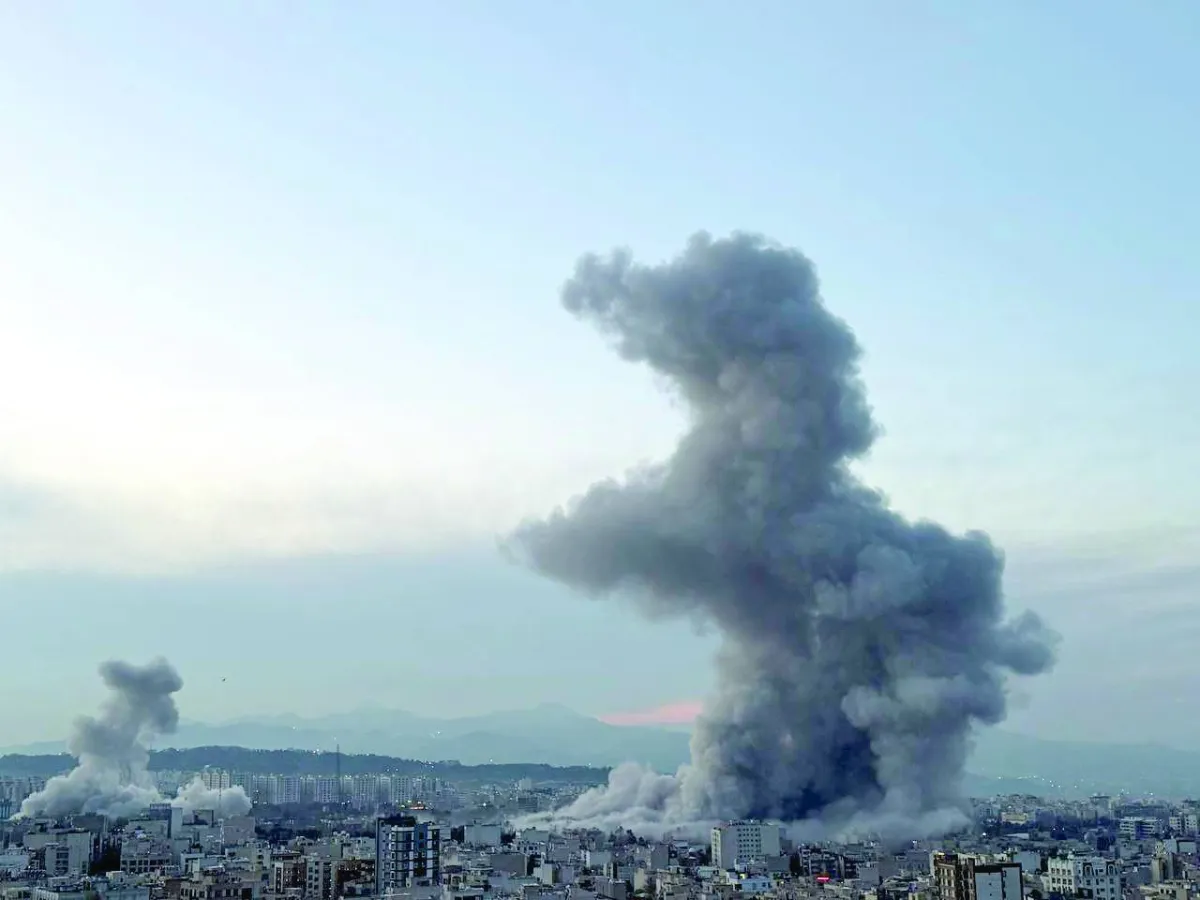
President Donald Trump has announced a possibility for a swift withdrawal from the conflict that the United States is engaged in with Iran, indicating that this depends on ensuring that Tehran is unable to develop nuclear weapons. Trump confirmed that the United States may return to executing targeted military strikes if needed, reflecting an escalation in tensions between the two sides.
Trump's statements are linked to the opening of the Strait of Hormuz, as he tied any progress in ending the fighting to the necessity of reopening it, while the Iranian Revolutionary Guard insisted on keeping it closed to what they described as "enemies." Trump showed little interest in Iran's stockpile of enriched uranium, stating that the primary goal is to prevent Tehran from acquiring nuclear weapons.
Details of the Situation
In remarks made to Reuters, Trump confirmed that the United States would withdraw from Iran "very quickly," noting that Tehran has become "incapable" of developing nuclear weapons. He reported that the "new regime leader" in Iran had requested a ceasefire, but conditioned it on the reopening of the Strait of Hormuz. In contrast, the Iranian Revolutionary Guard affirmed that it would keep the strait closed, further escalating tensions between the two sides.
On the military front, the Israeli army has carried out strikes on approximately 400 targets in Iran over two days, targeting what it described as military sites and weapons manufacturing centers. Images showed smoke rising from Iranian Ministry of Defense headquarters, reflecting an escalation in military operations.
Background & Context
These developments come at a time when the region is experiencing increasing military escalation between the United States and Iran, with U.S. pressures on Tehran continuing since Washington's withdrawal from the nuclear deal in 2018. These pressures have led to heightened military tensions, making the region susceptible to further conflicts.
Historically, the Strait of Hormuz has been a vital strategic point, through which about 20% of the world's oil passes. Therefore, any escalation in this strait could significantly impact global oil markets and increase regional tensions.
Impact & Consequences
All eyes are now on how Iran will respond to these statements and threats, as Iranian officials have confirmed their readiness for any type of attack. Experts have warned that any military escalation could lead to unpredictable outcomes, potentially dragging the region into further chaos and conflicts.
Moreover, the continuation of military operations could affect relations between the United States and its allies in the region, as European countries may find themselves in a difficult position between supporting Washington or attempting to mediate the conflict.
Regional Significance
These developments are significant for the Arab region, as they may affect the stability of Gulf Cooperation Council countries, especially those that rely on the Strait of Hormuz for oil exports. Additionally, any escalation could lead to economic and social repercussions for neighboring countries.
In conclusion, the situation in the region remains tense, with ongoing threats from both sides, making it difficult to predict the course of events in the near future.