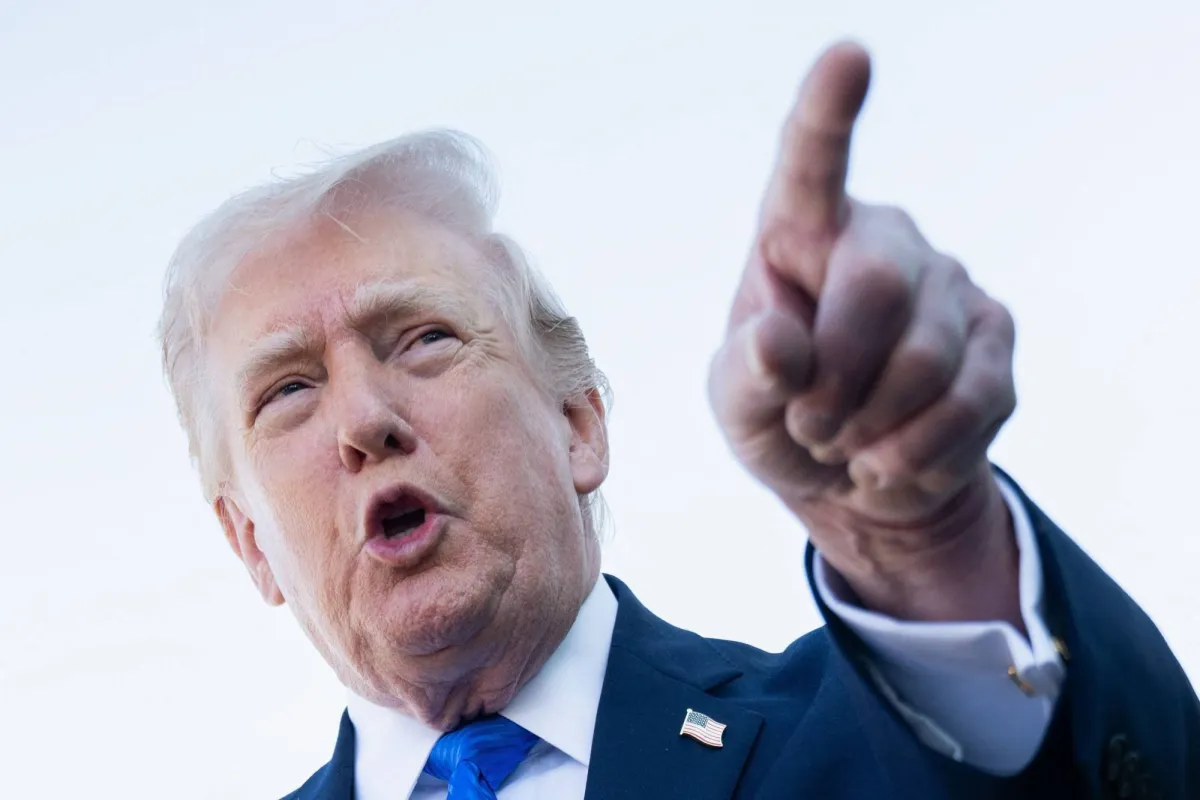
Political circles in the United States have cautiously welcomed President Donald Trump's announcement of 'productive' progress in the ongoing talks with Iran, which could open new avenues towards resolving the ongoing conflict. This announcement came after the reactivation of a communication channel between US envoy Steve Biegun and his Iranian counterpart Abbas Araghchi, despite Tehran's public denial of such talks.
This positive development, as Trump describes it, is seen as a potential step to help de-escalate the current tensions, but opinions within Washington have clearly divided regarding its seriousness. Some believe that Trump's talk of negotiations may merely be a maneuver to buy time rather than a diplomatic victory.
Details of the Announcement
House Speaker Mike Johnson clarified that Trump's announcement represents a 'responsible step' that could help reduce current tensions, suggesting that entering a new phase of negotiations might be a victory for the military pressure exerted on Iran. Meanwhile, some members of Congress have been more skeptical, expressing concerns over the lack of a clear plan to address the crisis, especially amid frustrations regarding Israel's handling of the current situation.
Democratic Senator Chris Murphy regarded Trump's announcement about the talks as merely a calming message for financial markets, coming at a time when gasoline prices have notably risen within the United States. In a tweet, he warned that the proposed settlements might not be genuine, indicating that the announcement could be a mere smokescreen, particularly with fears that delays could lead to renewed military escalation.
Background & Context
Tensions between Washington and Tehran have been escalating for years, but they have notably increased recently following the ongoing war. Previously, there were many contentious issues at the center of negotiations, including Iran's nuclear program and its regional presence, but there is currently no accurate information regarding the content of the latest talks or whether they will return to the pre-war status quo.
US sources indicated that preliminary conditions for the proposed settlement might resemble those set in previous talks regarding the nuclear program and lifting sanctions imposed on Iran. In all cases, questions arise about whether the ongoing negotiations will only address the current situation or lead to a comprehensive long-term settlement.
Impact & Consequences
In light of these developments, financial markets continue to respond swiftly to radical changes in circumstances, as evidenced by the decline in Brent crude contracts and the dollar's depreciation against other major currencies, indicating a strong correlation between official statements and economic performance. At the same time, analysts clarify that containing tensions must encompass all contentious issues, from Iran's nuclear program to the regional proxies associated with the Iranian regime.
Regardless of the seriousness of the talks, the world is eagerly awaiting their outcomes, as some view these developments as an opportunity to end the ongoing cycle of violence. Given that the consequences of any potential failure to advance the diplomatic process could be severe at both regional and international levels, the International Atomic Energy Agency is considered part of the scene as an entity that can provide technical support to the parties involved.
Regional Significance
The current situation reflects the trajectory of tensions in US-Iranian relations and highlights their potential impact on the stability of the Arab region. Escalation steps from both sides could lead to multiple repercussions, particularly for Gulf countries that are situated in a threat zone for markets and energy, as these countries are considered key partners for America in the region.
It is crucial for Arabs as a whole to understand and analyze these developments deeply, as these diplomatic maneuvers could serve their interests if contained, or lead to heightened tensions in the event of a diplomatic failure. The Arab position stems from the necessity of joint action and coordinated stances to maintain the security and stability of the region.