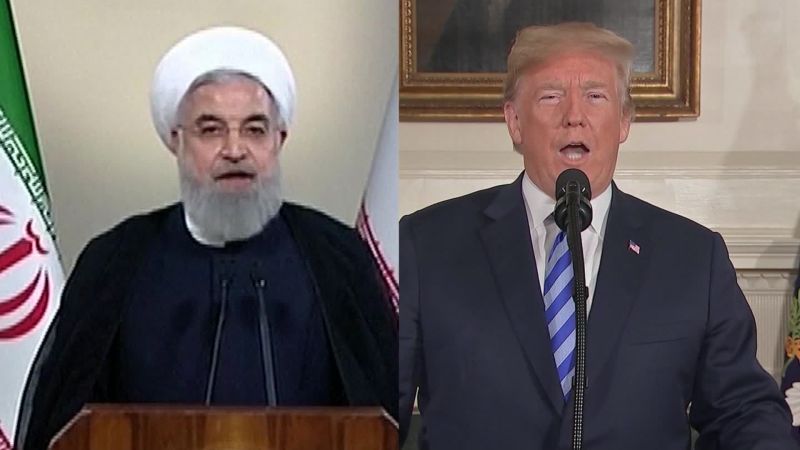
U.S. President Donald Trump has declared that the United States will withdraw from Iran 'very quickly,' noting that his country may return to executing 'targeted strikes' if necessary. These statements come amid escalating tensions between Washington and Tehran, which have seen a recent escalation.
Trump's remarks are part of his political strategy aimed at reassessing the U.S. role in the Middle East, as the U.S. administration seeks to reduce military presence in the region. These statements have elicited mixed reactions from Iranian officials, who believe that such steps will only exacerbate the situation.
Details of the Announcement
During a press conference, Trump confirmed that the withdrawal from Iran would be swift, without specifying a precise timeline. He also indicated that the United States reserves the right to respond to any threats it may face, opening the door for the possibility of conducting military operations against Iranian targets if necessary.
These statements come at a time when the Middle East is experiencing rising tensions, particularly following attacks on oil facilities in Saudi Arabia, which Iran has been accused of orchestrating. Additionally, the situation in Iraq and Syria remains complex, further intensifying regional tensions.
Background & Context
Historically, U.S.-Iranian relations have been strained since the Islamic Revolution in 1979. These relations have escalated in recent years, especially after the United States withdrew from the Iranian nuclear agreement in 2018. Since then, Washington has imposed strict economic sanctions on Tehran, negatively impacting the Iranian economy and worsening humanitarian conditions.
In recent years, Iran has sought to enhance its influence in the region by supporting armed groups in Iraq, Syria, and Lebanon, raising concerns among neighboring countries and the United States. These dynamics make it difficult to predict the future of relations between the two countries.
Impact & Consequences
Trump's statements could lead to increased tensions in the region, especially if the United States decides to carry out any military operations against Iran. Tehran is likely to respond to any attack, which could result in widespread military escalation.
A rapid withdrawal from Iran may also affect U.S. allies in the region, such as Saudi Arabia and Israel, who rely on U.S. support to counter Iranian threats. This could lead to a reassessment of their security and military strategies.
Regional Significance
The Middle East is extremely sensitive to any changes in U.S. policy. A swift withdrawal from Iran could create a vacuum that other powers might exploit, increasing instability in the region.
Additionally, these developments could impact the relationships between Arab states and Iran, as some countries may feel the need to strengthen their alliances to face potential threats. At the same time, other countries may seek to improve their relations with Tehran, complicating the regional landscape.
Trump's statements regarding the withdrawal from Iran reflect a shift in U.S. policy toward the Middle East, but they carry significant risks that could lead to heightened tensions in the region. While withdrawal may seem like an attractive option, its repercussions could be far-reaching.