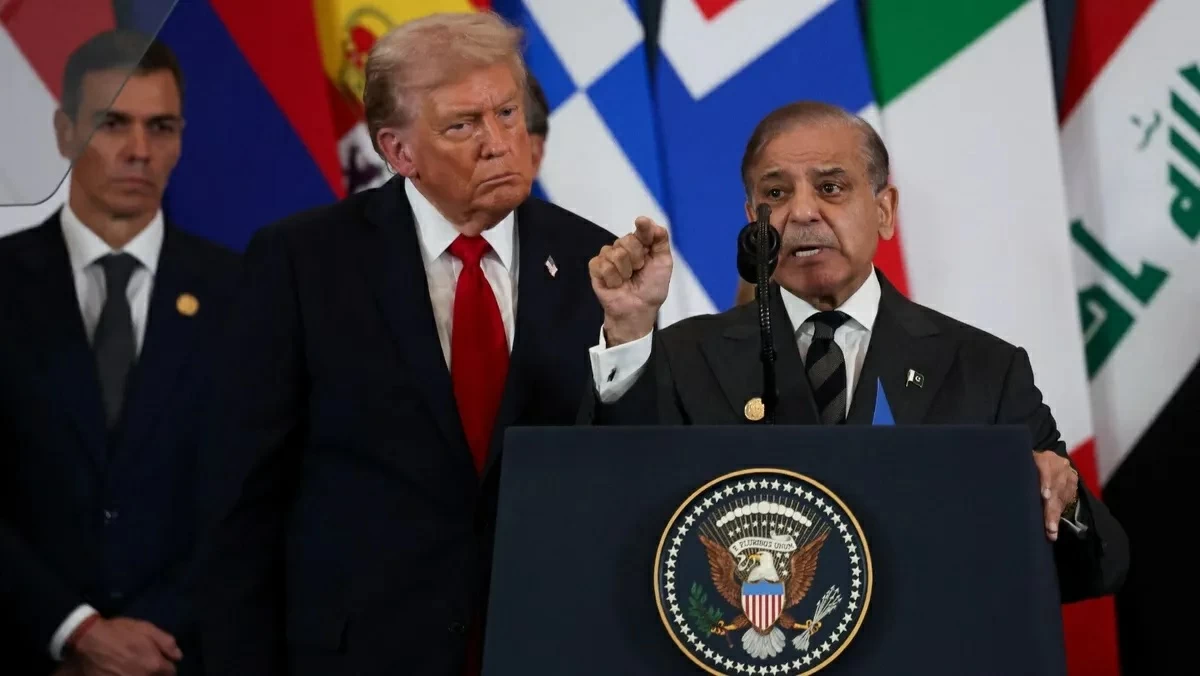
In a surprising announcement, President Donald Trump declared a two-week suspension of comprehensive military action against Iran, just an hour and a half before a deadline that threatened to spark a wide-ranging regional conflict. This decision came as a result of intensive mediation efforts by Pakistan, which succeeded in defusing tensions, at least temporarily.
Trump, who used his platform 'Truth Social' to announce the decision, clarified that it followed discussions with Pakistani Prime Minister Shahbaz Sharif and Chief of Army Staff General Asim Munir. He emphasized that the suspension of airstrikes is contingent upon Iran's agreement to the full and immediate opening of the Strait of Hormuz.
Details of the Announcement
Trump characterized the move as a "ceasefire from both sides," indicating that Washington has achieved its military objectives. He also mentioned that his administration received a proposal from Iran comprising ten points, which he considered a basis for negotiations, affirming that nearly all previous contentious points had been agreed upon. The two-week period is expected to be used to finalize the agreement.
In this context, Iranian Foreign Minister Abbas Araghchi announced that a preliminary agreement had been reached, stating that their armed forces would halt defensive operations if the attacks ceased. He also confirmed that passage through the Strait of Hormuz would be available during this period in coordination with the Iranian armed forces.
Background & Context
These developments come at a time when the region is experiencing escalating tensions, with conditions suggesting the potential for a full-blown war. Historically, the Strait of Hormuz has been a vital strategic point, through which approximately 20% of the world's oil passes. Therefore, any escalation in the region could significantly impact the global economy.
The Pakistani mediation reflects Islamabad's role as a mediator in regional disputes, as it seeks to strengthen its relations with both the United States and Iran. However, the question remains about the sustainability of this ceasefire and its ability to achieve lasting peace.
Impact & Consequences
Observers believe that the two-week period could serve as an opportunity for gathering intelligence and updating military strategies. At the same time, there are concerns that this ceasefire may merely be a temporary pause, with the possibility of returning to square one once the deadline expires.
As the parties prepare to sit down for negotiations in Islamabad, these talks are expected to be crucial in determining the future of relations between Iran and the United States. However, the costs of war and its repercussions may push the parties towards making concessions to avoid escalation.
Regional Significance
These developments hold significant importance for the Arab region, as any escalation in the conflict between Iran and the United States could affect regional stability. Additionally, the opening of the Strait of Hormuz may help alleviate economic pressures on oil-producing Arab nations.
In conclusion, the question remains open: Will this ceasefire transform into a new beginning towards a permanent agreement, or will it merely be a tactical pause before a return to conflict?