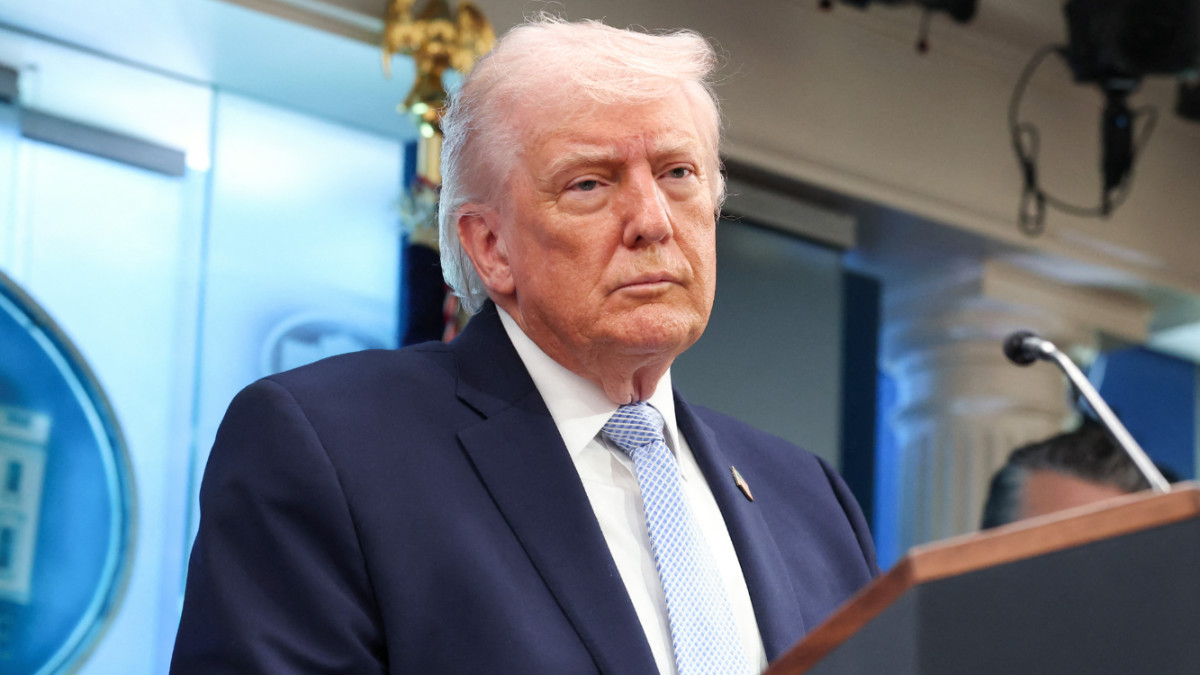
U.S. President Donald Trump announced on Tuesday his decision to halt airstrikes and attacks on Iran for a period of two weeks, stating that this decision is part of a bilateral ceasefire related to the reopening of the Strait of Hormuz. This announcement came after talks with Pakistani leaders, where Trump considered the ten-point Iranian proposal as a negotiable basis.
Trump stated, "Based on discussions with Pakistani Prime Minister Shahbaz Sharif, I agree to suspend airstrikes against Iran for two weeks, provided that Iran agrees to fully and safely reopen the Strait of Hormuz." He emphasized that most points of contention between the United States and Iran have already been agreed upon.
Details of the Announcement
Trump clarified that the aim of this suspension is to allow time to finalize agreements related to a long-term peace deal with Iran, noting that the United States has achieved its military objectives. He also confirmed that the Iranian proposal is considered a practical basis for negotiations.
For its part, the Iranian Supreme National Security Council announced that talks with the United States will begin on Friday in Islamabad after Tehran presented its proposal through Pakistan. These negotiations are expected to last up to 15 days, addressing issues such as the passage through the Strait of Hormuz, sanctions relief, and the withdrawal of U.S. forces from regional bases.
Background & Context
These developments come at a sensitive time, as relations between the United States and Iran have seen increasing tensions in recent years, especially following the U.S. withdrawal from the Iranian nuclear deal in 2018. Since then, Washington has imposed strict sanctions on Tehran, leading to heightened military tensions in the region.
Historically, the Strait of Hormuz is a vital strategic point, through which approximately 20% of global energy supplies pass. The region has witnessed numerous armed conflicts due to control over this critical waterway.
Impact & Consequences
An analysis of these developments suggests that the halt in strikes could represent an opportunity to revive diplomacy between the United States and Iran, which may lead to a reduction in regional tensions. However, previous hostile statements from Trump indicate that the situation remains fragile and could change rapidly.
Moreover, the success of these negotiations could significantly impact regional stability, potentially leading to sanctions relief for Iran and improved relations with neighboring countries, contributing to peace and stability in the Middle East.
Regional Significance
For Arab countries, any progress in negotiations between the United States and Iran could have direct implications for regional security and stability. Gulf states, for instance, are closely monitoring these developments, as any escalation could affect energy supplies and oil prices.
In conclusion, Trump's decision to halt strikes against Iran represents an important step towards reducing tensions, but it remains to be seen whether this ceasefire will lead to positive outcomes in the upcoming negotiations.