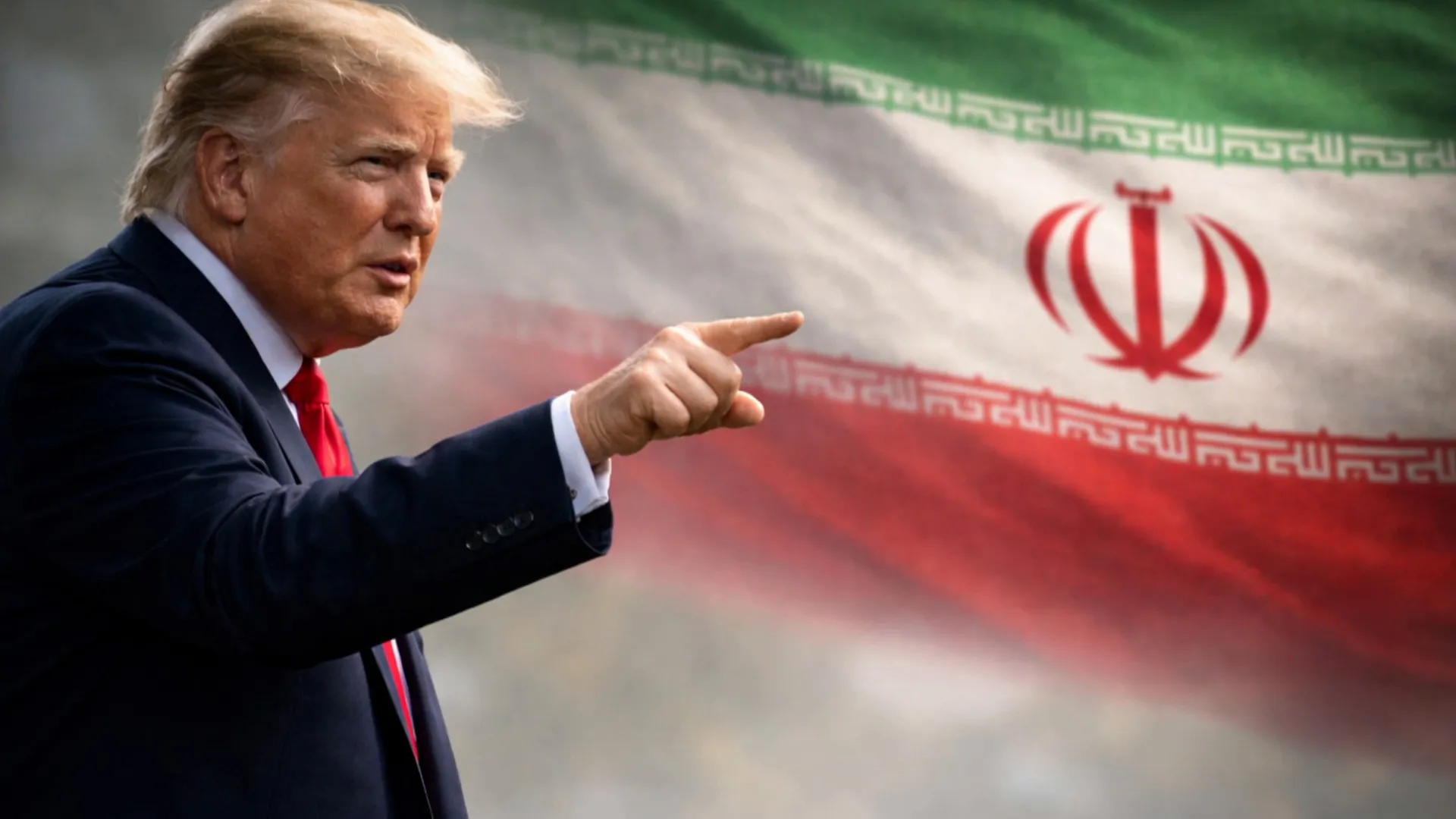
In a surprising move, U.S. President Donald Trump announced a two-week suspension of military operations against Iran, just moments before the deadline was set to expire. This announcement has sparked widespread debate on social media, with many questioning Washington's motives for this ceasefire.
This decision comes at a time when the Middle East is experiencing heightened tensions, following intensive mediation by Pakistan. Trump announced via the platform Truth Social that he agreed to halt airstrikes in exchange for the immediate opening of the Strait of Hormuz.
Details of the Announcement
This dramatic shift was accompanied by statements from U.S. Vice President J.D. Vance, who confirmed that the United States had largely achieved its military objectives, although more efforts were needed to reduce Iran's military capabilities. For its part, Tehran showed flexibility by agreeing to open the strait and halt defensive operations, proposing a ten-point plan that includes lifting sanctions and withdrawing U.S. forces.
Trump responded to this proposal by emphasizing the need to prevent uranium enrichment in exchange for negotiating tariffs. Meanwhile, Israel's position remained cautious, as Prime Minister Benjamin Netanyahu expressed support for the decision, provided that the ceasefire does not include the Lebanon front.
Background & Context
These developments come at a sensitive time, as tensions between the United States and Iran have significantly escalated in recent months. Some circles have viewed this ceasefire as an attempt by Trump to rearrange the cards in the region, especially with the upcoming U.S. presidential elections.
Impact & Consequences
This ceasefire carries significant implications on both regional and international levels. In addition to its impact on U.S.-Iran relations, it may also affect the security situation in the Middle East, where fears of escalating conflicts are growing in the absence of clear agreements.
Regional Significance
The ceasefire is considered an important step in efforts to ease tensions between the United States and Iran, and it may open the door for new dialogue. Analysts suggest that this could lead to a shift in regional dynamics, potentially fostering a more stable environment in the Middle East.
In conclusion, the suspension of military operations represents a pivotal moment in U.S.-Iran relations, with the potential to reshape future interactions and diplomatic efforts in the region.