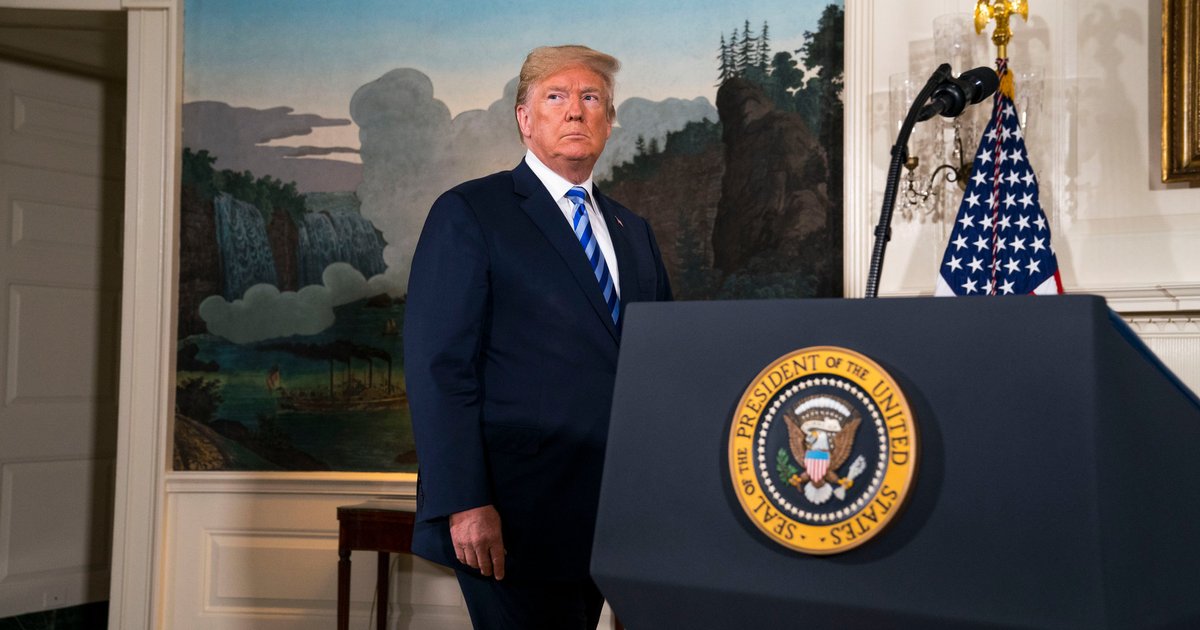
President Donald Trump has announced that the United States will withdraw from Iran 'very soon.' This statement is part of the current U.S. administration's policy aimed at reducing the American military presence in the Middle East, reflecting a strategic shift in U.S. foreign policy.
Trump's remarks came during a press conference, where he confirmed that U.S. troops would be returning home, raising questions about the potential impact of this withdrawal on security conditions in the region. He indicated that this decision aligns with his electoral promises to bring American soldiers back to their homes.
Details of the Announcement
During the conference, Trump clarified that the withdrawal from Iran is part of a broader strategy aimed at reducing American intervention in foreign conflicts. He emphasized that this decision does not mean abandoning U.S. commitments to its allies in the region, but rather reflects the administration's desire to minimize human and material costs.
This announcement comes at a time when the U.S. administration faces increasing pressure due to the tense situation in the Middle East, particularly with rising tensions between Iran and the United States. The decision has elicited mixed reactions from politicians and analysts, with some viewing it as a positive step towards peace, while others consider it a threat to regional stability.
Background & Context
Historically, the United States had sent its troops to Iran as part of efforts to counter Iran's growing influence in the region. Since 2003, the U.S. has maintained a military presence in Iraq and Afghanistan, which has led to the depletion of military and financial resources. With rising domestic and international criticism, the U.S. administration began to reassess its military strategy in the Middle East.
In recent years, relations between the United States and Iran have become increasingly strained, especially following Trump's withdrawal from the Iranian nuclear deal in 2018. This has led to heightened military tensions, making the American withdrawal from the region a hot topic of discussion.
Impact & Consequences
The withdrawal of U.S. troops from Iran could have significant implications for security conditions in the region. This withdrawal may increase Iranian influence in Iraq and Syria, raising concerns about escalating sectarian tensions and armed conflicts.
Furthermore, this decision could affect U.S. relations with its allies in the region, such as Saudi Arabia and Israel, who view Iran as a major threat to their security. The United States may need to reassess its military and diplomatic strategies in the region to address new challenges.
Regional Significance
Considering the situation in the Arab region, the withdrawal of U.S. troops from Iran could alter the balance of power in the Middle East. This may enhance Iranian influence in Iraq and Syria, raising fears of escalating sectarian tensions and armed conflicts in neighboring countries.
This decision may also impact relations between Arab states and Iran, as some countries may seek to strengthen their alliances to confront new security challenges. At the same time, this move could open up new opportunities for dialogue and cooperation between Arab states and Iran, if handled cautiously.
In conclusion, Trump's announcement of the withdrawal of U.S. troops from Iran represents a significant step in the context of U.S. foreign policy. However, the implications of this decision will require careful monitoring, as conditions in the Middle East remain complex and continuously evolving.