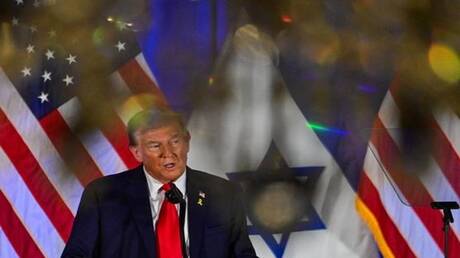
U.S. President Donald Trump has renewed his controversial statements regarding support for Israel, asserting that "evangelicals love Israel more than Jews do." These remarks come at a sensitive time as tensions in the region escalate and discussions about U.S.-Israeli relations intensify.
These statements are part of Trump's ongoing strategy to bolster American support for Israel, reflecting both his personal and political inclinations. He has made similar comments in 2021 and 2024, highlighting the continuity of this narrative within the context of his foreign policies.
Details of the Statement
In his remarks, Trump indicated that evangelicals form a strong support base for Israel, which underscores their significant influence in American politics. This support is part of a religious and political vision embraced by certain Christian denominations in the United States, who view Israel as a spiritual and historical center.
Trump's statements also reflect the complex relationship between Jews and evangelicals in the United States, where there is a divergence of opinions regarding support for Israel. While many Jews believe that support should stem from humanitarian and political grounds, evangelicals perceive it through a religious lens.
Background & Context
Historically, the United States has always been a key ally of Israel, and this relationship has significantly strengthened during Trump's presidency. Trump has taken several steps to support Israel, including recognizing Jerusalem as its capital and moving the U.S. embassy there, actions that sparked varied reactions both domestically and internationally.
These statements are part of Trump's strategy to attract evangelical voters, who represent a substantial segment of his electoral base. This support has bolstered his position in previous elections, prompting him to seek to maintain this relationship moving forward.
Impact & Consequences
Trump's remarks could deepen divisions between Jewish and Christian communities in the United States, as some Jews may feel that evangelical support for Israel is based more on political interests than genuine solidarity.
Moreover, these statements could influence U.S. foreign policy towards the Middle East, potentially strengthening Israel's position in negotiations with the Palestinians and increasing tensions in the region. Simultaneously, these remarks may provoke negative reactions from Arab and Islamic countries, which view this support as a clear American bias towards Israel.
Regional Significance
Trump's statements come at a time when the region is grappling with multiple crises, including the Israeli-Palestinian conflict. These remarks may contribute to heightened tensions between Palestinians and Israelis, as Palestinians feel that American support for Israel undermines their rights.
On the other hand, these statements could also strengthen alliances between some Arab nations and Israel, especially in light of geopolitical changes in the region. However, they may also lead to a rise in anti-American sentiments in certain Arab countries, negatively impacting relations between the United States and these nations.
In conclusion, Trump's remarks regarding evangelical support for Israel highlight a complex political strategy that carries profound implications for U.S.-Israeli relations and the overall situation in the Middle East.