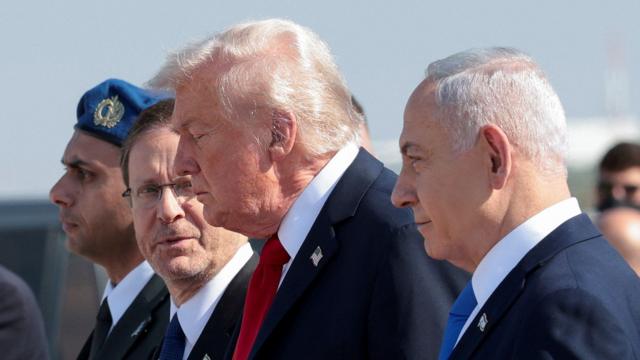
U.S. President Donald Trump has launched a fierce attack on Israeli President Isaac Herzog, accusing him of lying and backtracking on previous commitments to pardon Prime Minister Benjamin Netanyahu, who is currently facing corruption charges. Trump, a frequent supporter of Netanyahu, expressed his frustration over Herzog's stance, emphasizing that he had expected the pardon promise to be fulfilled.
In statements made to Israeli Channel 14, Trump said, 'Will your weak president not pardon him? He promised me repeatedly that he would pardon him, but he lied to me.' He further added that Herzog is a 'weak and pathetic man', stressing the importance of Netanyahu focusing on stronger issues instead of becoming entangled in what he termed 'nonsense'.
Details of the Incident
Several months ago, Trump urged Herzog in a speech before the Knesset in October 2025 to issue the pardon for Netanyahu. In November of the same year, he sent a message to Herzog expressing the same desire, which sparked criticism within Israel, being perceived as interference in the judicial matter. Despite this, Herzog returned on February 13 to confirm that the issue of pardoning Netanyahu was 'under review', stressing that it would proceed without any external or internal pressures.
Later, in a telephone interview with Israeli Channel 12, Trump reiterated his criticisms of Herzog, threatening to reveal more details about his stance, labeling him as a 'stain', indicating the growing tensions between the two men.
Background & Context
Benjamin Netanyahu is regarded as the first Israeli Prime Minister to face charges related to bribery, fraud, and breach of trust while in office, having denied the accusations since 2019. In this context, these political developments reveal the complexities of Israeli-American relations and their impact on the Israeli judicial system.
The pardon for Netanyahu holds particular importance in the Israeli political landscape, reflecting the power struggles between Netanyahu and his previous governments. Thus, Trump's positions regarding the pardon are not simply individual calls but also reflect the political strategies each leader employs on the international stage.
Impact & Consequences
The exchanged remarks between Trump and Herzog contribute to escalating tensions in the relations between the two governments, which may negatively affect future policies and partnerships between the United States and Israel. Furthermore, this attack could exacerbate the polarization of Israeli public opinion towards Netanyahu, facilitating conditions for the rise or fall of his popularity based on Herzog and Trump's positions.
Intensifying criticisms of Trump from certain Israeli officials may weaken the support base he strives to maintain, while some politicians could be driven to take a stiff opposition stance against the matrix of Israeli consensus.
Regional Significance
In a broader context, these developments reflect the ongoing challenges facing democracies in the region and highlight the capacity of external powers to influence internal politics. The lack of political stability in Israel is a concern for many Arab countries, especially given the complex ongoing conflicts in the Middle East.
These confrontations may lead to changes in political dynamics in neighboring countries, and Arab countries need to closely monitor developments in the Israeli political scene as they may result in repercussions affecting economic and social conditions in the region. Trump's statements and Herzog's attacks underscore the shifting nature of politics in the Middle East, carrying implications for regional stability.