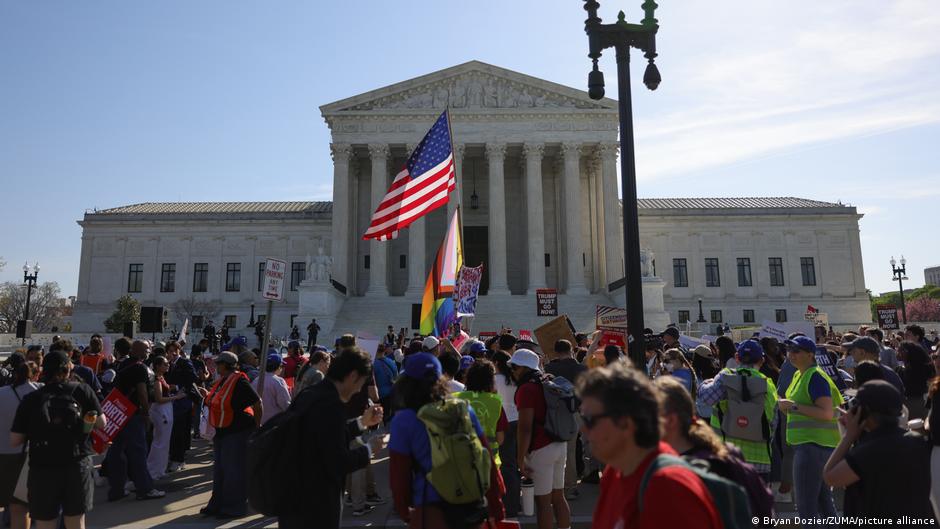
Last Wednesday, the Supreme Court of the United States witnessed a historic attendance by President Donald Trump, marking the first time a sitting president has participated in an oral argument session. This attendance was part of discussions regarding the constitutionality of birthright citizenship, as Trump observed his administration's attorney, John Sauer, challenging this right guaranteed by the 14th Amendment to the U.S. Constitution.
On his first day in office, Trump signed an executive order aimed at denying citizenship to children of undocumented immigrants, linking citizenship to the legal status of parents in the United States. However, this order contradicts the provisions of the 14th Amendment, ratified in 1868, which states that "all persons born or naturalized in the United States, and subject to the jurisdiction thereof, are citizens of the United States and of the state wherein they reside."
Details of the Event
The executive order regarding birthright citizenship was rejected by all lower courts that reviewed it, and it is now before the Supreme Court, which is expected to issue a final ruling on the matter next June. Trump sat in the front row alongside Secretary of Commerce Howard Lutnick, listening to discussions that lasted over an hour and a half. Outside, protesters gathered holding signs supporting birthright citizenship and opposing Trump's policies.
During the discussions, Sauer argued before the court that "unrestricted birthright citizenship contradicts the practice of the vast majority of modern nations," noting that this right "diminishes the value of the precious and profound gift of American citizenship." He also added that this policy acts as a magnet for illegal immigration and rewards undocumented immigrants who violate laws.
Background & Context
Historically, the 14th Amendment was introduced in the aftermath of the American Civil War, aimed at ensuring the rights of new citizens, including African Americans. This amendment has been used to affirm the right to citizenship for individuals born in the United States, making it one of the few countries that grant citizenship by birth. In recent years, this topic has become a focal point of significant political controversy, especially with the rise of anti-immigration rhetoric.
In 1898, a similar case was brought before the Supreme Court, where the court ruled that the 14th Amendment stipulates that anyone born on U.S. soil is a citizen. This ruling remains in effect and is considered a fundamental part of American law.
Impact & Consequences
If the Supreme Court upholds Trump's policy, it could radically change the concept of citizenship in the United States, potentially denying thousands of children their rights as citizens. This could provoke strong reactions from human rights advocates, who view this policy as contrary to core American values.
On the other hand, this decision could exacerbate political divisions in the country, as many Americans see birthright citizenship as part of American identity. Additionally, this matter could affect international relations, particularly with countries that have large immigrant communities.
Regional Significance
For the Arab region, this issue highlights the challenges related to migration and asylum. Many Arab countries host large numbers of refugees and migrants and face similar challenges regarding their rights. The debate over birthright citizenship in the United States may influence policies in Arab countries, especially those seeking to improve the conditions of refugees.
In conclusion, this event represents a turning point in discussions about citizenship and immigration in the United States, and it may have far-reaching implications for both American and international society.