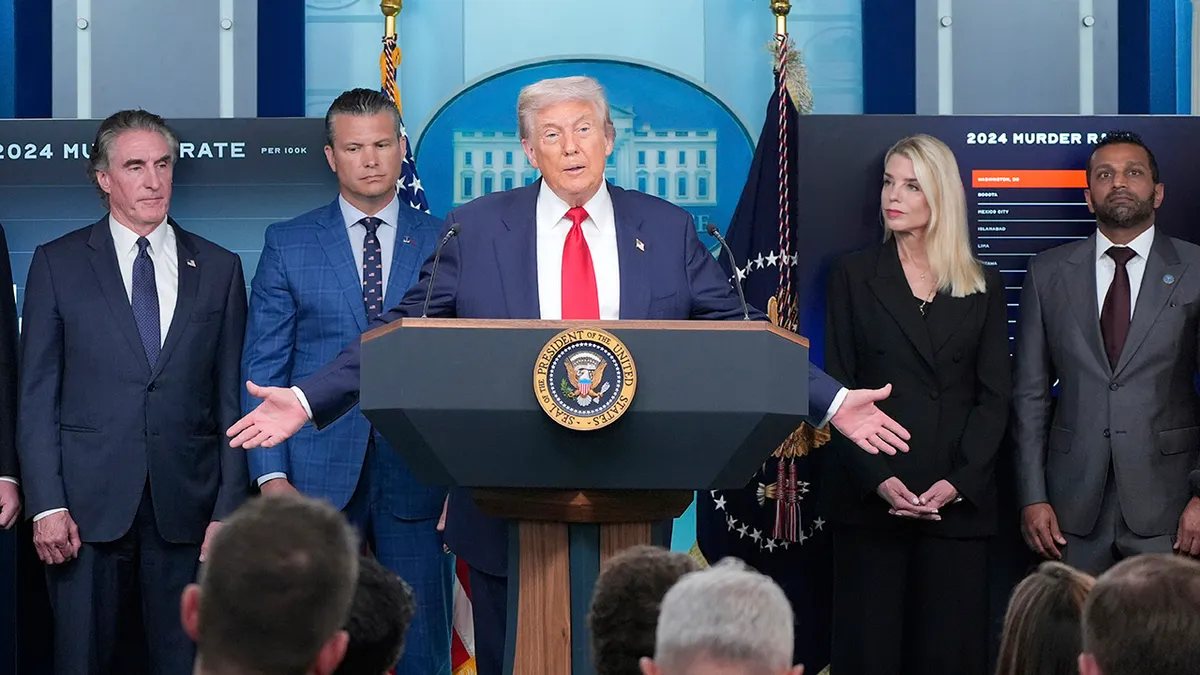
Former President Donald Trump described the decision to shut down the Department of Homeland Security as an unprecedented national emergency, pointing to its potential implications for national security. This statement comes at a time when security conditions in the United States are increasingly tense, with growing fears of terrorist attacks and organized crime.
In his recent statements, Trump emphasized that the closure of the department would create a security vacuum that extremists could exploit. He also indicated that this decision reflects the current administration's weakness in addressing escalating security challenges, putting the country in a dangerous position.
Details of the Event
Trump announced his position during a press conference, where he criticized the security policies of the current administration, arguing that the shutdown of the Department of Homeland Security would exacerbate security conditions. This statement coincided with reports of an increase in security incidents across the country, raising public concern.
Trump also pointed out that the closure of the department would negatively affect the government's ability to confront increasing threats, including cyber and terrorist attacks. He argued that this decision necessitates a comprehensive reassessment of national security strategies.
Background & Context
The Department of Homeland Security was established after the events of September 11, 2001, with the aim of enhancing national security and protecting citizens from internal and external threats. Since then, the department has played a pivotal role in implementing security policies and addressing growing challenges.
As political and social tensions in the United States have increased, the issue of national security has become a focal point of public discourse. In recent years, the country has witnessed a rise in the number of terrorist incidents, prompting the government to adopt stricter measures in the realm of security.
Impact & Consequences
The closure of the Department of Homeland Security could have serious implications for national security, as it would affect the government's capacity to deal with increasing threats. It may also lead to a loss of public trust in the government's ability to protect them.
Furthermore, this decision could open the door for extremist groups to exploit the security vacuum, thereby increasing the risk of terrorist attacks. Consequently, this decision could exacerbate security conditions in the country.
Regional Significance
The security situation in the United States is influential in the Arab region, as any deterioration in U.S. national security could impact its foreign policies towards Arab countries. This could lead to changes in security cooperation strategies between the United States and Arab nations.
Additionally, the rise in security threats in the United States may reflect on the security situation in the region, as extremist groups might exploit any weaknesses in U.S. security to enhance their activities in Arab countries.
In conclusion, the decision to close the Department of Homeland Security remains a contentious issue, requiring a comprehensive reassessment of security policies in the United States. As security challenges continue to rise, the question of how this decision will affect national security and international relations remains open.