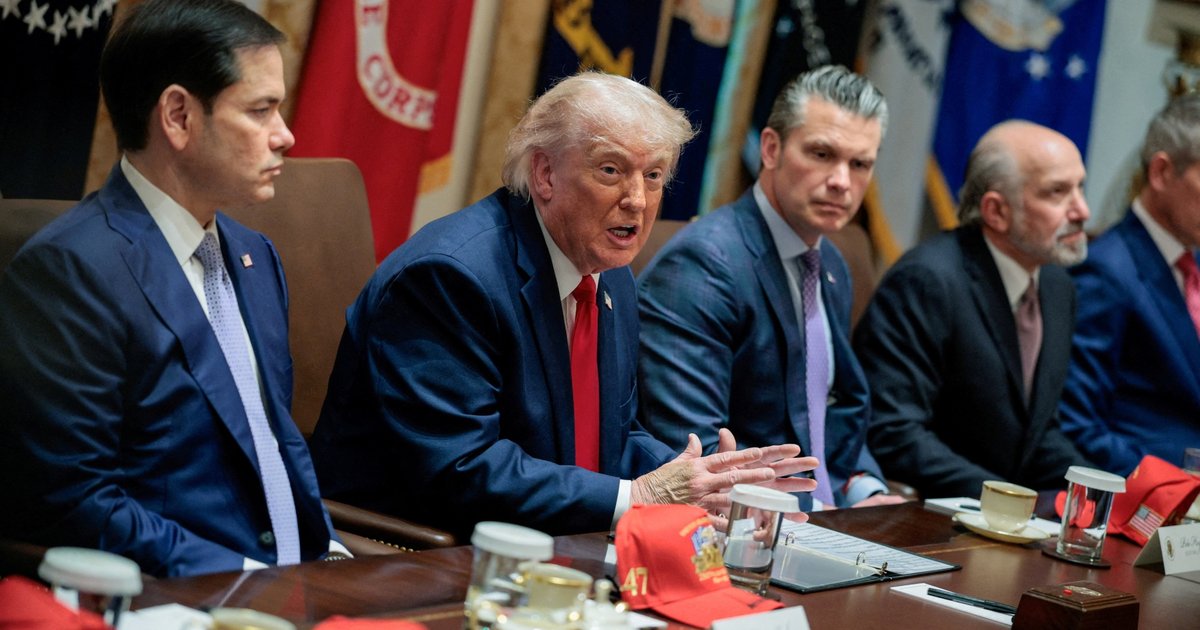
In remarks made on Wednesday, U.S. President Donald Trump confirmed that easing sanctions imposed on Iran is not part of the current negotiations aimed at ending the war, reopening the Strait of Hormuz, and reducing Iran's nuclear capabilities.
These statements come at a time when Iranian officials, including Parliament Speaker Mohammad Baqer Qalibaf, are seeking financial facilitation as a condition for building trust in talks with the United States. Qalibaf and the head of Iran's central bank visited Qatar to discuss the release of $6 billion held since September 2023, indicating a potential breakthrough in negotiations.
Details of the Situation
Iran is facing a severe liquidity crisis, claiming it is owed up to $120 billion in revenues that have been withheld due to ongoing U.S. sanctions since the Islamic Revolution in 1979. Sanctions were expanded under the Iranian Sanctions Act of 1996, which prohibited business transactions with Tehran and imposed restrictions on its ability to acquire nuclear weapons.
U.S. sanctions prevent anyone living in the United States or holding U.S. citizenship from doing business with Iran, also denying Iran access to the global banking system dominated by the United States.
Background & Context
Since 2005, the United States has imposed a series of sanctions on individuals and companies alleged to be linked to terrorist activities. These sanctions have exacerbated the economic situation in Iran, making it increasingly reliant on external support.
Historically, relations between the United States and Iran have been tense, with the past decades witnessing numerous crises, including the hostage crisis at the U.S. embassy in Tehran in 1979 and escalating military activities in the region.
Impact & Consequences
Trump's statements indicate that the U.S. administration is adopting a hardline stance towards Iran, which may worsen conditions in the region. Some analysts believe that Trump's maximalist demands may be unrealistic, as Iranians view their survival as a victory in itself.
Additionally, Iran's control over the Strait of Hormuz, a vital point for oil transport, could strengthen its strategic position in negotiations. Trump has stated that he does not want any country to control this strait, emphasizing that the United States will monitor the situation.
Regional Significance
These developments directly impact Arab countries, especially those that rely on the Strait of Hormuz for oil transport. The continuation of tensions between the United States and Iran may lead to escalated conflicts in the region, threatening regional stability.
At the same time, some Arab countries may seek to strengthen their relations with Iran as a means to alleviate tensions, reflecting the complexities of the political landscape in the region.