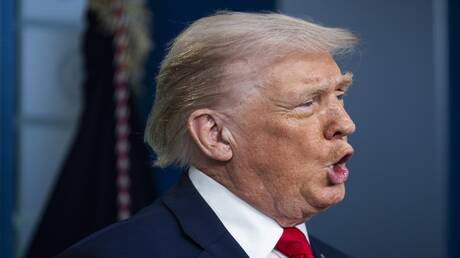
On Wednesday, President Donald Trump mistakenly distinguished between Venezuela and Iran while discussing U.S. operations in the Middle East. This error occurred during a press conference where Trump addressed the situation in the region, leading to astonishment among observers and analysts.
In his remarks, Trump referenced the ongoing tensions in the Middle East but confused the two countries, reflecting either a lack of accurate information or confusion in his speech. Such mistakes can impact the image of the United States globally, especially amid current tensions in international relations.
Details of the Incident
During the conference, Trump spoke about the challenges facing the United States in the Middle East, emphasizing the need for strict actions against regimes threatening regional security. However, when he mentioned Venezuela, the context was entirely different, leading to a mix-up of issues.
This is not the first instance of such an error, as Trump has previously made similar mistakes in past statements, raising concerns about his understanding of the complex geopolitical situations in the region.
Background & Context
Both Venezuela and Iran are countries facing significant political and economic challenges. Venezuela is suffering from a severe economic crisis, while Iran is under increasing international pressure due to its nuclear program and regional policies.
The United States, under Trump's leadership, has taken a hard stance against Iran, imposing stringent economic sanctions. In contrast, it approaches Venezuela differently, seeking to support the opposition against the current government.
Impact & Consequences
This mix-up between the two countries could affect U.S. foreign policy, as it may be perceived as a lack of clarity in the American strategy towards both Venezuela and Iran. Such statements could create a misleading impression of the U.S. position, undermining the credibility of the administration in the eyes of both allies and adversaries.
Moreover, this type of error can be exploited by hostile media or countries seeking to undermine American influence in the region, complicating matters for the United States.
Regional Significance
As tensions rise in the Middle East, any misstatement by global leaders can directly impact regional stability. Arab countries are closely monitoring how the United States handles these issues, as any shift in policy could affect their interests.
The confusion between Venezuela and Iran could also lead to misunderstandings in relations between Arab states and the United States, highlighting the need for clearer articulation of American positions.
In conclusion, amid the complex challenges facing the United States in the Middle East, the accuracy and clarity of statements are crucial. American leaders must be more cautious in distinguishing between different issues to ensure there is no confusion in foreign policy.