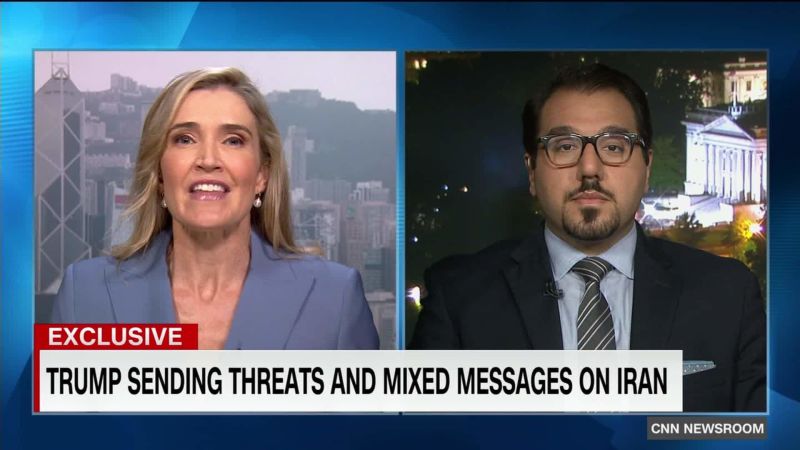
U.S. President Donald Trump is reportedly contemplating the dismissal of National Intelligence Director Avril Haines due to escalating tensions with Iran. This decision comes at a critical time as the administration seeks to define its strategy towards Tehran.
Pressure is mounting on Trump from some of his advisors who believe that Haines has not provided sufficient accurate information regarding Iranian activities, which has impacted the administration's decisions on how to deal with Tehran. Reports have indicated that there is a divergence of opinions within the administration on how to address Iranian threats, further intensifying tensions.
Details of the Situation
Information suggests that Trump may be disappointed with Haines's performance, especially following reports indicating that Iran may have increased its military activities in the region. In this context, there is growing concern that a failure to take decisive action could exacerbate conditions in the Middle East.
Additionally, there are calls from some members of the U.S. Congress for a change in leadership at the National Intelligence Office, as they see a need for new strategies to confront the challenges posed by Iran. At the same time, Trump is facing pressure from his allies in the region, who are demanding more robust actions against Tehran.
Background & Context
Historically, U.S.-Iran relations have been tense since the Islamic Revolution in 1979. These relations have seen a rise in tensions, particularly after the United States withdrew from the Iranian nuclear agreement in 2018. Since then, the U.S. has imposed stringent sanctions on Iran, leading to worsening conditions in the region.
In recent years, Iran has increased its influence in the Middle East, raising concerns among neighboring countries and the United States. This has led to growing calls from some U.S. officials to adopt a stricter policy towards Tehran.
Impact & Consequences
If Haines is dismissed, this move could lead to significant changes in U.S. policy towards Iran. Trump may seek to appoint someone more hardline, which could escalate tensions in the region. At the same time, this step could lead to further divisions within the U.S. administration, as opinions differ on how to handle Iran.
Moreover, Haines's dismissal could impact U.S. relations with its allies in the region, who may view this move as a sign of instability within the administration. Under these circumstances, it may be challenging for the United States to build effective coalitions to address Iranian challenges.
Regional Significance
The developments in U.S.-Iran relations are of great importance to the Arab region. As tensions escalate, neighboring Arab countries may be directly affected, especially those sharing borders with Iran. Any escalation in the situation could lead to negative repercussions for security and stability in the region.
In this context, Arab countries are closely monitoring developments, as they seek to bolster their national security amid rising threats. There is also an urgent need for coordination among Arab states to confront the challenges posed by Iran.
In conclusion, amid escalating tensions with Iran, the future of U.S.-Iran relations remains uncertain. If Haines is dismissed, this could mark a turning point in U.S. policy towards Tehran, significantly affecting security and stability in the region.