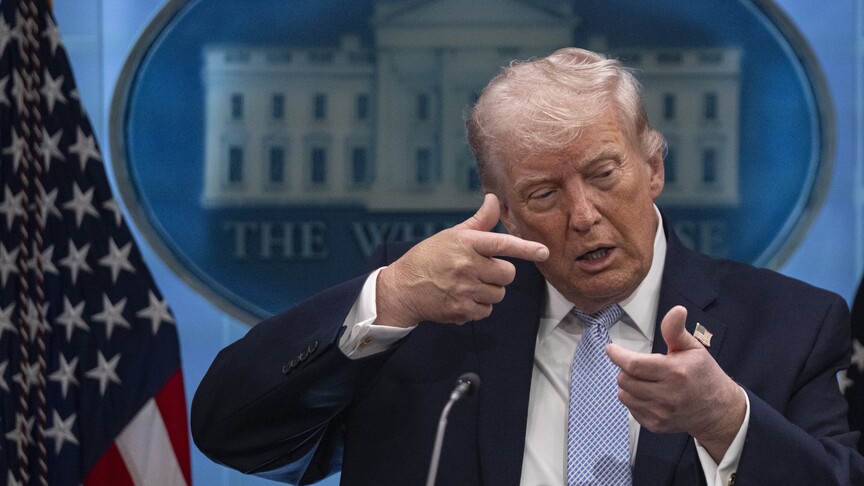
U.S. President Donald Trump is reportedly under mounting pressure to make a decision regarding potential military strikes against Iran, with an announcement anticipated by Tuesday evening. This move comes amid escalating tensions between the two countries, as diplomatic talks falter and fears of military escalation that could destabilize the region grow.
Pressure on Trump is coming from some of his advisors who are advocating for military action, while others are urging a search for diplomatic solutions. This divergence of opinions reflects a division within the U.S. administration on how to handle Iranian threats, especially in light of recent statements indicating that Iran may resume its nuclear activities.
Details of the Situation
Reports suggest that Trump may be poised to take escalatory steps against Iran, including targeting vital facilities such as oil or military installations. Recent events, such as attacks on commercial ships in the Gulf, indicate that the situation may be trending towards increased tension. Simultaneously, the U.S. administration is striving to maintain its alliances in the region, complicating the situation further.
These developments coincide with calls from some European allies to return to the negotiating table, believing that diplomatic solutions are still possible. However, hostile statements from both sides may complicate these efforts, increasing the likelihood of military escalation.
Background & Context
The history of U.S.-Iranian relations is fraught with tensions and conflicts, significantly deteriorating after the Iranian revolution in 1979. Since then, the U.S. has imposed economic sanctions on Iran, exacerbating the country's economic and social conditions. In recent years, these tensions have escalated dramatically, particularly following the U.S. withdrawal from the Iranian nuclear deal in 2018.
Iran is considered one of the key players in the Middle East, exerting significant influence over numerous regional conflicts. Therefore, any military escalation could have far-reaching consequences, not only for Iran but also for neighboring countries.
Impact & Consequences
If the U.S. administration decides to take military action against Iran, it could provoke a violent response from Tehran, potentially dragging the region into a broader conflict. Such actions could impact global oil prices, as any escalation in the Gulf could lead to significant price increases.
Moreover, military escalation may affect U.S. relations with its allies in the region, as some countries may adopt differing stances based on their own interests. This could complicate peace efforts in other areas such as Syria and Yemen.
Regional Significance
Neighboring Arab countries such as Iraq, Saudi Arabia, and the UAE find themselves in a precarious position. Any military escalation could impact the stability of these nations, raising fears of new conflicts. The economic impact could also be significant, as many of these countries rely on stable oil prices.
In conclusion, the question of how the U.S. administration will handle this situation remains uncertain, as the available options range from diplomacy to military escalation. Upcoming developments will determine the future of U.S.-Iranian relations and could have long-term implications for the entire region.