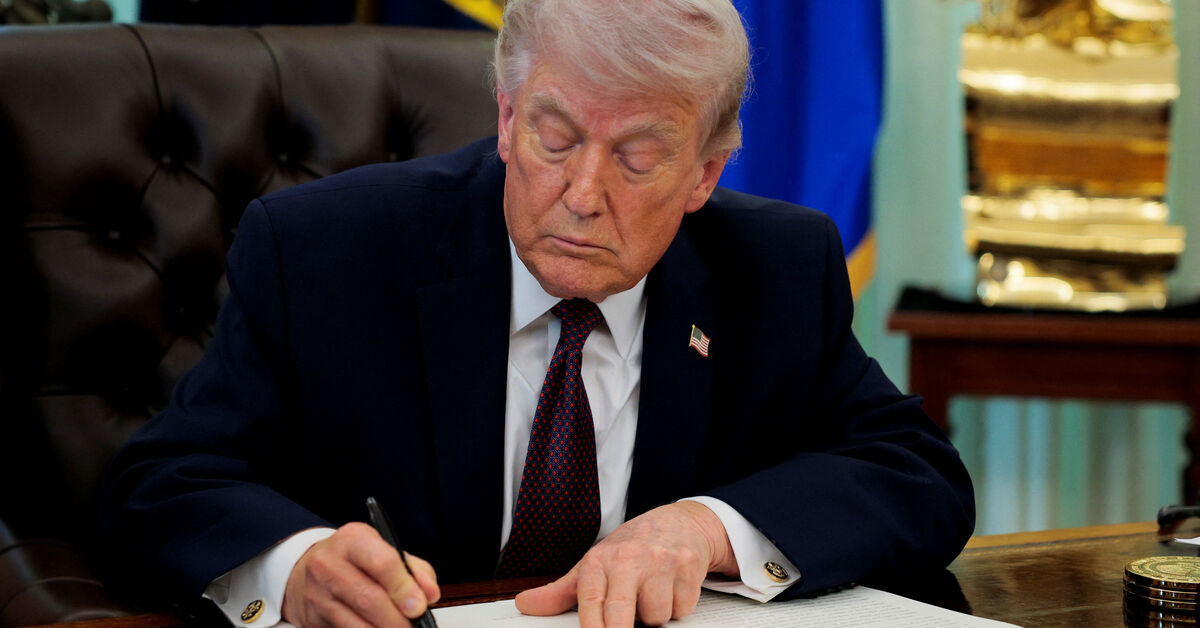
In a controversial statement, U.S. President Donald Trump confirmed that he is seriously considering withdrawing the United States from the North Atlantic Treaty Organization (NATO) during an interview with the British newspaper The Daily Telegraph. This announcement came after allies failed to provide support for Washington's military plans against Iran, raising questions about the future of the alliance and its significance to the United States.
Trump described NATO as a 'paper tiger,' indicating that the possibility of the U.S. withdrawing from this military alliance has become 'off the table.' These remarks reflect the growing distrust that Trump feels towards the alliance, which he considers unable to provide adequate support in critical times.
Details of the Statement
Trump's comments come at a sensitive time, as tensions in the Middle East are escalating, particularly following recent events related to Iran. Trump expressed his dissatisfaction with the inability of European allies to support the United States in its military actions, prompting him to reconsider the feasibility of continued U.S. membership in NATO.
This statement represents a significant shift in U.S. foreign policy, as NATO has long been one of the cornerstones of American and European security. The announcement has elicited mixed reactions among politicians and analysts, who believe that a U.S. withdrawal could destabilize the security framework in Europe.
Context and Background
NATO was established in 1949 as a military alliance aimed at countering Soviet threats during the Cold War. With the end of the Cold War, NATO's role evolved to include peacekeeping operations and military interventions in conflict zones. However, in recent years, there has been a decline in support from some key member states, leading to increased criticism regarding NATO's effectiveness.
Trump is not the first to question the future of NATO, as several European leaders have previously expressed concern over the United States' commitment to protecting its allies. These concerns reflect significant shifts in global politics, where the importance of defense autonomy for European countries is increasing.
Consequences and Impact
If the United States decides to withdraw from NATO, it could lead to drastic changes in the military balance in Europe. European nations may feel greater pressure to develop their own defense capabilities, potentially leading to a new arms race in the region. Additionally, this withdrawal could open the door for other powers, such as Russia, to enhance their influence in Europe.
Furthermore, this decision may affect U.S. relations with its traditional allies, potentially creating new divisions in international politics. Tensions between the United States and European countries are likely to increase, which could impact cooperation in various areas such as trade and security.
Impact on the Arab Region
For the Arab region, this decision could have significant implications, especially amid existing tensions with Iran. If the United States withdraws from NATO, Arab countries may feel greater anxiety regarding their security, prompting them to seek new alliances or bolster their military capabilities.
This withdrawal could also impact the U.S. strategy in the Middle East, where many Arab nations rely on American military and political support to face regional challenges. Under these circumstances, Arab countries may need to reassess their security and defense policies.