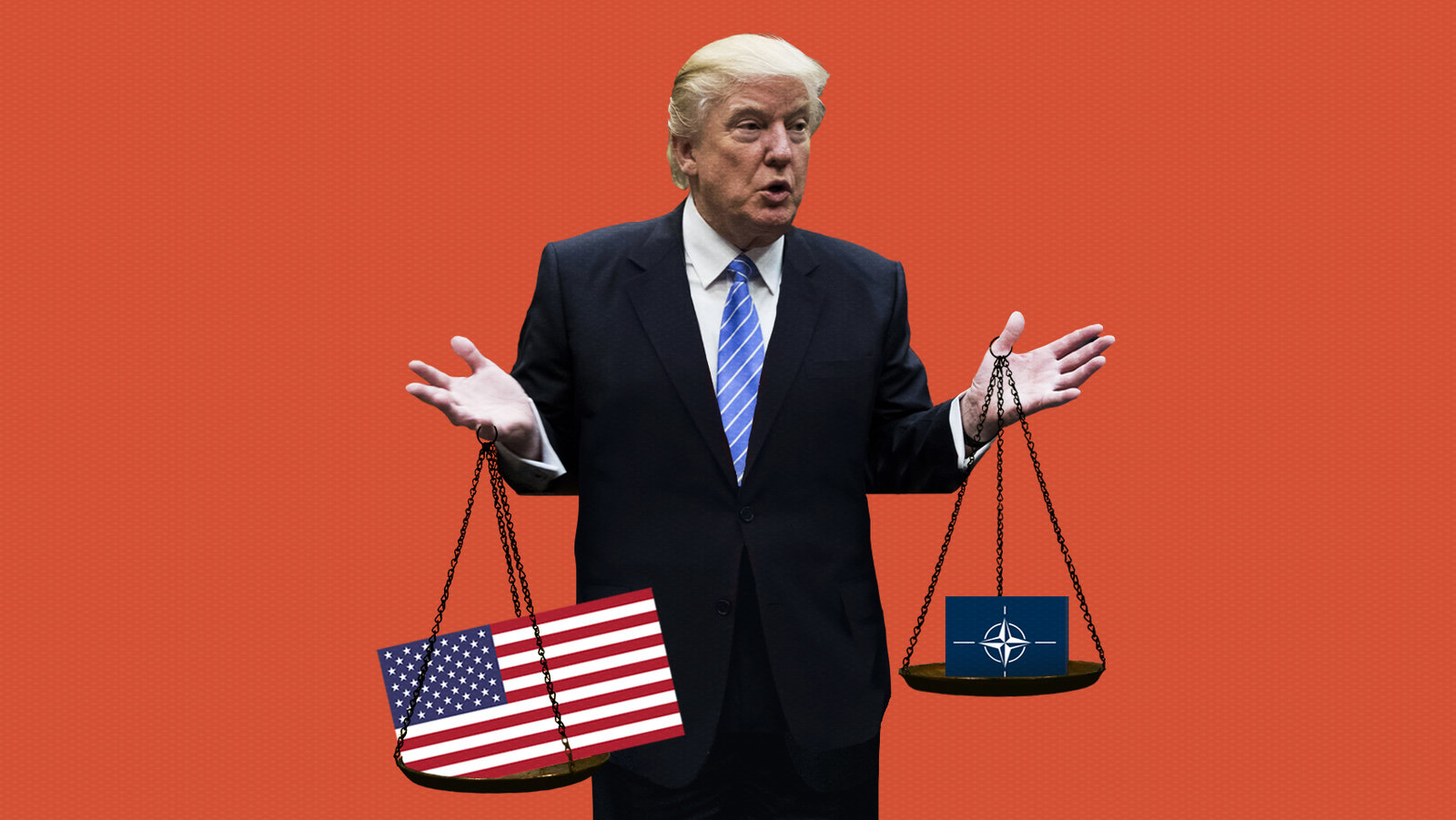
Former U.S. President Donald Trump has stated that he is seriously considering the possibility of the United States withdrawing from the North Atlantic Treaty Organization (NATO), according to remarks reported by the British newspaper The Telegraph. These statements come at a time when pressures on the alliance are increasing due to rising geopolitical tensions around the world.
Trump, who served as president from 2017 to 2021, has criticized NATO on several occasions during his presidency, indicating that member countries should bear more of the financial burdens. His recent comments have raised questions about the future of the alliance and its role in enhancing European security.
Details of the Statement
In his remarks, Trump confirmed that he does not rule out the idea of withdrawing from NATO, suggesting that the United States might be better off if such a decision were made. These statements followed a series of global events that have seen escalating tensions among major powers, including the conflict in Ukraine and rising tensions with China.
NATO is considered one of the most important military alliances in the world, comprising 30 countries, and aims to enhance the collective security of its members. Should the United States withdraw, the alliance could face significant upheaval in its structure and objectives.
Background & Context
NATO was established in 1949 in response to Soviet threats during the Cold War. The alliance has played a pivotal role in maintaining security in Europe for decades. However, in recent years, it has faced new challenges, including international terrorism, economic crises, and climate change.
During Trump's presidency, NATO faced increasing criticism from the U.S. administration, as Trump believed that some member countries were not contributing enough to the alliance's budget. This criticism has raised concerns among European allies, who view NATO as a guarantee of their security in the face of rising threats.
Impact & Consequences
If the idea of a U.S. withdrawal from NATO is realized, it could lead to a reshaping of the global security system. European countries may find themselves compelled to bolster their defense capabilities, potentially leading to a new arms race in the region. Additionally, such a withdrawal could open the door for other powers like Russia and China to enhance their influence in Europe.
Moreover, this decision could lead to the disintegration of traditional alliances, creating an unstable environment on the international stage. This situation is concerning for many countries that rely on U.S. support to address security threats.
Regional Significance
In the Arab context, a U.S. withdrawal from NATO could have indirect effects on security and stability in the region. Arab countries that cooperate with the United States in security and defense may find themselves in a difficult position, especially if tensions in the Middle East escalate.
Furthermore, such a withdrawal could strengthen Iran's position in the region, potentially exacerbating existing conflicts. Therefore, Arab nations need to closely monitor developments and consider new strategies to address increasing security challenges.
In conclusion, Trump's statements regarding a withdrawal from NATO remain a significant point of interest, as they could impact international relations and global security overall. The international community must take these remarks seriously, given their potential ramifications for stability worldwide.