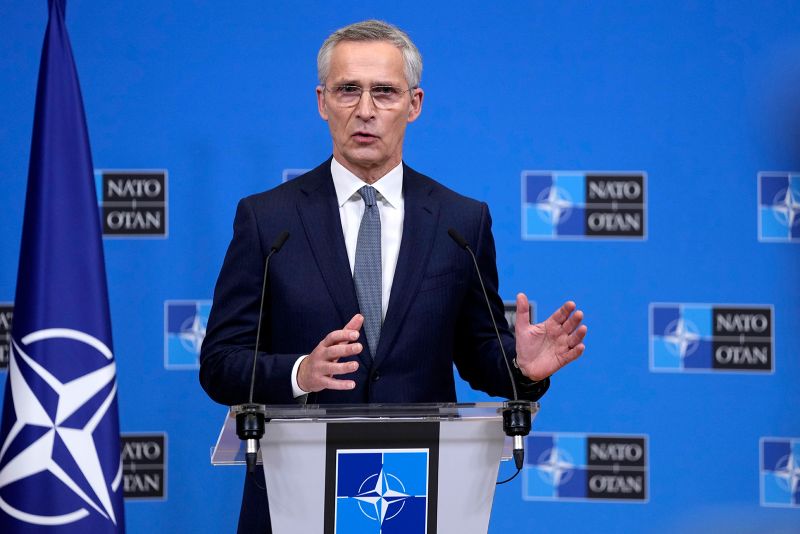
US President Donald Trump has announced that he is considering the possibility of withdrawing the United States from the North Atlantic Treaty Organization (NATO), describing it as a 'paper tiger'. These remarks were made during an interview with the Telegraph, where Trump expressed his frustration over the lack of cooperation from European allies regarding the reopening of the Strait of Hormuz, a vital passage for oil and gas.
In the interview, Trump pointed out that NATO has not had a real impact on international crises, stating: 'I have never been influenced by NATO. I always knew they were a paper tiger, and Putin knows that too.' These comments come at a sensitive time as tensions in the region escalate due to Iranian activities.
Details of the Event
Trump's statements come at a time when he is frustrated with European allies' refusal to send warships to assist in reopening the Strait of Hormuz, which is controlled by Iran. Trump has deemed this refusal a betrayal by NATO, especially after the support the alliance provided to Ukraine in its conflict with Russia.
He also added that he expected allies to respond to the United States' request, saying: 'It was hard to believe they weren't there. I didn't push too hard, but I thought it should be automatic.'
Background & Context
NATO was established in 1949 as a defensive alliance among Western nations to counter Soviet threats. Over time, the alliance has evolved to address various international security issues, including counter-terrorism and regional crises. However, current challenges, such as the Iranian conflict, put NATO to a real test of its effectiveness.
Historically, the United States has been the driving force behind NATO, providing military and financial support to member states. However, in recent years, some European countries have begun to express a desire to reduce their dependence on the United States for defense issues.
Impact & Consequences
If the United States decides to withdraw from NATO, it could lead to a reshaping of the security landscape in Europe and globally. European nations may feel vulnerable, prompting them to bolster their military capabilities individually or seek new alliances.
Furthermore, a US withdrawal from NATO could increase Russian influence in the region, as Moscow might exploit the vacuum left by the absence of American leadership. This would raise concerns among European nations and heighten tensions in international relations.
Regional Significance
For the Arab region, a US withdrawal from NATO could signify significant changes in security dynamics. This might lead to increased tensions in the Arabian Gulf, particularly with Iran, which is viewed by the United States and its allies as a threat to regional security.
Additionally, instability in the region could affect oil prices, potentially negatively impacting Arab economies that heavily rely on oil revenues. Therefore, Arab nations need to closely monitor developments and prepare for any potential repercussions.