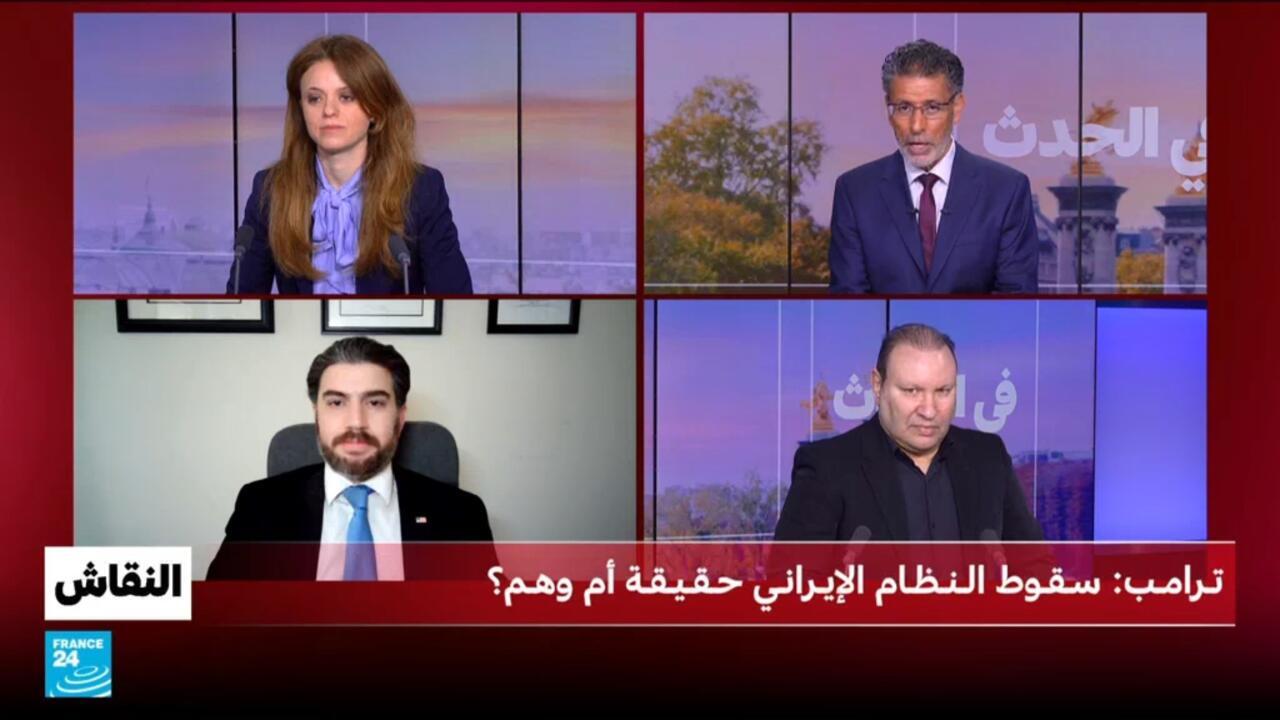
U.S. President Donald Trump's statements regarding Iran are notably inconsistent, showcasing a clear hesitation in his strategy towards the country. While he expresses readiness to negotiate with what he refers to as the 'new regime' in Tehran, he simultaneously threatens to bomb islands and vital facilities such as power generation and desalination plants. This contradiction raises questions about the true objectives behind Trump's policy towards Iran.
In discussing these statements, the program hosted Leila Bashara, a journalist from Radio Monte Carlo International, Rami Khalifa Al-Ali, a political writer, and Hazem Alghabra, a former advisor at the U.S. State Department and member of the Republican Party. These guests provided various analyses regarding Trump's motivations and the implications of his statements.
Details of the Event
Recently, Trump made conflicting statements about Iran, indicating a possibility of negotiating with the new leadership in Tehran, which reflects a desire to change the traditional U.S. approach towards the Iranian regime. However, his threats to bomb vital facilities serve as evidence of the ongoing tension between the two countries. These statements come at a sensitive time, as fears of potential military escalation in the region are rising.
Trump, who is seeking re-election, seems to be using these statements as part of his political strategy, attempting to showcase U.S. strength in the face of external challenges. However, could these statements merely be an electoral tactic?
Background & Context
Historically, relations between the United States and Iran have been tense since the Islamic Revolution in 1979. Since then, the U.S. has pursued a policy of pressure on Tehran, including imposing strict economic sanctions. However, recent years have seen attempts at negotiation, especially during Barack Obama's administration, which resulted in the 2015 nuclear agreement.
But after Trump's withdrawal from the agreement in 2018, tensions escalated significantly, leading to a series of military and economic events that increased instability in the region. Trump's recent statements come in this context, as he seeks to reshape U.S. policy towards Iran.
Impact & Consequences
Trump's contradictory statements could exacerbate conditions in the region, potentially provoking violent reactions from Iran and its allies. Additionally, threats of bombing could lead to unwanted military escalation, complicating the security situation in the Middle East.
Moreover, these statements may affect U.S. relations with its allies in the region, as Arab and Gulf countries must take clear stances regarding this increasing tension. How will these countries navigate the pressures from both the U.S. and Iran simultaneously?
Regional Significance
The Arab region is a crucial part of the U.S.-Iran conflict, with countries like Saudi Arabia and the UAE playing a pivotal role in countering Iranian influence. Trump's statements could heighten tensions between these nations and Iran, potentially negatively impacting security and stability in the region.
In light of these circumstances, the pressing question remains: Will the U.S. succeed in achieving its goals through this contradictory policy, or will matters escalate further?