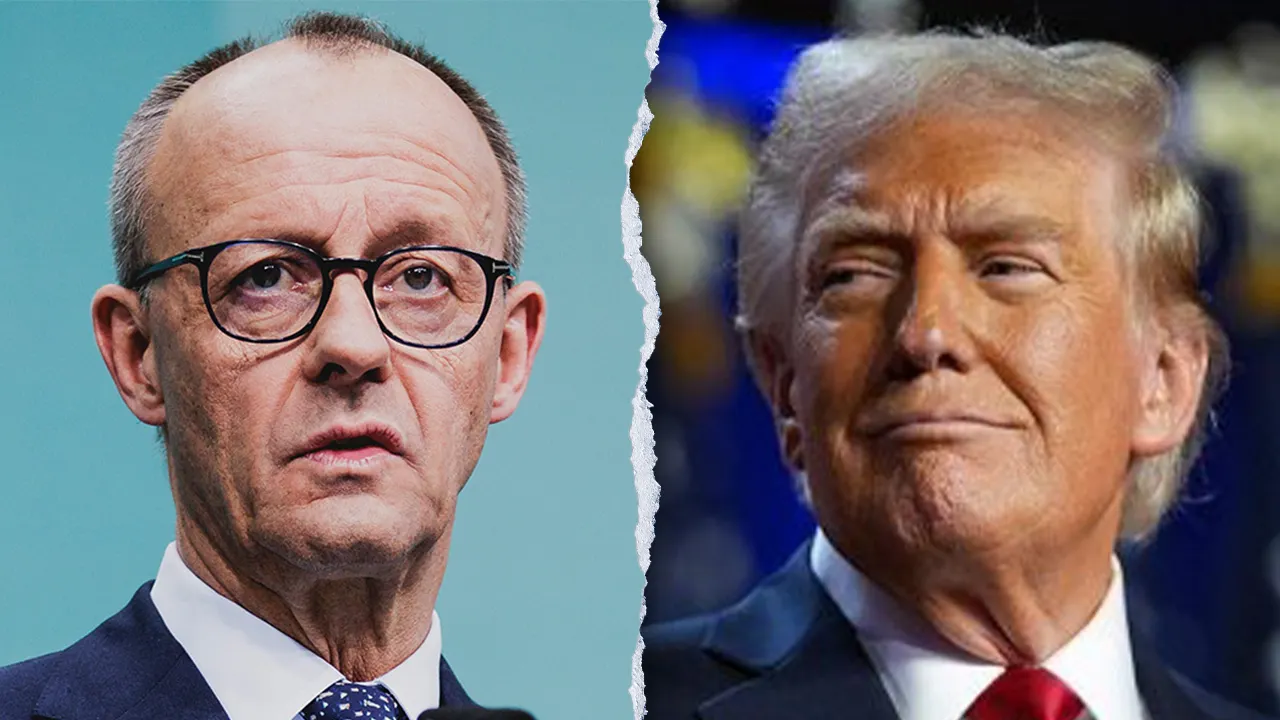
U.S. President Donald Trump has criticized German Chancellor Friedrich Merz, asserting that he does not know what he is talking about regarding Iran. These remarks followed Merz's statement, made just a day earlier, in which he claimed that the Iranians are "humiliating" the United States during negotiations to end the ongoing conflict.
Trump's comments reflect a growing tension between the United States and Germany over how to handle Iran, especially amid ongoing crises in the region. Merz's remarks have sparked a strong reaction from Trump, who seems to feel there is a need to clarify the American position more explicitly.
Details of the Incident
In his statements, Merz indicated that Iran is manipulating the United States in negotiations, which provoked a strong response from Trump. Trump stated, "Merz does not know what he is talking about, and he should familiarize himself with the facts before making such statements." These comments highlight a lack of agreement among Western allies on how to approach Iran, which the United States views as a threat to regional security.
These remarks come at a sensitive time, as fears of escalating tensions in the Middle East are increasing. Reports have indicated that Iran has reached out to several European countries in an attempt to ease the sanctions imposed on it, further complicating the situation.
Background & Context
Historically, relations between the United States and Iran have been tense, particularly following the U.S. withdrawal from the nuclear agreement in 2018. Since then, tensions have escalated significantly, with the United States accusing Iran of supporting armed groups in the region.
In contrast, Iran seeks to bolster its regional position by expanding its influence in Iraq, Syria, and Lebanon. This regional conflict complicates peace efforts and heightens tensions among major powers.
Impact & Consequences
The implications of these statements extend beyond the bilateral relations between the United States and Germany, affecting regional balances in the Middle East. The tensions between Iran and the West could lead to a potential military escalation, threatening stability in the region.
Furthermore, these remarks could impact U.S. relations with its European allies, as some may feel there is a need to adopt a more conciliatory approach toward Iran. This situation could lead to divisions within the Western alliance, undermining their position in negotiations.
Regional Significance
The exchanged remarks between Trump and Merz signal increasing tensions that may affect Arab countries. The relations between Iran and Arab states, particularly those in the Gulf, could be significantly impacted if these tensions continue.
Any military escalation could have serious repercussions for regional security, prompting Arab nations to adopt cautious stances amid these changing circumstances.
In conclusion, these statements reflect the substantial challenges facing U.S. foreign policy toward Iran and highlight the need for more balanced strategies in dealing with regional issues.