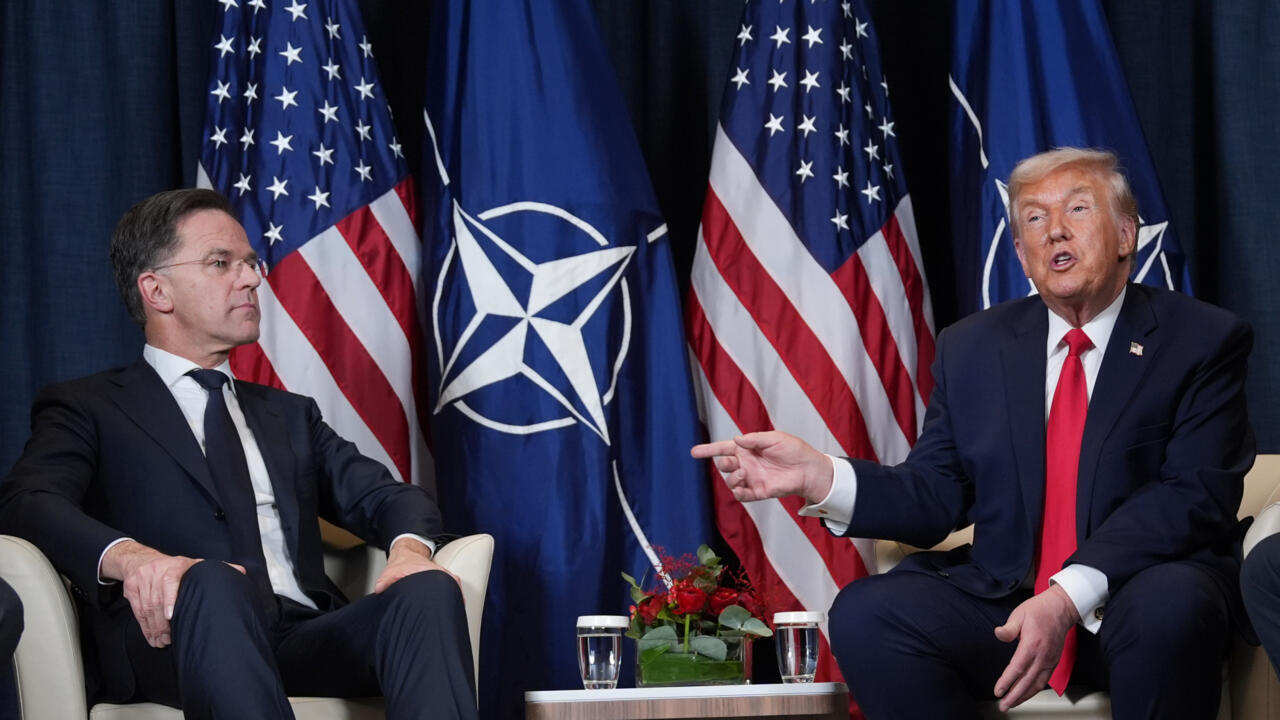
In a move reflecting escalating tensions between the United States and its allies, President Donald Trump met with NATO Secretary General Mark Rutte at the White House on Wednesday. The meeting, which lasted approximately two and a half hours, came at a sensitive time as tensions rise in the Middle East, particularly concerning Iran.
Prior to the meeting, Rutte met with US Secretary of State Marco Rubio to discuss the situations in Iran and Ukraine, as well as the alliance's responsibilities. Rutte is also scheduled to meet with Defense Secretary Pete Hegseth during his visit to Washington.
Details of the Meeting
During the meeting, Trump expressed his dissatisfaction with NATO's performance, posting on his platform "Truth Social" a message stating that "NATO was not there when we needed it, and it will not be there if we need it again." These remarks reflect Trump's frustration with some European countries' failure to meet their commitments to the alliance.
Earlier, Trump described NATO as a "paper tiger," accusing member states of failing to take effective steps to open the strategic Strait of Hormuz and imposing restrictions on the use of American forces at military bases on their territory. He also expressed anger over his Western partners' refusal to engage in the war against Iran, which he views as a threat to the stability of the alliance.
Context and Background
These statements come amid increasing pressure on NATO, as member states face multiple challenges related to security and defense. In recent years, the alliance has faced growing criticism from Trump, who demands that member countries increase their defense budgets. Trump pointed out that the American people are funding the defense of these nations, which intensifies the criticism.
In contrast, Rutte defended the commitment of most European countries to their defense pledges, stating in an interview with CNN that "the vast majority of European countries have fulfilled their promises." This statement comes at a critical time as the alliance seeks to enhance its defensive capabilities in the face of rising threats.
Implications and Effects
These developments indicate the potential for significant changes in US policy towards NATO, as Trump hints at the possibility of withdrawing from the alliance. Such a move could destabilize the Western military coalition and increase tensions between the United States and European countries.
Reports also suggest that the Trump administration is considering a plan to redeploy US forces, which means withdrawing them from some NATO countries and relocating them to nations more supportive of American efforts in Iran. This step could be seen as a punishment for "non-cooperative" countries, complicating relations between the United States and its allies.
Impact on the Arab Region
The Arab region is directly affected by these developments, as any escalation in tensions between the United States and Iran could lead to negative repercussions for security and stability in the region. Additionally, a potential withdrawal of US forces from some countries could create a security vacuum that might be exploited by other powers.
Under these circumstances, Arab countries must closely monitor developments, as any change in US policy could impact their security and defense strategies.
In conclusion, relations between the United States and NATO remain tense, highlighting the need to reassess commitments and cooperation among member states. At the same time, Arab countries must be prepared to deal with any repercussions that may arise from these tensions.